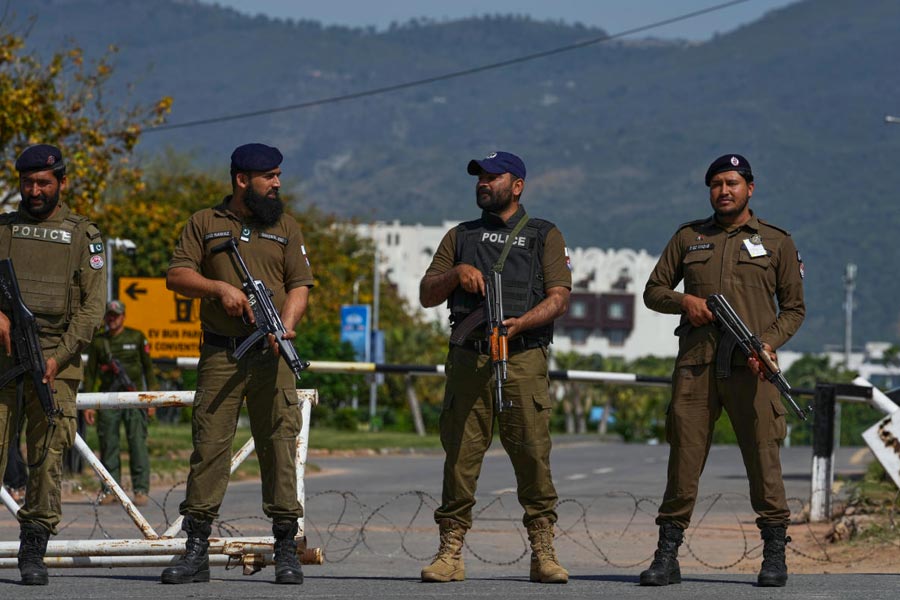
Islamabad remained shut to heavy traffic on Friday as uncertainty continued over the possible visit of top US and Iranian leaders for Pakistan-mediated peace talks, with authorities yet to announce any official schedule. Security restrictions and transport suspensions have disrupted normal life across the twin cities of Islamabad and Rawalpindi for five straight days.
The administrations of Islamabad and Rawalpindi had sealed major roads and markets in VVIP movement zones on Sunday following indications that the talks could begin at any point during the week. More than 10,000 security personnel have been deployed to maintain law and order.
Despite the heightened preparations, no confirmation has been issued regarding the leaders’ arrival as the week nears its end. Authorities have also not decided when to reopen areas surrounding Nur Khan Airbase or resume Metro Bus, electric bus services, and goods transportation.
Streets, link roads, markets, and banks near the old airport have remained closed over the past five days, leaving residents of Shah Faisal Colony, Khalid Colony, Gulzar-e-Quaid, Fazal Town, and nearby localities largely confined to their homes.
Public transport services continue to face major disruptions. The Metro Bus Service connecting Rawalpindi and Islamabad remains suspended, along with electric bus operations on seven routes. Goods transport has also been halted since April 19, causing inconvenience to commuters and businesses.
Islamabad’s high-security Red Zone remains sealed, with employees in offices located there continuing to work from home.
While limited heavy vehicle movement has been allowed in some parts of Rawalpindi, Islamabad remains inaccessible to trucks and buses. Schools and colleges remain open, though universities have shifted to virtual classes.
There is still no official confirmation on when the talks may begin, although Pakistani authorities continue diplomatic efforts and remain hopeful of bringing both sides to the negotiating table.
Strict monitoring on roads leading into Islamabad suggests preparations for the proposed talks are still ongoing.
The first round of US-Iran talks, held on April 11 and 12, failed to deliver a breakthrough, prompting renewed diplomatic efforts by host Pakistan to ease tensions and facilitate another round of negotiations.
On Wednesday, The New York Post quoted US President Donald Trump as saying that the second round of the US-Iran talks could take place as early as Friday.
However, Iranian Foreign Ministry spokesman Esmaeil Baqaei said Tehran has not yet decided whether to attend a new round of Pakistani-mediated talks in Islamabad.
On Tuesday, Trump extended the two-week ceasefire with Iran indefinitely to give Tehran more time to prepare a unified proposal to end the war, just hours before the truce was due to expire.
The Iran war began on February 28 with US-Israeli strikes.