Shared joy
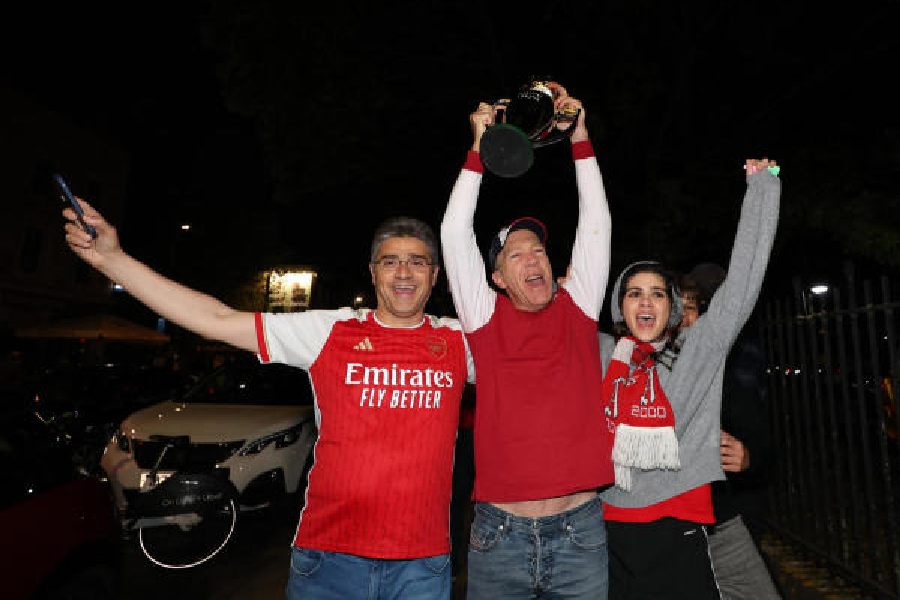
Sir — Supporters in places like Gaborone or Gandhinagar may never visit London, yet they invest deep emotions in clubs like Arsenal (“Gooners’ roar”, May 24). Fans build friendships, routines, and personal identities around clubs they follow for years. Football creates communities that feel real even without local ties. That explains why a fake government notice in Botswana celebrating Arsenal’s Premiership win and announcing a public holiday could appear believable, amusing, and emotionally satisfying to many supporters. In many ways, football is a shared language that connects strangers across countries, classes and cultures.
Aditya Mukherjee,
Calcutta
Immoral force
Sir — Cuba’s crisis shows how sanctions often punish ordinary citizens more than political leaders (“Cuba’s turn”, May 21). Reports of hospitals struggling without fuel and families enduring day-long blackouts are deeply troubling. Economic pressure is frequently presented as a peaceful alternative to war, yet it can still create severe human suffering. Governments under sanctions often become more authoritarian during crises instead of reforming. International disputes require diplomacy, negotiations, and humanitarian safeguards. Any policy that knowingly worsens living conditions for civilians deserves far greater scrutiny from democratic societies and global institutions alike.
Annesha Ghosh,
Calcutta
Sir — The recent statements from the president of the United States of America, Donald Trump, about Cuba deserve serious concern. Public threats of intervention against another sovereign country weaken international norms that powerful nations themselves claim to defend. Cuba’s government has many faults, including restrictions on political freedom, but outside coercion rarely produces stable democratic outcomes. Iraq, Libya, and Venezuela already demonstrate the risks of aggressive foreign policy. Ordinary Cubans are now facing fuel shortages, food insecurity, and failing public services. A crisis affecting civilians should never become a geopolitical spectacle for electoral or strategic gain.
Trisha Dey,
Calcutta
Sir — The debate around Cuba is often reduced to two extreme positions. One side excuses repression by the Cuban state, while the other treats sanctions as morally justified regardless of their human cost. Both approaches ignore the daily realities faced by ordinary people. Long power cuts, medicine shortages, and economic collapse affect citizens who have little influence over state policy. A humane foreign policy must recognise that governments and populations are not interchangeable. Punishing an entire society rarely creates democratic reform or political stability in the long term.
Altaf Khan,
Mumbai
Sir — Sanctions are regularly defended as tools that avoid military conflict, yet their effects can still be devastating for civilians. The reports from Cuba suggest that hospitals, transport systems, and food supplies are under severe strain. Such conditions raise important moral questions about collective punishment. If the stated aim is to promote human rights, policies that deepen humanitarian crises appear contradictory. International pressure should be focused on political accountability, targeted legal measures, and diplomatic engagement instead of broad economic restrictions that mainly burden vulnerable citizens and public institutions.
B. Sanyal,
Calcutta
Sir — Much discussion about Cuba focuses on ideology but practical realities matter more to struggling families. Citizens require electricity, fuel, medicines, and functioning hospitals regardless of political systems. Decades of sanctions have clearly failed to produce regime change in Cuba, Iran, or North Korea. Evidence increasingly suggests that such measures strengthen state control by creating permanent external threats. Foreign policy should be judged by outcomes rather than intentions alone. If a strategy consistently worsens civilian hardship without achieving political goals, policymakers must reconsider its usefulness and ethics.
Abhilasha Gupta,
Calcutta
Sir — The global community should pay closer attention to the humanitarian consequences of sanctions. Cuba’s current fuel crisis demonstrates how financial and trade restrictions can quietly damage everyday life over many years. Public debate often centres on governments and leaders, while the experiences of workers, patients, and children receive far less attention. There is legitimate criticism of Cuba’s political system, but outside pressure that contributes to shortages and collapsing services cannot be ignored. Civilian suffering should never become an acceptable instrument of international policy.
Anita Roychoudhury,
Calcutta
Correction
In “Gooners’ roar” (May 24), Mukul Kesavan mentions a match between
JCT Phagwara and Leaders Club Jullunder that took place in the late 1960s.
JCT Phagwara was founded in 1971. The error is regretted.