The Bengal government’s decision to set up pre-deportation “holding centres” for illegal immigrants follows the example of Assam, the first state in India to set up a standalone detention centre for such people.
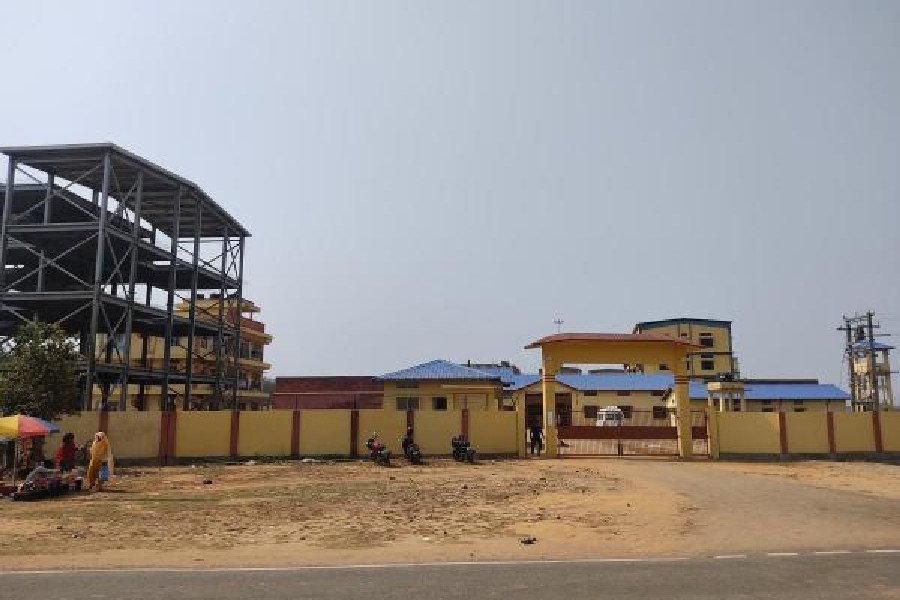
That detention centre — the Matia Transit Camp in Goalpara district, 150km from Guwahati — was the subject of controversy in 2024 over allegations of poor living conditions.
Assam had initially set up six makeshift detention centres — housed in the Silchar, Goalpara, Dibrugarh, Jorhat, Tezpur and Kokrajhar district jails — starting from 2008-09.
These were meant to hold people declared as foreigners by the foreigners’ tribunals, besides convicted foreigners sentenced for illegal entry or visa violations and refugees awaiting deportation. The detention centres were renamed as transit camps in 2021.
All the inmates were, however, shifted to the Matia camp after it became operational in 2023 following Gauhati High Court orders.
The Matia Transit Camp is the largest detention centre for illegal foreigners in India, spread over 20 bighas. The ₹46.5-crore facility has 15 buildings, each with the capacity to house 200 inmates, bringing its total capacity to 3,000 inmates.
A source said the centre had around 40 foreigners three months ago. Officials dealing with the Matia camp could not immediately confirm the number of detainees there.
The Centre had in 2014 directed the Assam government to set up an exclusive detention centre.
In 2020, Gauhati High Court ruled that those declared as foreigners or illegal immigrants cannot be kept on jail premises because they cannot be treated as convicted prisoners. Such treatment deprives them of their dignity, rights and liberty, it said.
In 2024, over 100 Rohingya and Chin refugees from Myanmar staged a hunger strike at the Matia camp demanding they be handed over to the United Nations High Commissioner for Refugees or be transferred out of the centre.
One of the detainees complained about the quality of food and hygiene. A report by the state legal services authority, submitted to the Supreme Court in August 2024, said the facilities at the Matia camp were “very poor”.
Illegal immigration has been a big political issue in Assam, triggering an agitation from 1979 to 1985 that sought safeguards against the threat.
It culminated in the signing of the Assam Accord in 1985, under which those who entered the state illegally after March 24, 1971, were to be detected, detained and deported. Assam has 100 foreigners’ tribunals, which are quasi-judicial bodies that decide cases dealing with suspected illegal immigrants.
The Assam government told the Assembly in February that 1.7 lakh foreigners had been detected till then and around 31,000 of them deported.
Those declared as foreigners by the tribunals can appeal before higher courts, which can be a long-drawn process.
A Supreme Court order in 2019 said that declared foreigners can be released -- subject to certain conditions (which allow the authorities to keep a tab on their whereabouts and activities) -- after three years in detention. It reduced the detention period to two years in 2020.
These released foreigners, too, are liable to be deported in future.
Chief minister Himanta Biswa Sarma has said his government’s policy is not to hold declared foreigners in detention too long but to deport them as promptly as possible.