Affordable housing is rapidly becoming rare. A new United Nations report has laid bare the scale of this entrenched crisis. According to the World Cities Report 2026, released by the UN-Habitat at the World Urban Forum, around 40% of the global population is affected by a housing crisis that is marked by unaffordability, shortage in and poor quality of homes, and lack of access to clean water and sanitation; moreover, 44% of households spend more than 30% of their income on housing. Housing prices have risen faster than incomes: the average price-to-income ratios increased from 9.3 in 2010 to 11.2 globally and 16.8 for Central and South Asia in 2023. India mirrors this distressing trajectory. Affordable housing declined in the eight largest Indian metropolises, from 52% of new builds in 2018 to just 17% in 2025. In Delhi and Mumbai, homeownership remains far beyond the reach of median-income households. Availing mortgage finances often forces families to rely on savings and borrowing. Incidentally, the Economic Survey 2025-26 highlighted that India has an estimated urban affordable housing deficit of around 9.4 million units, a gap that is projected to rise to nearly 30 million by 2030. Calcutta, where recent trends show a growing preference for premium homes, too, reveals this worrying shift.
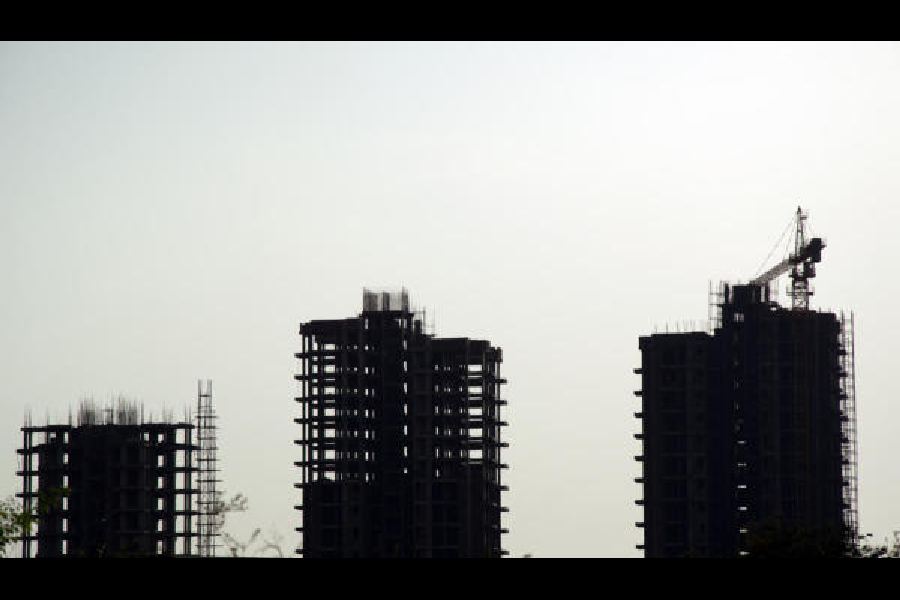
The contradiction is stark. Despite the pierced skylines and the booming luxury real-estate markets, affordable shelter remains elusive. Urban housing markets seem to be catering primarily to upper-income groups while lower-income groups are pushed to the periphery, or, in severe cases, outright homelessness. Government schemes such as the Pradhan Mantri Awas Yojana have attempted to address the shortage, but scale, financing and land constraints continue to limit impact. India has 13 homeless persons per 10,000 population. Homelessness, not merely a humanitarian concern, imposes severe public welfare costs through poor health outcomes, crime vulnerability, sanitation burden and education disruption. Cities, the UN report also warns, are expected to absorb another two billion people worldwide in another 25 years. India should pay close attention to this because of its inherent economic advantage: in countries like the United States of America, where building a single-family home can support 2.9 jobs, the figure is 4.06 jobs for India. India thus needs a more ambitious and inclusive housing strategy, unlock unused public land, strengthen rental housing, encourage microfinance for informal workers, and incentivise developers to build affordable homes.