West Bengal does not lack advantages; it lacks the ability to convert them into jobs, investment, and prosperity. Few Indian states possess Bengal’s strengths: a strategic location linking South Asia and the Northeast, fertile agricultural land, historic industrial infrastructure, major ports, a population of over 10.6 crore and deep pools of intellectual talent. Calcutta remains one of India’s leading educational and cultural centres, producing thousands of engineers and professionals every year.
Yet Bengal’s economic position has weakened steadily. Its share in India’s GDP has declined from over 10% in the 1960s to nearly 5.6% today. Per capita income, once far above the national average, has fallen to nearly 84% of the national average, while industrial contribution to GSDP remains around 21-22%, which is significantly
lower than leading manufacturing states. At the same time, many young professionals continue to migrate to Bengaluru, Hyderabad, and Pune in search of better opportunities.
The central question, therefore, is not whether Bengal has assets. It is why those assets are failing to generate sufficient economic returns. The answer lies in one word: enablers.
Economic growth depends not on announcements alone but on strong enabling conditions for investment and productivity. West Bengal’s transformation will require five key enablers: fiscal credibility, investor confidence, gateway activation, welfare-linked productivity and digital governance to create sustainable jobs, investment and broad-based prosperity.
The foundation of sustainable growth is fiscal credibility. A state carrying debt estimated at nearly Rs 8 lakh crore cannot indefinitely sustain high consumption expenditure without strengthening productive investment. Every rupee spent servicing debt is a rupee unavailable for roads, power infrastructure, logistics, industrial parks or skill development. Fiscal health is not an accounting issue alone; it directly shapes the state’s developmental capacity. This does not mean welfare spending should be abandoned. Welfare programmes such as Lakshmir Bhandar, Kanyashree and Krishak Bandhu have created important social protection for millions of households. But fiscal strategy must increasingly shift toward creating productive assets that expand the economy itself. West Bengal requires a visible transition from borrowing primarily for recurring expenditure toward borrowing for growth-generating infrastructure.
Investor confidence is central to West Bengal’s economic revival. Despite being India’s fourth-most populous state and a major eastern gateway, Bengal attracts relatively low industrial investment compared to competing states. More than 6,600 companies reportedly shut down operations or relocated after 2011, reinforcing concerns about policy unpredictability, land uncertainty, and administrative opacity. The industrial sector contributes only about 21-22% to the state’s GSDP, lower than in major manufacturing states. To rebuild trust, Bengal must ensure transparent, rules-based industrial policies in which incentives are protected from retrospective changes. Equally important is land certainty through a professionally managed industrial land bank with pre-cleared titles and ready infrastructure to attract mobile manufacturing capital.
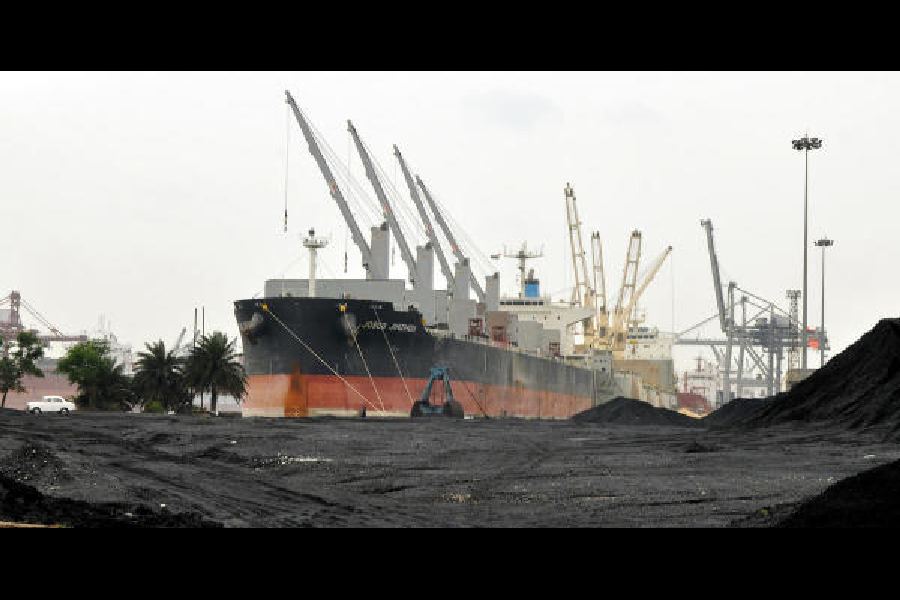
One of West Bengal’s most underutilised strengths is its geography. No other Indian state serves simultaneously as the land gateway to Bangladesh, Nepal and Bhutan, while also acting as the maritime connector for the Northeast. Calcutta and Haldia ports remain critical eastern trade hubs, and projects like the proposed Tajpur deep-sea port could reshape regional commerce. India-Bangladesh trade already exceeds Rs 1.8 lakh crore annually, yet Bengal captures only a limited share of its logistics and export value. Geography creates opportunity only when supported by strong logistics ecosystems, efficient customs, warehousing, cold chains and seamless border connectivity. Such infrastructure can generate jobs in transport and logistics while helping farmers and fishermen access export markets more efficiently. Geography alone does not create wealth. Gateway activation of infrastructure does.
The fourth enabler involves redefining welfare itself. West Bengal has built one of India’s largest welfare architectures. That social protection must continue. But welfare should serve as the foundation for participation in economic growth, not the ceiling on aspiration. A household receiving modest cash support gains security, but not necessarily upward mobility. The next stage of economic strategy must therefore connect welfare beneficiaries with enterprise opportunities, market access, digital commerce, skills and formal employment pathways. Self-help groups can become engines of women-led entrepreneurship. Farmer collectives can enable higher agricultural incomes through aggregation and processing. Rural youth need skills aligned with industry demand, not generic training certificates. The objective should not be poverty management alone, but income expansion.
The final enabler is digital governance. Modern economies depend on frictionless interaction among citizens, businesses and the State. Delayed approvals, opaque land records, manual clearances and fragmented systems discourage investment and reduce efficiency. Digitisation is not merely a technology initiative; it is an economic reform. Single-window clearances, online land records, digital incentive processing and transparent public dashboards can dramatically improve governance credibility. For citizens, digital systems reduce leakages, minimise intermediaries and improve service delivery. Most importantly, digital governance signals modernity. Bengal’s talent outflow is not irreversible. Young professionals migrate primarily because ecosystems elsewhere offer greater opportunity and efficiency. A state that visibly embraces transparent, technology-enabled governance can retain and attract talent, once again.
West Bengal’s economic transformation depends on five interconnected enablers. Together, they can attract investment, create jobs, strengthen infrastructure and raise household incomes. Success must be measured not by announcements, but by better roads, reliable electricity, stronger local businesses and dignified employment within the state. West Bengal does not need to reinvent itself from scratch. It needs to unlock what it already possesses. The real challenge is not identifying opportunities. It is creating the conditions that allow those opportunities to flourish.
Gourav Vallabh is Professor of Finance and PT Member of the Economic Advisory Council to the Prime Minister