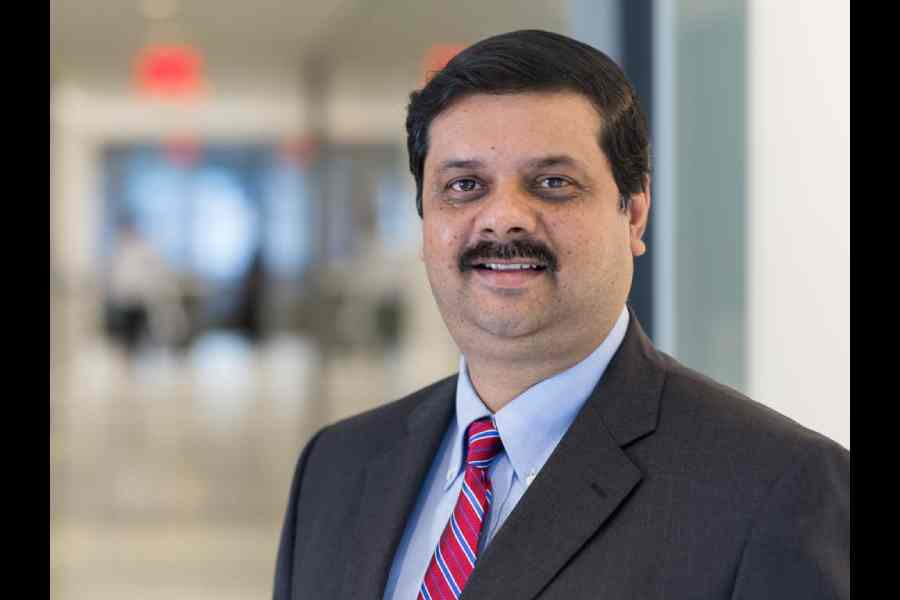
Tata Steel, which recorded a 146 per cent jump in profit in the last quarter, expects India’s steel demand to grow by 7-8 per cent over the next two decades even as the country grapples with shock of the West Asia war, the impact of which is yet to fully play out in the economy, said Koushik Chatterjee, ED and CFO of Tata Steel in an interview with Sambit Saha of The Telegraph. An excerpt
Tata Steel achieved a stellar performance in Q4 and FY26. What led to this performance?
Well, taking into account a challenging year, the performance was certainly fulfilling. One of the most fundamental resets with a single-minded focus on the cost take-out program covering multiple areas across geographies.
The foundation for the transformation program was laid 18 months back in FY25 and the entire organisation rallied to deliver ₹10,800-crore-plus efficiencies during FY26 alone. In the world we live in today, full of uncertainties, transformation programs remain the survival kit for future sustenance, hence we will endeavour to continue this journey further in the future.
How confident is the company that it can maintain the momentum in FY27?
As I mentioned earlier, we live in a world that is characterised by frequent outages, and we work to be proactively ready to deal with them.
Our continued focus remains on the operating excellence program across geographies, increasing our volumes in India by almost 2 million tonnes (mt) in FY27, widening our product capabilities with the newly commissioned facilities in Kalinganagar and driving down fixed costs across all geographies.
These are the fundamental pivots, and with market prices stabilising in many geographies due to regulatory actions, we should be on course with our performance journey.
The external uncertainty cascading from the global geopolitical megaplex, of course, remains a risk.
How concerned are you about the West Asia war and its impact on the Indian economy and Tata Steel?
It is indeed of great concern for the world economy and for India in particular. The West Asia war theatre has caused a very significant cost shock on the Indian economy, with several second and third-order impacts that will take a long time to re-anchor. Make no mistake, we haven’t yet seen the impact play out fully.
In the 85-plus days of the conflict so far, the rupee depreciation has been linear, crude prices have retraced back from the April 7 peak, but are still at a much higher level than pre-war, and the RBI spent around $29 billion defending the rupee.
India is currently battling the double blow of higher oil prices on the currency and a widening current account deficit.
Most of the macro assumptions of the union budget FY 2027 are no longer valid and as one of the most affected major economies, India has to handle the currency, inflation, growth and fiscal deficit conundrum very carefully to avoid being thrown towards an economic precipice.
In Tata Steel, scenario planning and risk-based decision management on operational planning, supply chain diversification, and active hedging strategy for commodities and currencies have become the norm to mitigate the impact of the war.
Given geopolitical uncertainties and AI reshaping industry workflow and job creation, how confident are you of secular growth for steel demand over the next decade?
Well, whether you are fighting a war or building the economy post any conflict, steel remains the foundational material for any economy. Steel is also a common man’s material – long-lasting, highly affordable and circular in nature.
Hence, steel in some ways has civilizational value, and that is why countries without a strong domestic steel industry are known to be at sovereign risk.
Steel demand in India has been growing between 7-8 per cent per annum and this momentum will continue in the next two decades with infrastructure build and focus on new growth sectors like data centres, ship building and defence manufacturing.
Tata Steel appears to be taking a calibrated approach to capex compared to its peers. Why?
Now that you ask, let me explain our strategy. We believe India will continue to be a growing market for steel in the future and Tata Steel’s India strategy is to ensure we grow our market share in the chosen segments with expanded volume of value-added products and services.
We have organic growth options to build to 40-plus mt per annum capacity with enhanced optionality to grow further with our intention to enter Maharashtra.
Organic growth by definition is calibrated in nature, and the capital is spent over the time of the build. Last December, we disclosed the pipeline of our growth plan and we are working on it. Our consolidated annual capital expenditure is around ₹20,000 crores and more than 60-65 per cent is in India. Hope that gives a sense of our capital allocation priorities.
How did the onshoring of debt help the Tata Steel group in FY26 and what is the roadmap for debt management?
We have been consciously on-shoring the overseas debt because, on a fully hedged basis, the interest costs are similar yet carry a higher principal risk in forex.
In 2020-21, our overseas debt was about 50 per cent of the consolidated debt, which is now about 18 per cent. In the last 12 months, as the rupee depreciated from ₹88 to the US dollar to around ₹94.78 as of March 31, our tactical strategy helped save ₹8700 crores on the principal liability value.
Going forward, we will continue to further onshore the debt with both prepaid and scheduled repayments to minimise the forex risk on the balance sheet.
The overall debt metrics now stand at 2.3x net debt to EBITDA, and we continue to be rated amongst the few investment-grade steel companies globally by the international rating agencies.
The Netherlands and UK operations put together posted a positive EBIDTA. What is the outlook for the European business in FY27?
In both entities we continue to work on the cost and commercial strategies and with better market pricing, will continue to improve further on their financial performance in the next 12 months.
The key watch point remains the geopolitical risks that will have impact on the energy costs and steel demand.