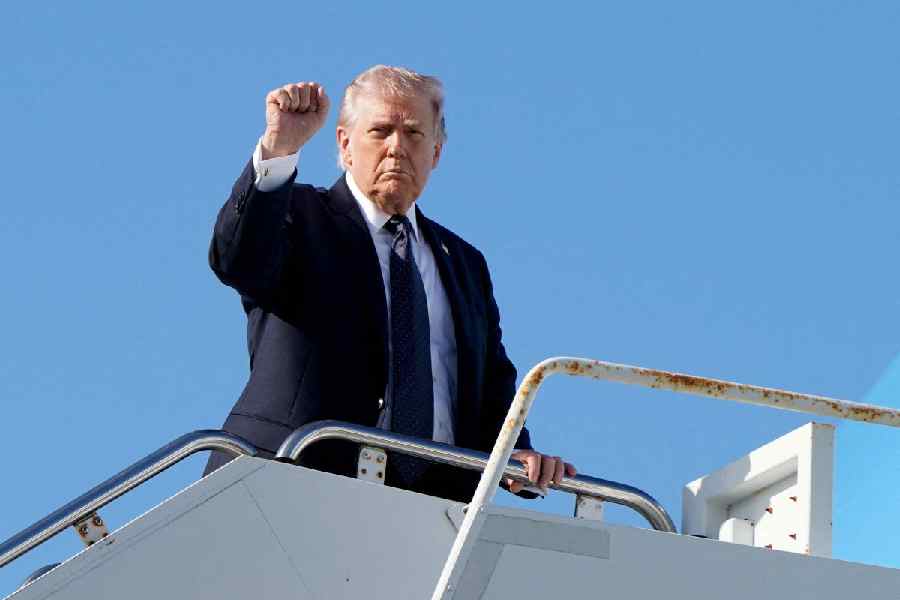
The consequences of a conflict often end up obfuscating its causes. At times, there are difficulties in achieving a consensus on what started the fire. The war that is now raging across West Asia may be an exception in this respect. This is because Donald Trump’s decision to dangerously swerve the policy of the United States of America on Iran during his stints as president has undoubtedly played the principal role in stoking the flames. A perusal of the chronology of recent events would establish Mr Trump’s complicity in the aggression. The Iranian Revolution had, of course, been the nadir of Washington’s diplomatic ties with Tehran. But that does not mean that US-Iran ties did not witness engagement, even progress. In fact, Tehran did reach an agreement with the US — the nuclear deal with Iran was, in fact, one of Barack Obama’s most notable successes in foreign policy. But then came Mr Trump who, in his first presidential stint, nixed the nuclear deal that had demonstrated that deterrence and leverage could be attained through economic sanctions and sustained diplomatic engagement as opposed to military intervention. Soon, one policy disaster followed another. Last year, Mr Trump joined Israel in an offensive against Iran. And, now, West Asia is experiencing one of its riskiest military escalations with active involvement of the US.
Mr Trump’s military adventurism against Iran may appear strange for a leader who loves to claim to have stopped numerous conflicts across the world. In fact, in 2016, he was a staunch advocate for affixing limits to the US’s military power — especially in West Asia. His renewed licence for American militarism may have something to do with a structural transformation: military advisers with a tempered view on the use of force have either been sidelined or fired in Mr Trump’s current administration. But the more plausible explanation is this. At a time when Mr Trump finds himself cornered on a number of issues — the people are circumspect over his claims on the US’s economic recovery; the proverbial Damocles’ sword known as the Epstein Files hangs over him; the Supreme Court has struck down the president’s weaponisation of tariffs — Mr Trump has, like many of his predecessors, decided to, in a manner of saying, wag the dog. The conflict with Iran, Mr Trump would be hoping, would provide the diversion that is necessary to tide over his domestic challenges and arrest the slide in ratings in a year in which the US will go to mid-term polls.