The widening Middle East war could soon spill into Indian kitchens. Households may face a sharp squeeze on cooking gas supplies if tanker traffic through the Strait of Hormuz remains effectively blocked, analysts warn. The narrow waterway is the chokepoint through which a large share of India’s energy imports passes.
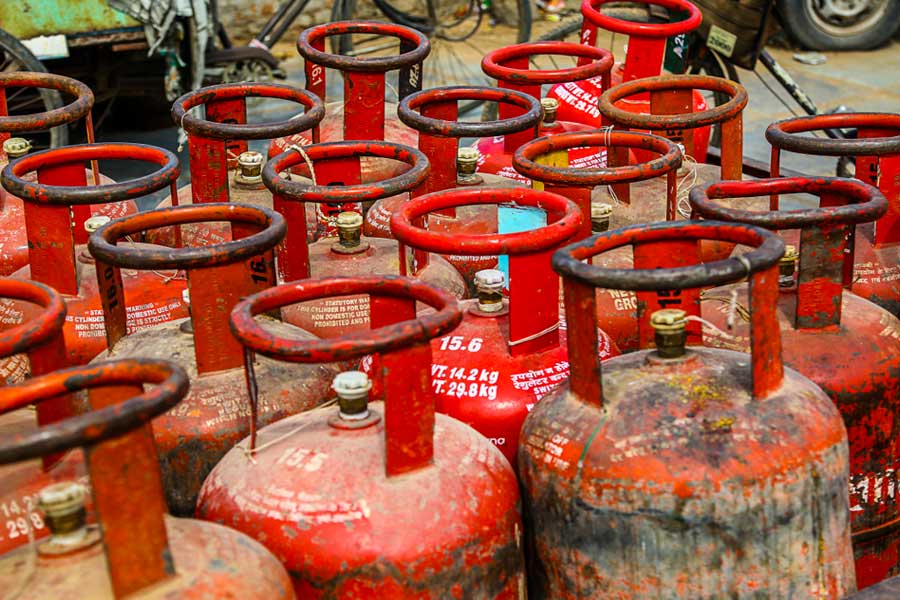
Liquefied petroleum gas, or LPG, the fuel delivered in cylinders to homes, is emerging as the most exposed part of India’s supply chain. Compared with crude oil and liquefied natural gas (LNG), LPG supplies are tighter and there are fewer fallback sourcing options.
“India imports around 80 per cent to 85 per cent of its LPG needs, with the majority sourced from Gulf suppliers and almost entirely transiting Hormuz,” said Sumit Ritolia, lead research analyst at Kpler. “Unlike crude, India does not maintain strategic LPG reserves of comparable scale, making LPG flows more logistically vulnerable.”
He said India had limited room to manoeuvre in finding replacement LPG supplies. While small additional cargoes might be secured from the United States, Russia or Argentina, those volumes would be modest and heavily dependent on freight costs and spot market availability.
Government officials say existing LPG stocks can last roughly 30 days. That cushion narrows quickly if cargoes scheduled for March are delayed and if households begin booking refills early out of fear.
Distributors in urban centres are reporting that consumers are trying to secure extra cylinders. Officials have urged people not to hoard, warning that panic buying can strain availability even before stocks run low.

India is the world’s second largest LPG importer and depends on the Middle East for more than 90 per cent of those purchases, according to Kpler data. Unless LPG vessels stranded near the Strait of Hormuz and scheduled to unload in March resume voyages within days, distribution problems could emerge quickly, analysts say.
The wider energy picture offers slightly more protection, but it is also worrying.
With Iran threatening ships travelling through the Strait of Hormuz, the most important route for Persian Gulf energy exports, and insurers withdrawing war risk cover, many tankers have stopped crossing the waterway. The result is effectively a blockade.
India normally imports about 2.5 million barrels a day to 2.7 million barrels per day of crude oil through Hormuz, largely from Iraq, Saudi Arabia, the United Arab Emirates and Kuwait. Over the past two to three months, refiners have increased purchases from the Middle East after reducing Russian volumes following pressure from the United States.
Although India has diversified its crude suppliers, Gulf barrels retain a logistical advantage. A tanker from the Gulf typically takes five to seven days to reach Indian ports, while cargoes from the Atlantic can take 25 to 45 days, adding freight costs and tying up vessels for longer.
For now, crude supplies are better cushioned than LPG. India holds nearly eight weeks of combined commercial and strategic reserves of crude and petroleum products, which can help weather an initial disruption.
Kpler tracking also shows Russian cargoes remain available in the Indian Ocean and Arabian Sea, including volumes in floating storage. If Gulf inflows tighten sharply, refiners could pivot back towards Russian crude grades relatively quickly.
Russia’s deputy prime minister, Alexander Novak, said on Wednesday that Moscow was ready to increase oil supplies to India and China.
Brent crude has climbed above $85 per barrel, levels last seen in mid 2024. Several brokerages see prices remaining in the $80 to $90 range if tensions persist, while JPMorgan Chase has warned crude could reach $120 per barrel if there is a sustained disruption of oil flows through the Strait of Hormuz.
Higher crude prices feed directly into India’s import bill and may widen the trade deficit. They can also lead to higher prices at the pump and for LPG unless the government absorbs the increase through subsidies.
LNG is also under pressure. India gets about 40 per cent of its LNG from Qatar which has shut down production completely. Spot LNG prices in Asian markets have surged, with recent prices around $25 per million British thermal units, roughly double many long term contract rates.
Petronet LNG, the country’s largest LNG importer, has issued force majeure notices on cargoes from Qatar amid production disruptions and security risks. Qatar Energy too has issued force majeure notices to its customers.
Qatar shut down LNG production on Monday at its Ras Laffan plant, the world’s largest export facility, after an Iranian drone strike. Force majeure is a contractual provision that allows companies to suspend deliveries when extraordinary events, such as war, make fulfilment impossible.
“Considering the prevailing security situation and the material risks posed to maritime navigation, the company has issued a force majeure notice to QatarEnergy in respect of its LNG tankers,” Petronet said.
Indian gas companies, including GAIL, Indian Oil and Bharat Petroleum, have warned industrial customers of reduced LNG allocations. Some sectors are reported to have seen 10 to 30 per cent cuts, while city gas distribution for households and CNG is being prioritised.
For consumers, crude can be supported by reserves and alternative sourcing. LNG shortages first hit industry and power generation. LPG, however, goes straight to kitchen stoves.
If the disruption in Hormuz lasts a week or more, officials believe the impact on consumers can be managed by drawing on inventories and reallocating supplies. A longer crisis would force India to lean more heavily on distant suppliers, raising freight costs and delivery times. “Hormuz remains a main artery in the energy security network. If that artery stays blocked, the supply pressure will be on,” says an energy analyst.