As war breaks out between the United States of America and Israel on one side and Iran on another, we behold the spectacle of a vast swathe of the world engulfed by a dangerous conflict that has spilled well beyond borders and is capable of disrupting not only the economies of the region but also all oil-dependent economies.
There are small mercies for us in South Asia, especially the Northeast. For once, after a brief and bitter conflict with Pakistan last year, on and off again tensions with China as well as worries about instability in Bangladesh, things appear to be calmer than before.
Conditions in Bangladesh are especially of importance for the region that comprises the eight northeastern states. This can be explained by the fact that Bangladesh is their biggest neighbour with a population that is over four times their size, a GDP that is expected to grow to $519.29 billion this year, with high-performing education and gender indices. For the Northeast, it can become the region’s largest trading partner and generator of visitors seeking to avail of the growing health sector while also enabling high tourism footfalls of well-heeled Bangladeshis. Most people, not just in the Northeast but across India, have the erroneous impression that Bangladesh is inhabited by poor people. There may be a majority of people with middling or low incomes but there are extremely wealthy individuals, business groups and families in Bangladesh who live well, invest wisely, and travel widely. It is this group that the tourism sector of the region should attract. But the constant haranguing, political campaigning and prejudiced use of the word, ‘Bangladeshi’, to mean illegal immigrants, especially in Delhi, West Bengal and Assam, means that such potential cannot be unlocked.
While the matter of illegal foreign nationals is a genuine issue in the region and cannot be wished away, it should not be mixed up with the need to attract Bangladeshi capital and travellers. Illegal immigration from Bangladesh is a convenient and ready political club to bash opponents with, accusing them of nefarious and anti-national activities that are never proven; nor has the number of alleged Bangladeshis in India been provided in any well-researched document. Yet, the issue is bound to figure in the upcoming elections in Assam and West Bengal.
On the other hand, PRAN, a leading Bangladeshi conglomerate, is already in the region, as are its excellent food products ranging from juices and frozen foods to snacks and biscuits. Started in 1981, PRAN now exports globally with major markets in Australia, New Zealand and Southeast Asia. The kind of work that PRAN does is a natural opportunity for partnership, economic skill-building and employment opportunities for the Northeast. The diverse and rich agricultural sector in the region provides the possibilities that we are speaking of — retaining traditional livelihoods and providing incomes, but also stable buyers and procurement prices. The shelf-life of farm products could improve with the use of technology.
The flight of Sheikh Hasina to New Delhi after her ouster in the wake of a huge public tumult in 2024 against her led to a freeze in relations between India — which was supportive of her — and the interim government headed by the Nobel laureate, Muhammad Yunus. This was reflected in a dip in formal economic relations, a drop in the issuing of visas to Bangladeshis, and the virtual closing of routes on the international border. It may not have caused much of a dent to the vast Indian economy but it certainly adversely affected those on the border who are dependent on border trade and local haats. They include underprivileged village and tribal communities. This approach also reinforced the views of those in Bangladesh who felt that Delhi only wanted a government that was not just friendly but dependent.
During the early period after Hasina’s ouster, there were extensive reports, especially in the Indian media, that Hindu minorities in Bangladesh were suffering extensive harm. The charges were stoutly denied by Bangladesh. Indian and international media professionals who have visited the country before and during the recent national elections say that the atmosphere was calm though competitive and concerns about being an Indian journalist were quickly brushed aside. However, the extensive attacks on the media, especially the offices of The Daily Star and Prothom Alo in Dhaka, revealed the entrenched prejudices of one particular group.
With Myanmar continuing to be in disarray, India must engage robustly with Bangladesh, which is now under the new regime of Tarique Rahman. The Bangladesh Nationalist Party won overwhelmingly in an election that was free of fraud but also free of its largest and most powerful opponent, Sheikh Hasina’s Awami League, which has been banned. While Rahman’s language has been refreshingly free of rhetoric so far — he has said that he wants good relations with India — New Delhi will be closely watching his moves towards Islamabad and Beijing. The BNP has long been close to both these nations.
What the new order in Dhaka wants was made clear to the Indian high commissioner, Pranay Verma, when the latter visited the home minister, Salahuddin Ahmed. Ahmed was quoted by official media as saying, “We don’t want to see any killing at the borders… The Indian side said they are also sincere about the matter.” This was a clear reference to shootings that have taken place over the decades when informal migrants try to cross the border from either side despite most of it being fenced by the Indian side. They move for different purposes — ranging from migration, smuggling and trafficking to marriage and visits to larger families for relatives continue to reside cross border.
Another point emphasised by Ahmed, who is a member of the BNP’s powerful Standing Committee, was that relations with India should be on “the basis of mutual respect and dignity”. Unlike the Awami League, the BNP is not likely to take kindly to aggressive posturing or insulting rhetoric by Indian politicians or the prejudiced branding of Muslim Bengali speakers as Bangladeshis.
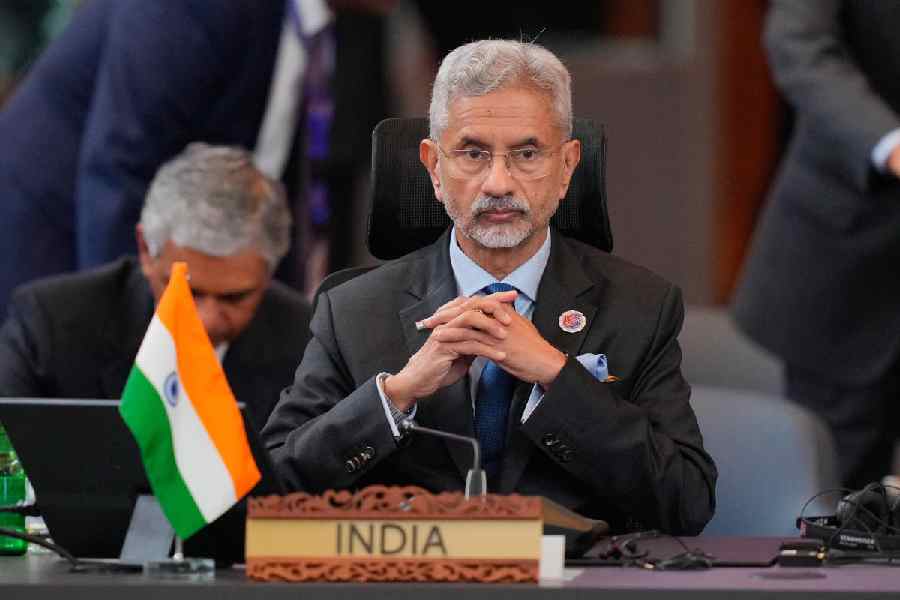
As the Centre’s much vaunted Act East and Neighbourhood First policies remain in some disarray — uncertainty in Nepal, civil war in Myanmar and an unknown entity in Bangladesh — it is time to mend the gaps. India should go the extra mile, open up routes and trade facilitation, enable people-to-people connectivity and open the visa offices again. This is in our enlightened self-interest — otherwise both Beijing and Islamabad will be only too delighted to take advantage of the breach. It is time for India’s top diplomat, S. Jaishankar, to set out on a mission to ease the India-Bangladesh relationship and smoothen the troubled waters.
Sanjoy Hazarika is a writer who specialises on the Northeast and travels extensively in the region