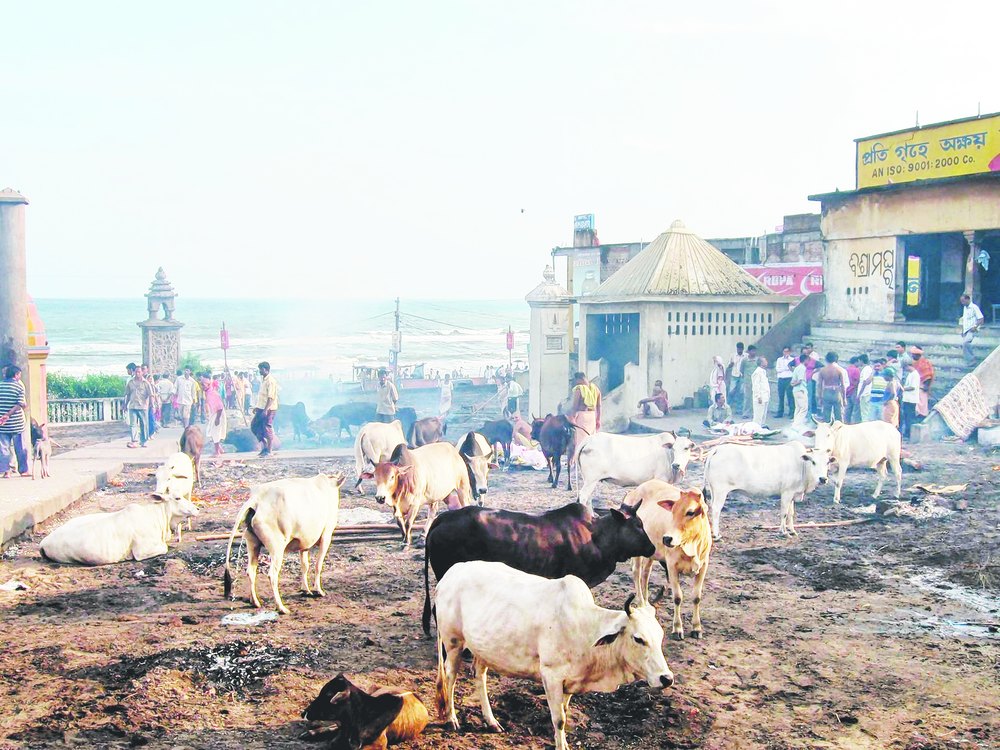

New Delhi, May 5: The Delhi-based principal bench of the National Green Tribunal today warned that it would take coercive steps against the Odisha government and senior officials if they failed to fully control pollution from the open cremation of bodies at Swargadwar off Puri beach by July 30.
The bench consisting of Justice Swatanter Kumar, chairperson and members D.K. Agrawal and Bikram Singh Sajwan ordered that "officers of the municipal corporation, pollution control board and the state government would ensure that pilot project of the cremation ground is properly altered and become fully operational before the next date of hearing," which is July 30.
An amount of Rs 40 lakh has been spent to set up the pilot project at Swargadwar.
"If now these officers fail to comply with the directions, we will be compelled to take coercive steps against them personally as well as against the government," further stated the bench.
Petitioner Subhas Datta submitted that similar cremation system had been operating without hitch at Nimtala ghat in Calcutta.
Earlier during hearing, the Puri Municipality reported to bench that the project commissioned for burning bodies within the enclosed area at Swargadwar to control air pollution in the surroundings has all but failed.
The municipality submitted that only eight bodies could be burnt within the newly commissioned system in the past two months, while 1,764 bodies were burnt in the open.
During earlier hearings in response to a PIL, filed by environmentalist Subhas Datta, the bench had repeatedly directed the Odisha administration to ensure that the pollution from open pyre burning of bodies at Swargadwar was prevented after the state pollution control board report had confirmed significant air pollution caused by the open burning of nearly thousand bodies every month. In response, the municipality submitted that they would be controlling the pollution by treating the fume after the bodies were burnt within an enclosed zone.
According to the municipal sources the entire enclosure, while burning a body, gets extremely hot, and at least eight hours is required between the burning of two bodies.
Senior officials, including urban development commissioner, chairman and executive officer of the municipality, member secretary of the pollution control board and chief engineer of the sewage board, were present during the hearing.