
Bhubaneswar, Oct. 26: The recent fire at the IMS and Sum Hospital has stirred the civic body into action, which has issued a directive to all shopkeepers to remove combustible materials from their shops.
Mayor Ananta Narayan Jena said the civic body had directed all market associations to install fire-fighting mechanisms, including fire hoses and extinguishers.
On October 18, a fire that broke out on the first-floor Intensive Care Unit of Sum hospital killed 25 people and injured several others, raising questions over fire safety measures in place at one of the city's top private health care centres.
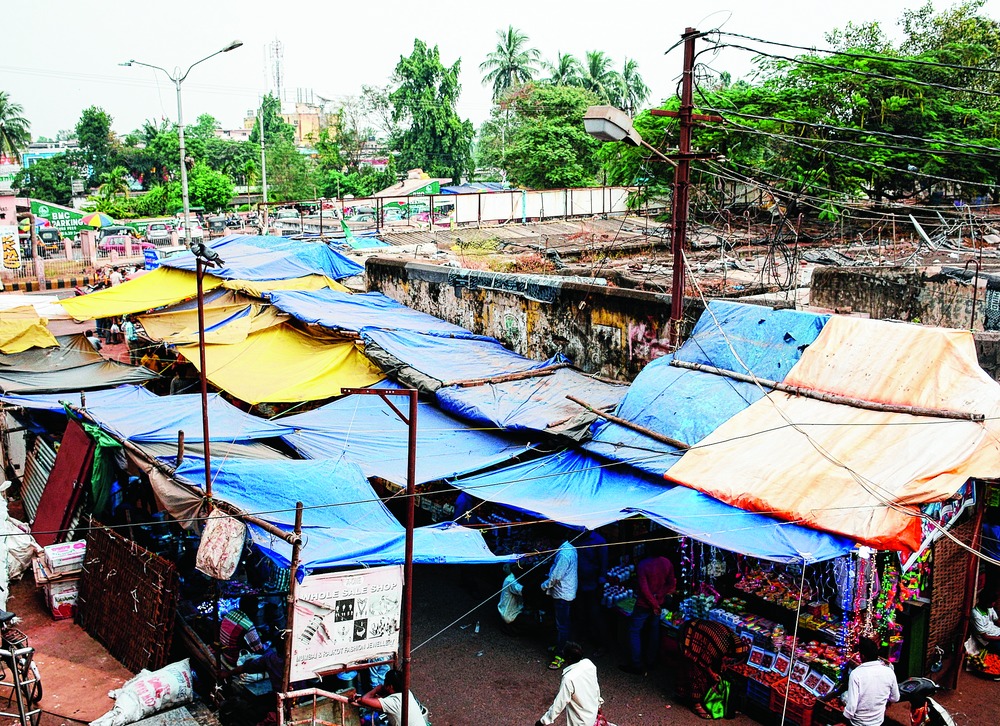
The Bhubaneswar Municipal Corporation's Unit-I market area, which also doubles as a vegetable market, has several makeshift shops that run under polythene sheets. Besides, some shops are also covered with thatched roofs that are inflammable in the event of a short circuit.
A fire on November 13, 2013, at the market place gutted 29 shops and partially damaged six more. It had taken six fire tenders nearly three hours to douse the flames. The total cost of the damage was estimated to be around Rs 5 crore.
A few betel shops at the market also indulge in illegal sale of petrol, another highly inflammable item. Fire safety at the market remains a concern because of the congested bylanes and overhead wires.
Subhankar Behera, 54, a vegetable vendor at the Unit-I market, said the authorities were yet to take concrete steps to prevent the outbreak and spread of a possible fire in the area.
"Market association president Gayadhar Swain had urged the civic body to take steps to change the electrical wiring and replace it with underground cables. But the civic body has done nothing," he said.
Officials of the fire department had said the congested entry points made it difficult for fire tenders to enter the premises on November 13, 2013.
The Kochilei haata at Rasulgarh faces a similar problem. The market's main gate remains perennially blocked by vehicles, mostly two-wheelers parked there. Several makeshift vegetable shops in the market use polythene sheets as sheds and some also sell petrol and LPG cylinders.
The other approach to the market from the Rasulgarh Industrial Estate side, too, is congested.
Bipin Nayak, 32, a trader at the market, said it ran the risk of catching fire any day.
"The municipal corporation should take care of the haphazard overhead wiring here to prevent short circuits. The market also has hotels that use LPG cylinders. The civic body should monitor the use of cooking gas at these establishments as well," he said.
The civic body's guidelines state that no shop in crowded areas would be allowed to use combustible materials. Besides, they would also be required to install fire safety mechanisms to prevent any mishap.
However, the civic body itself was yet to form a fire safety enforcement squad to conduct checks on buildings and market places. The squad was mooted at a district-level disaster management plan meeting in February.
Mayor Jena said the civic body's directive included all market places across the city and not just those under its ownership. He added that the civic body had directed all market associations to install fire-fighting mechanisms that associations would have to bear the cost of installing.
"We will take stringent action, including cancellation of allotment, against the shops that defy the guidelines," he said.