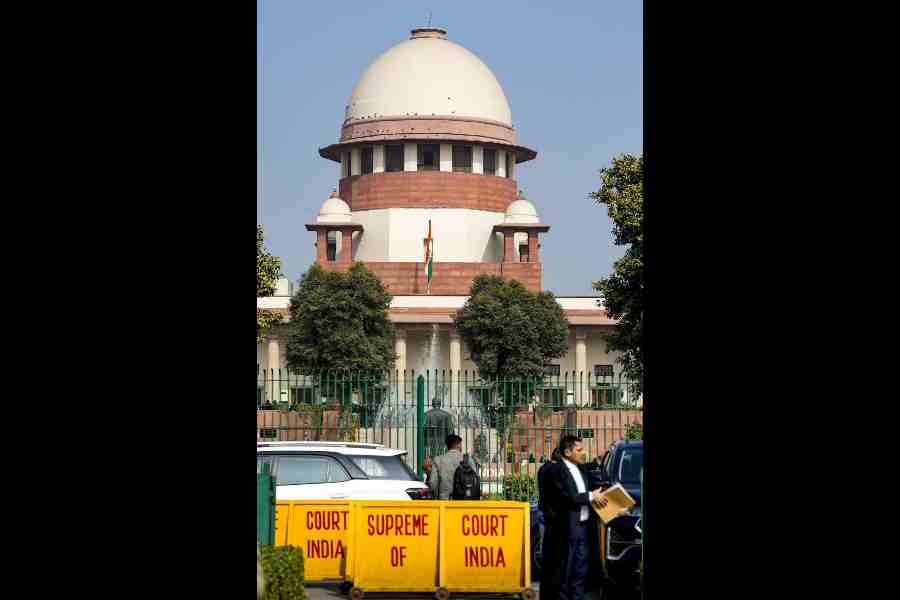
The Supreme Court on Thursday did not allow a writ petition filed by Congress Rajya Sabha MP Jairam Ramesh challenging the grant of retrospective environmental clearances.
“All this is just for media publicity,” Chief Justice of India Surya Kant told Ramesh’s counsel during the hearing.
In January, Ramesh had filed a petition before the apex court challenging the practice of granting environmental clearances to projects after the construction work had begun.
Ramesh had argued that the practice was unlawful, detrimental to public health and undermined governance.
The CJI led bench with Justice Joymalya Bagchi questioned why Ramesh did not file a review petition instead of a writ petition.
“Why did you not file a review? You are just raising all these grounds in writ. In a writ, how can you seek a review of a judgement and if you do then be ready to face exemplary costs,” the CJI said.
Ramesh’s counsel informed the court that they wanted to withdraw the petition, which was allowed.
The plea challenged the ruling made by a three-Judge bench of the apex court in November last year.
The Environment Impact Assessment (EIA) rules 2006 make it mandatory for projects to get environmental clearances before commencement of the groundwork.
Twice, in 2017 and 2021, the government had allowed some projects to seek clearances after the groundwork had already started.
In May 2025, the Supreme Court ruled that retrospective clearances violated environmental and constitutional principles and ruled any construction project without environment clearances as illegal.
Six months later, hearing a review petition filed by the Confederation of Real Estate Developers of India (Credai), the bench ruled that demolitions would add to further pollution.