A nurse infected with the Nipah virus died at a private hospital in North 24-Parganas Barasat on Thursday afternoon after weeks of critical illness and multiple complications.
The nurse was taken ill and admitted at the hospital days after one of her male colleagues had taken ill and displayed identical symptoms. Both slipped into a coma and were on ventilation support for days.
The male nurse had recovered and was discharged from the hospital around a week ago. Tests conducted on January 11 confirmed that both the nurses had contracted Nipah and soon slipped into a coma.

The woman had been on prolonged ventilation support, according to regional media reports. She was taken off ventilation at the end of January after showing signs of improvement. But she developed breathing difficulties again.
Medical tests revealed that after spending an extended period in critical care, she developed a secondary infection in her lungs. She was put back on ventilation on Wednesday.
After remaining in a coma for a long time, her immunity had dropped. She also developed a lung infection, which worsened her condition.
Despite intensive treatment, she died on Thursday afternoon at the private hospital in Barasat. Earlier, hospital officials had said she remained on ventilation by tracheostomy, with stable oxygen requirements.
Her blood pressure was being maintained with vasopressor support, though the dosage had been reduced. Neurologically, her status remained unchanged, with no seizure activity noted.
While her biochemical parameters had shown some improvement, her condition remained critical.
In contrast, the male nurse showed steady recovery. He tolerated oral intake well and had been mobilised out of bed under close clinical observation. He also completed the prescribed antiviral course.
Repeat Nipah RT-PCR tests for him returned negative on two separate occasions. He was discharged from hospital and will remain in home isolation for at least another week with necessary precautions.
The World Health Organisation has assessed the risk of wider spread of the Nipah virus as low following the confirmation of three recent cases in India and Bangladesh.
Speaking at a news briefing in Geneva on Wednesday, WHO Director-General Tedros Adhanom Ghebreyesus said that while the two cases in West Bengal and one in Bangladesh were concerning, they did not point to sustained community transmission or a broader outbreak.
In public health terms, a “low risk” assessment indicates that the infections remain limited and contained, with no evidence so far of widespread circulation in the community.
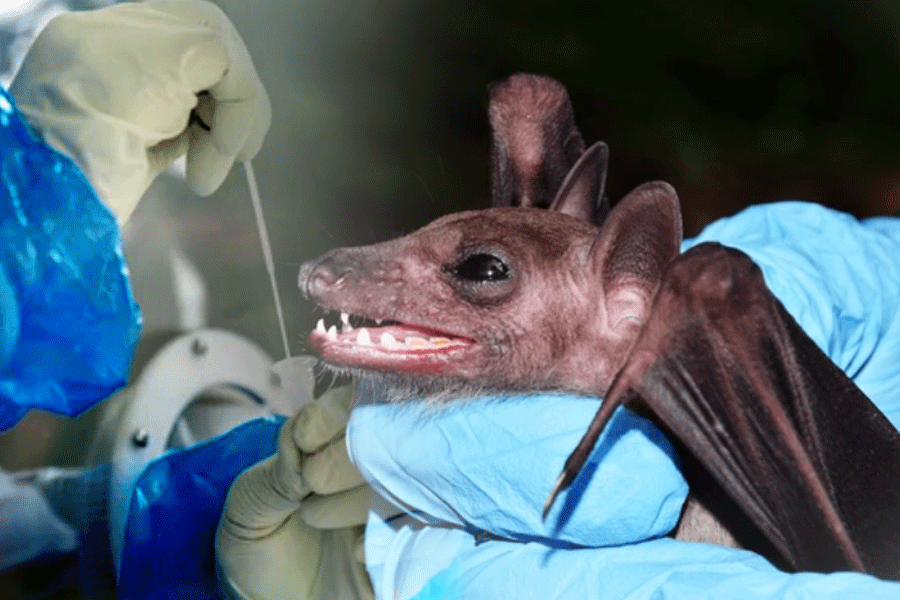
Health authorities, however, continue active surveillance and contact tracing, given that Nipah is a high-fatality zoonotic virus with no approved vaccine and a case fatality rate ranging between 40 and 75 per cent, depending on the strength of local healthcare systems.