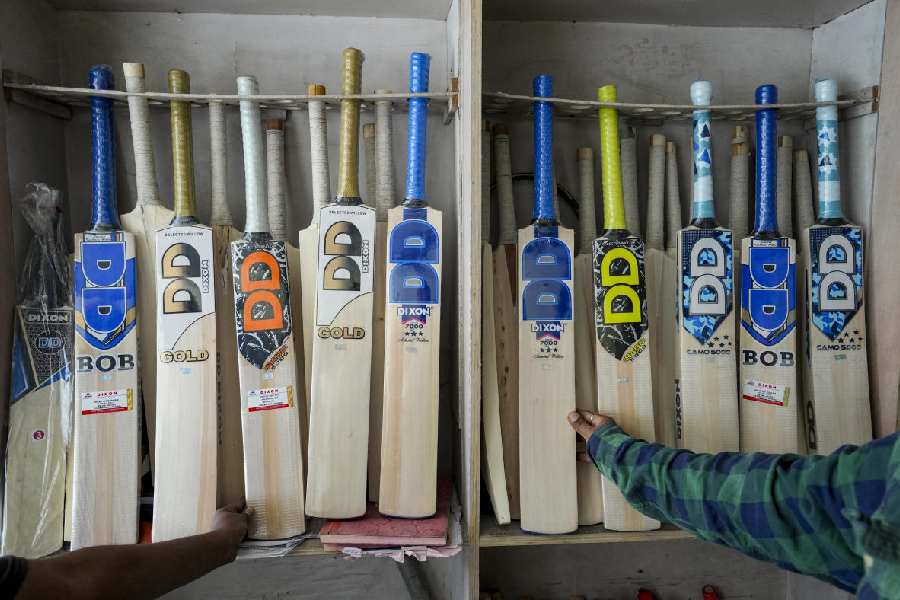
When Bhanuka Rajapaksa suggested that Indian cricketers use bats that are “different” and unavailable in the open market, the remark snowballed into one of the biggest off-field debates of the 2026 T20 World Cup.
Rajapaksa said India’s bats appeared to generate unusual power, remarking that it felt “as though a layer of rubber” had been applied inside.
He called this an “open secret” among professionals and implied that even other international players could not access them.
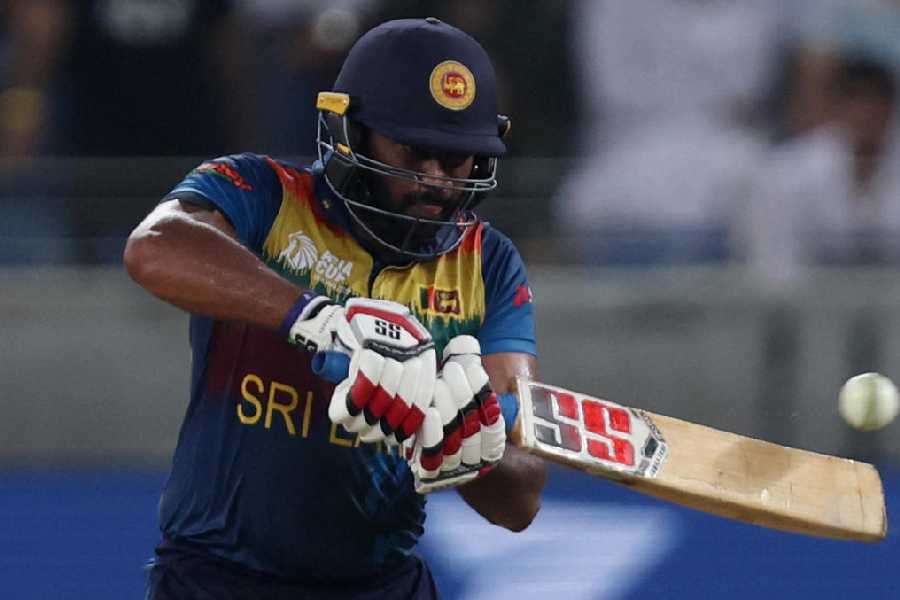
But on Wednesday night, Rajapaksa clarified his remarks. In a statement on social media, he said his words had been misinterpreted and “lost in translation”.
He also stressed that he had intended to praise the advanced infrastructure and standards of Indian bat manufacturers rather than tampering.
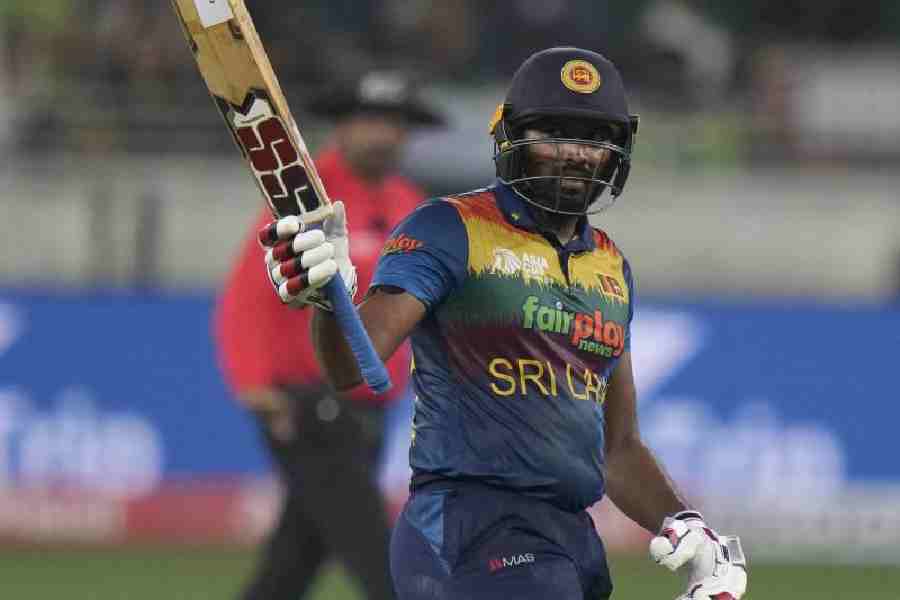
The clarification has changed the tone of the debate. If there is no illegality, what explains the perception that Indian bats sound louder and travel farther?
Busting the myth
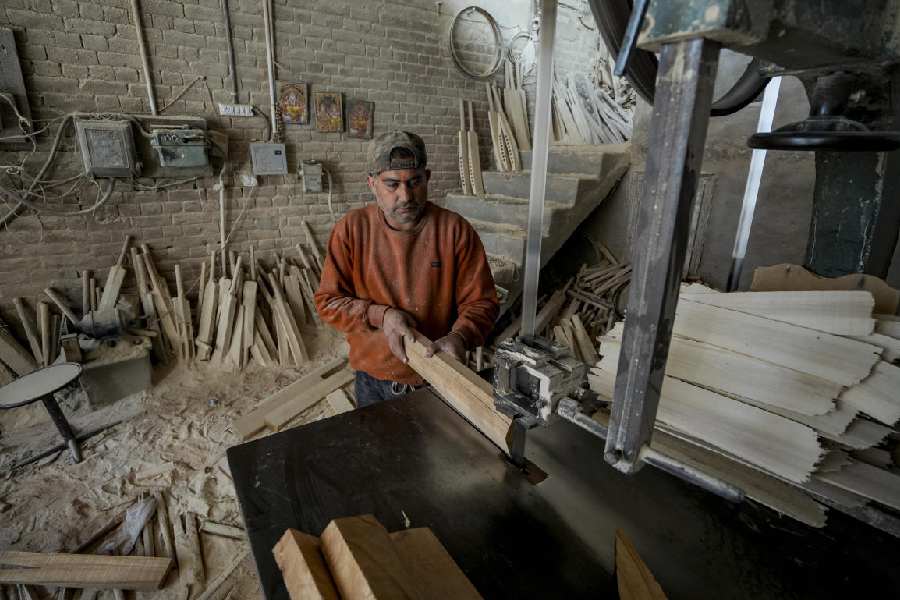
A worker carves a cricket bat at a workshop, ahead of the ICC Men's T20 World Cup 2026, in Jalandhar/ PTI
To examine that, The Telegraph Online spoke to bat manufacturers in Meerut and Jalandhar, India’s two principal bat-making hubs.
Top international players, they said, use Grade 1 or Grade 1+ English willow imported from the United Kingdom. The botanical source remains Salix alba var. caerulea, the same species used by leading English and Australian brands.
There is no special domestic-only Indian willow dominating world cricket.
“Raw willow quality at the highest level is the same worldwide,” said a senior Meerut craftsman who has shaped bats for several IPL players.
“The difference is in selection and shaping. Every professional chooses his own cleft. That cleft is reserved before retail grading,” he added.
The ‘cleft’ is unique for every elite player
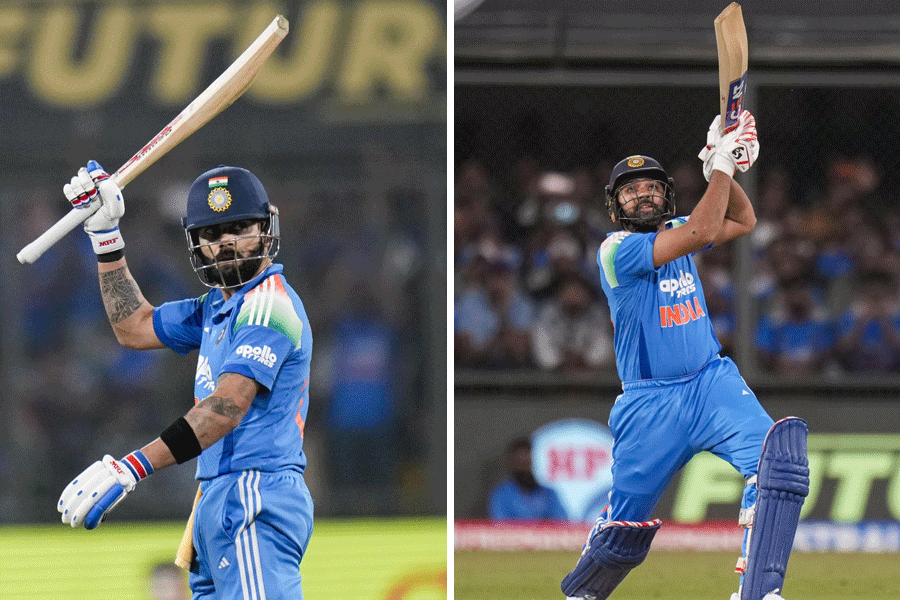
Virat Kohli/ Rohit Sharma
The cleft (the rough-cut block of willow from which a bat is carved) is unique for every elite player.
Manufacturers explained that professionals either visit workshops or send detailed specifications covering weight, balance, edge thickness and sweet spot placement.
The cleft is then pressed, carved and hand-finished to those exact requirements.
Hydraulic presses can apply up to two to three tonnes of pressure to compress fibres, hardening the surface for immediate use against 150kph bowling while preserving rebound.
The exact bat used by a contracted international, they stressed, is not available in retail stores anywhere in the world.
“You cannot buy the same bat used by an Indian international,” said a Jalandhar-based manufacturer. “But you also cannot buy the exact bat used by an English county captain or an Australian opener. Those are player-only selections.”
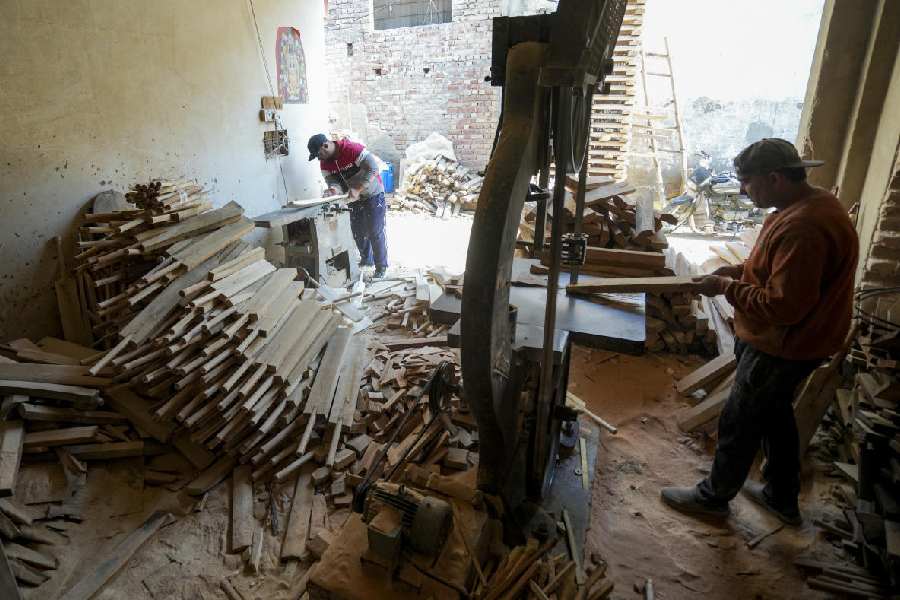
Workers carve cricket bats at a workshop, ahead of the ICC Men's T20 World Cup 2026/ PTI
Retail “Players Edition” models may look similar, but they are not identical in grain structure, pressing intensity or balance. That distinction is global practice, not Indian exclusivity.
The manufacturers were categorical on another point: ICC size regulations are universal. There is no Indian-specific leeway.
Under MCC Law 5, enforced at ICC events, bats must not exceed 108mm in width, 67mm in depth and 40mm in edge thickness. The maximum overall length is 38 inches.
Before every international match, fourth umpires use a bat gauge.
If a bat fails to pass through the slot, it is rejected. Using an illegal bat during play can result in five penalty runs under unfair play provisions and further sanctions under the ICC Code of Conduct.
“There is no way a rubber insert would pass inspection,” one manufacturer said. “It would alter density, sound and balance. It would be detected immediately.”
Specs of India’s power hitters explained
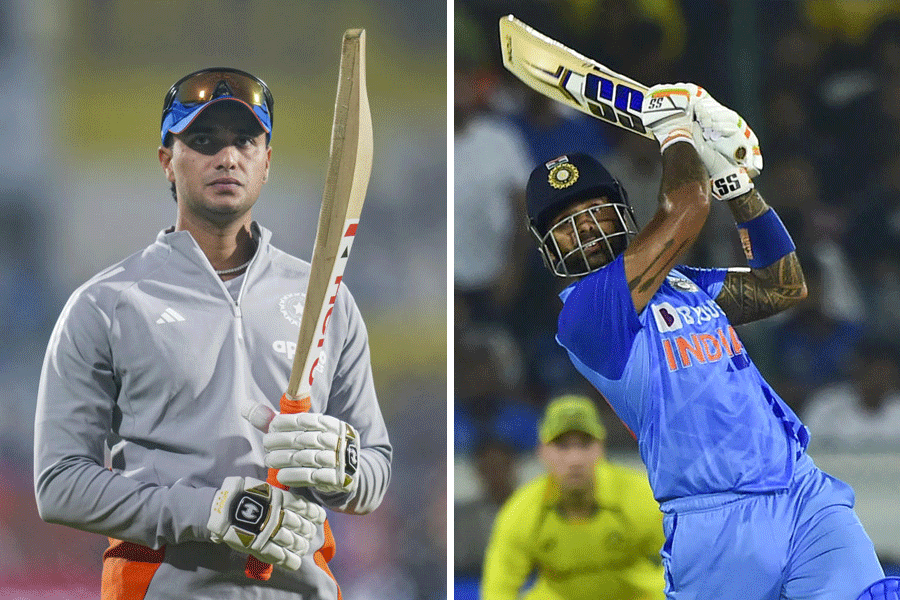
Abhishek Sharma/ Suryakumar Yadav
The specifications of India’s leading T20 batters further illustrate that performance gains stem from legal profiling rather than hidden materials.
Abhishek Sharma uses the SS Super Select Players Edition. His bat typically weighs between 1080g and 1100g, exceptionally light for a power-hitter.
Edge thickness ranges from 33mm to 36mm, with pronounced concaving and a nine-piece Sarawak cane handle designed for shock absorption and bat speed.
Suryakumar Yadav, known for his 360-degree strokeplay, uses the SS Ton SKY Original Players Bat. It generally weighs between 1150g and 1190g, with edge thickness touching 38mm to 40mm and a spine height of around 62mm to 65mm.
The profile features a mid-to-low sweet spot and a semi-oval handle to aid wrist rotation.
Rohit Sharma uses the CEAT Hitman Edition, typically weighing 1160g to 1200g, with edges approaching 39mm to 41mm and a massive spine designed to maximise the hitting zone for pull shots and lofted drives.
Virat Kohli favours the MRF Genius Grand Edition, usually between 1160g and 1220g, often with 38mm to 42mm edges.
His bat features a “duckbill” profile, shaving weight from the toe to maintain balance toward the handle and facilitate quick-handed drives.
All remain within ICC-prescribed limits.
The history of spring bat
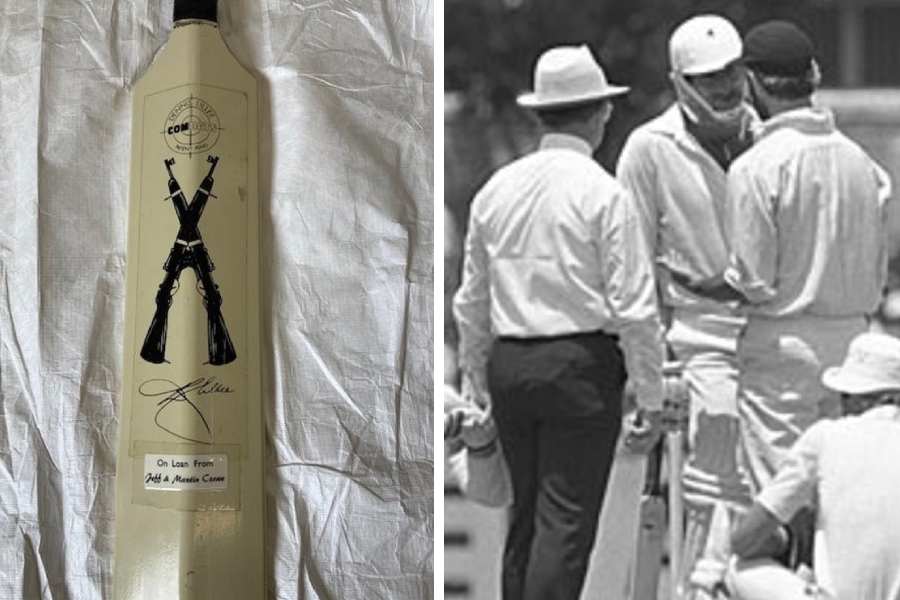
The aluminium Bat (L)/ Dennis Lillee argues with Mike Brearley over the legality of Lillee's aluminium bat (R)
The anxiety around “spring bats” is now new. In 1979, Dennis Lillee walked out at Perth wielding an aluminium bat, triggering a standoff and a swift clarification that blades must be made of wood.
In 1996, when Sanath Jayasuriya revolutionised ODI batting, rumours circulated about hidden reinforcements.
In 2003, after Ricky Ponting’s 140 in the World Cup final, conspiracy theories resurfaced.
None were substantiated.
What has changed in the last decade is not the material but the method.
The ‘Method’
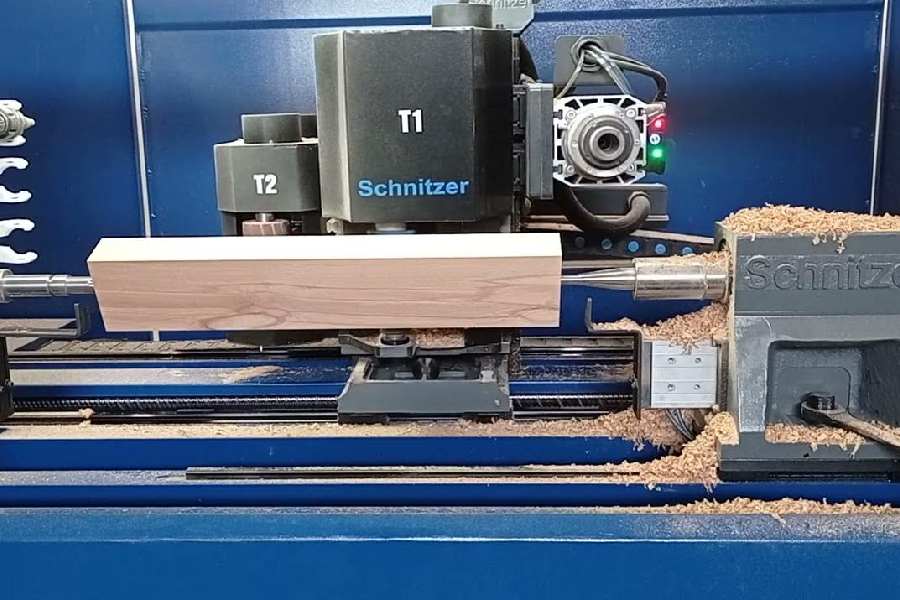
CNC precision shaping of a cricket bat cleft
Indian manufacturers have upgraded in pressing technology, CNC precision shaping, moisture control and handle construction. Multi-piece Sarawak cane handles layered with rubber inserts for shock absorption are now standard.
The IPL has acted as a testing laboratory, allowing rapid iteration between players and craftsmen. Feedback loops are tighter, turnaround times shorter and profiling more data-driven.
The result is bats with thicker edges yet lighter pick-up, enlarged sweet spots positioned lower in the blade for subcontinental tracks and sharper rebound due to optimal pressing. The louder “ping” that fuels perception is a by-product of compressed fibres, not concealed polymers.
Rajapaksa’s walk-back acknowledged as much. His clarification reframed the issue as one of manufacturing excellence rather than manipulation.
The raw wood still comes from England. The size laws remain universal. The inspections are mandatory.
What has improved is the craft.
In cricket, extraordinary hitting has always triggered extraordinary theories. In 1996 it was steel. In 2003 it was springs. In 2026 it was rubber — before being walked back.
The bat remains wood. The difference lies in how expertly it is shaped.