Wednesday, 17 June 2026
Wednesday, 17 June 2026
Wednesday, 17 June 2026
Bangladesh voted on Thursday amid sporadic violence at polling stations, in the first general election since former prime minister Sheikh Hasina was ousted, with early turnout indicating strong voter participation.
Turnout nears 33% by noon
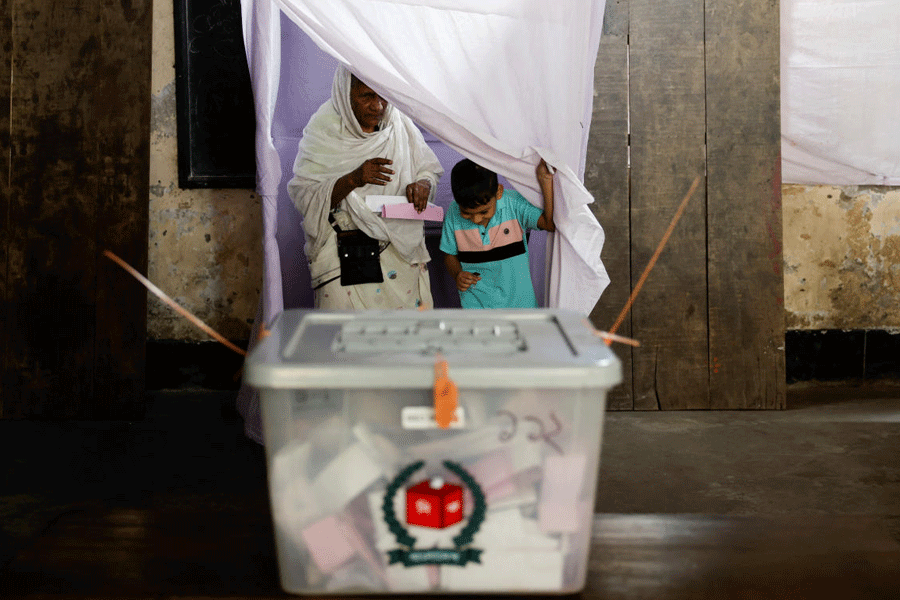
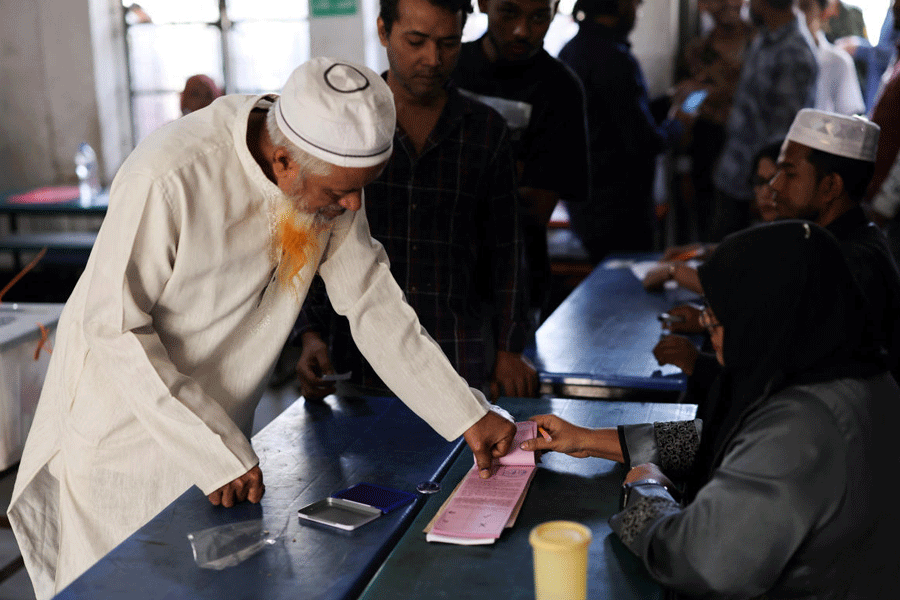
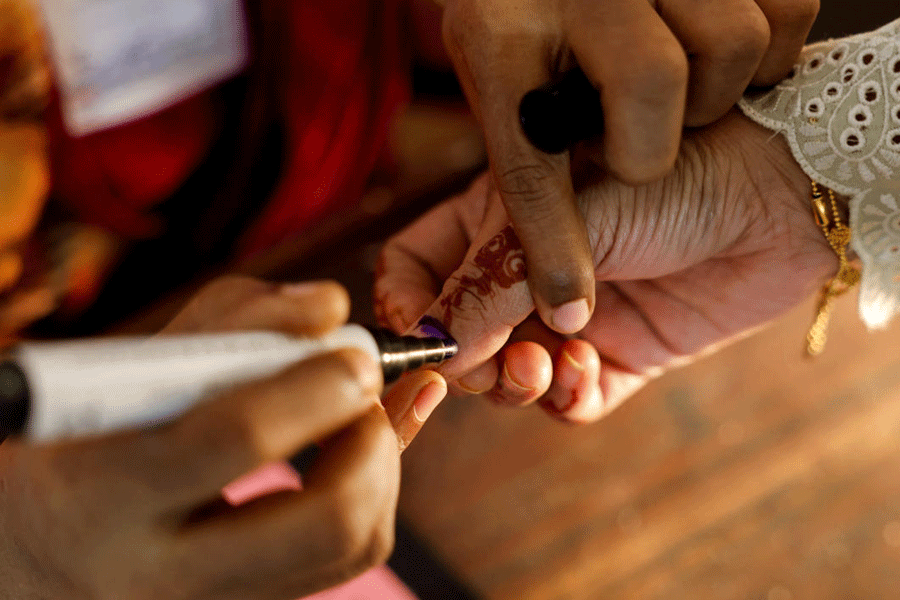
Voting began across Bangladesh in a crucial general election, the first since the ouster of long-time prime minister Sheikh Hasina in massive nationwide protests two years ago. Polling started at 7:30 am local time in 299 of the 300 parliamentary constituencies and will continue until 4:30 pm, with vote counting expected to begin shortly after.
The Election Commission (EC) said voter turnout stood at 32.88 per cent by noon, with ballots cast at about three-fourths of the country’s polling centres. The update was shared at a briefing at 12:45 pm.
EC Senior Secretary Akhtar Ahmed said voting was continuing nationwide despite isolated incidents of violence. “So far, voting has not been suspended in any polling centre. There is no alarming situation,” he told reporters, according to The Dhaka Tribune. Voting in one constituency was cancelled due to the death of a candidate.
Sporadic violence, injuries reported
Despite heavy security, election-day violence was reported from several areas. In Gopalganj, three people, including a 13-year-old girl and two members of the Ansar force, were injured in an alleged hand bomb attack at a polling station. Presiding officer Zahirul Islam said the injuries were minor and voting resumed shortly after.
In Munshiganj-3, between 10 and 12 crude bombs were detonated outside a polling centre, briefly disrupting voting. “We stopped voting briefly, but it has now started again and people are casting their ballots,” presiding officer Md Titumir said.
A BNP leader, Mohibuzzaman Kochi (55), died following an altercation with Jamaat activists outside a polling centre in Khulna, with rival parties offering conflicting accounts of the incident.
Overnight, clashes and allegations of ballot stuffing were reported in parts of Sylhet, Joypurhat and Dhaka, leading to arrests and security interventions. Jamaat chief Shafiqur Rahman, in a midnight Facebook post, dismissed reports of irregularities as “rumours,” urging citizens to ignore what he called a “laylatul gujob” or night of rumours.
Massive security deployment, new technology
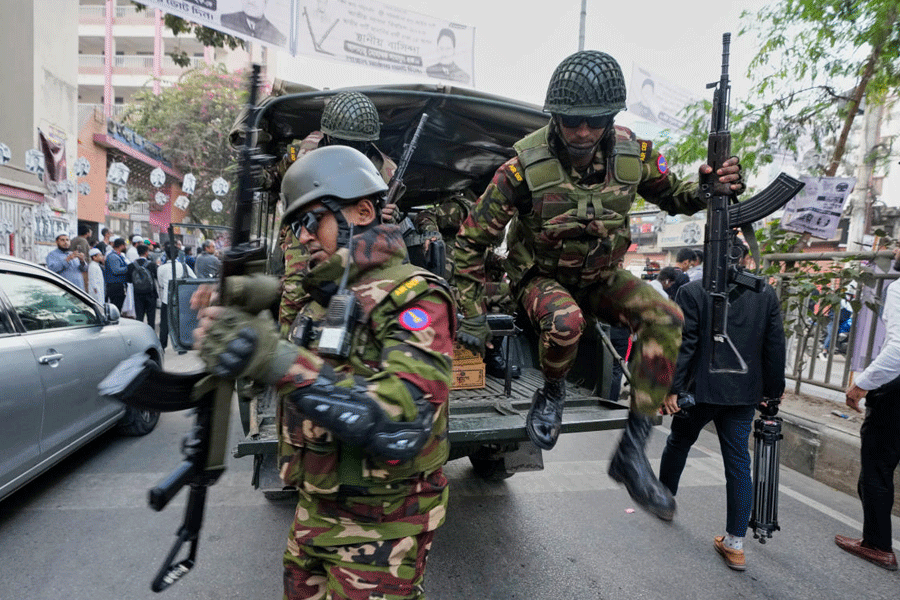
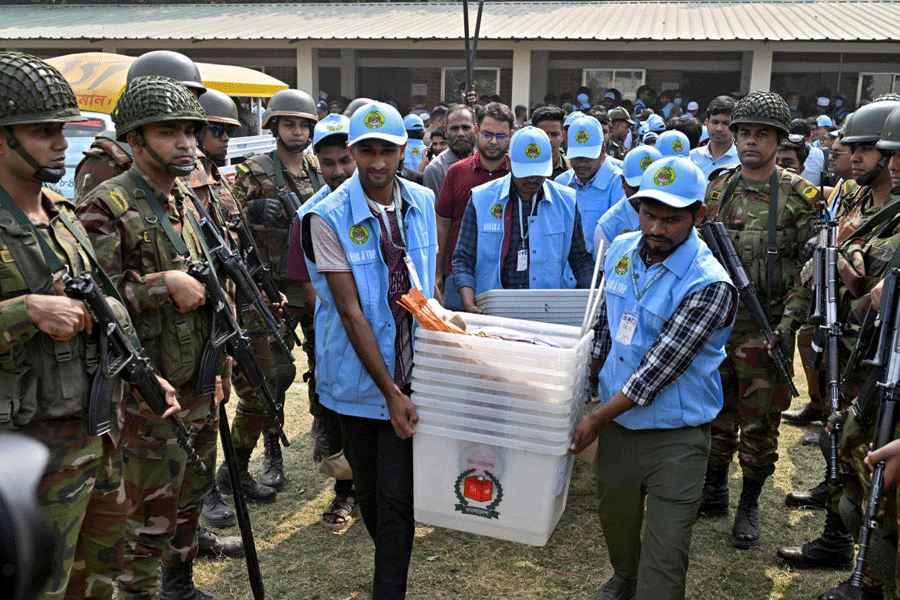
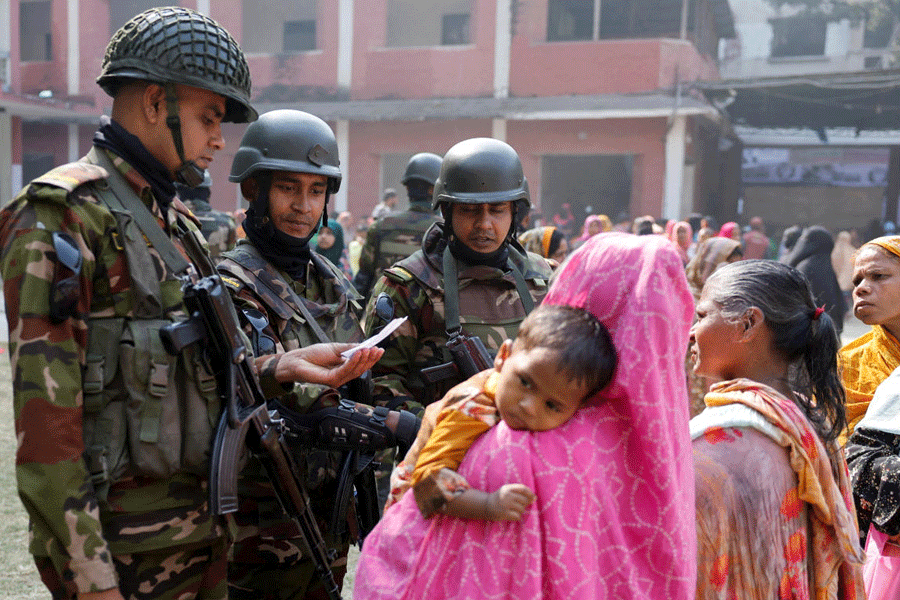
Authorities have rolled out the largest-ever security operation for a Bangladeshi election, deploying close to one million personnel from police, army and paramilitary forces. Armoured Personnel Carriers and Rapid Action Teams have been positioned in sensitive areas, while drones and body-worn cameras are being used for the first time.
Police flagged over 1,600 of Dhaka’s polling centres as risk-prone, though the army said only two centres in the capital were classified as “risky.”
Voters turn out with hope, leaders appeal for calm
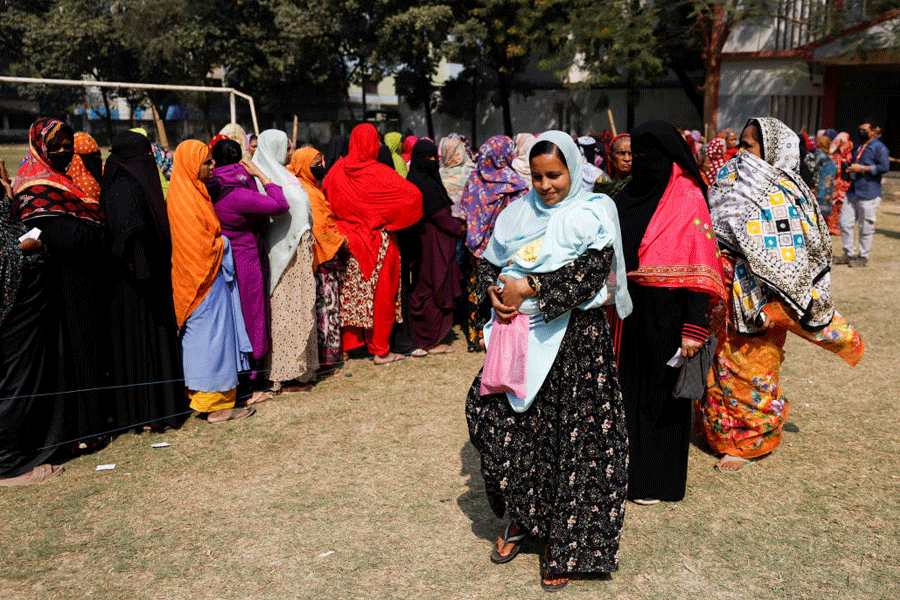
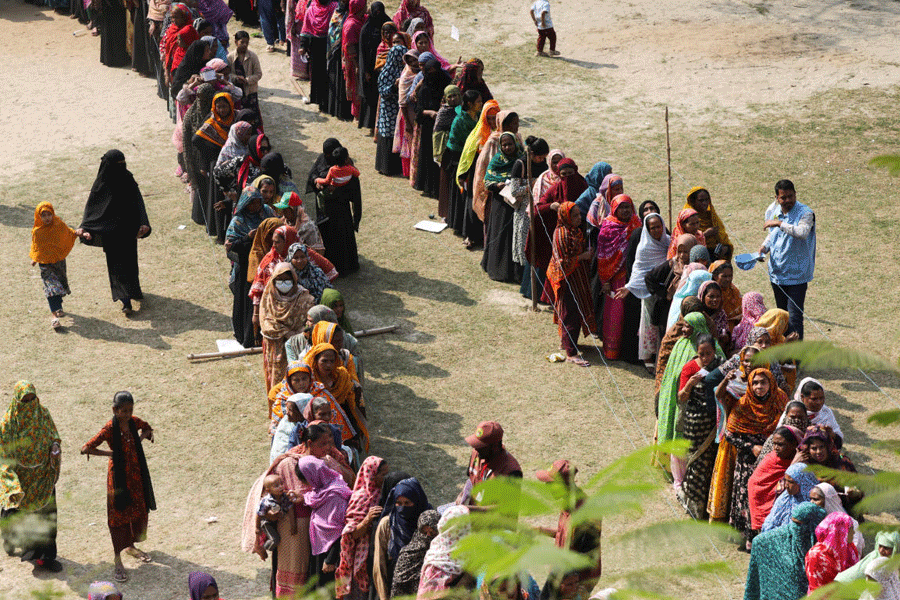
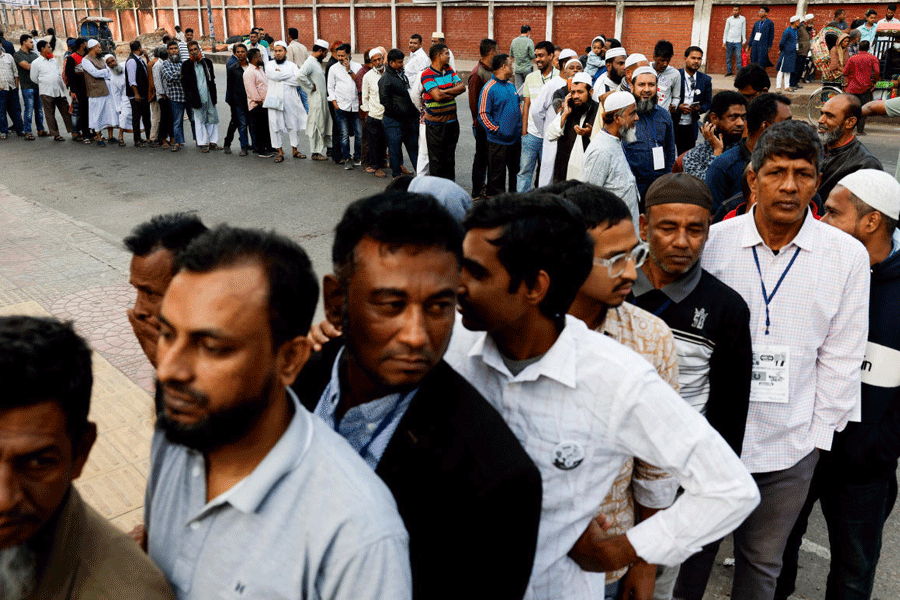
Long queues formed outside polling stations, particularly in Dhaka, with many voters expressing optimism after years of disputed elections.
“I am feeling excited because we are voting in a free manner after 17 years,” said Mohammed Jobair Hossain, 39. “Our votes will matter and have meaning.”
BNP Chairman Tarique Rahman urged citizens to vote peacefully, saying on Facebook: “Dear pro-democracy brothers and sisters, I request everyone to exercise their voting rights in a festive and peaceful environment. Vote for whomever you deem fit.”
Chief Adviser Muhammad Yunus, after casting his vote, described the day as one of “great joy,” calling it “the birthday of the new Bangladesh.” He said the nation had “completely renounced the nightmarish past” and extended greetings to the public, saying “Eid Mubarak.”
Chief Election Commissioner AMM Nasir Uddin also appealed for calm, asking voters to cast their ballots freely and maintain a peaceful atmosphere. Representatives from 45 countries and organisations are observing the polls.
High-stakes contest without Awami League
The 13th parliamentary elections are being held alongside a referendum on a complex 84-point reform package, including proposals for a neutral interim government during elections, a bicameral parliament, greater women’s representation, judicial reforms and a two-term limit for the prime minister.
The contest is mainly between the Bangladesh Nationalist Party (BNP) and the Islamist Jamaat-e-Islami, former allies now locked in a fierce race. Hasina’s Awami League has been barred from contesting after it was disbanded last year by the interim government led by Chief Adviser Muhammad Yunus.
A total of 1,755 candidates from 50 political parties and 273 independents are in the fray. The BNP has fielded the highest number of candidates at 291, while 83 women are contesting. Analysts say a decisive result is crucial for stability in the country of 175 million, following months of unrest that disrupted key industries, including the garments sector.
Polling to end at 4:30 pm
Polling will conclude at 4:30 pm, with early trends expected around midnight and results likely to become clear by Friday morning. Alongside the election, nearly 800,000 expatriate Bangladeshis are voting for the first time through an IT-based postal ballot system, while first-time voters account for about 3.6 per cent of the electorate.
“The crucial test for Bangladesh now will be to ensure the election is conducted fairly and impartially, and for all parties to then accept the result,” said Thomas Kean of the International Crisis Group, calling the vote a key moment for democratic renewal.
With inputs from Reuters and PTI