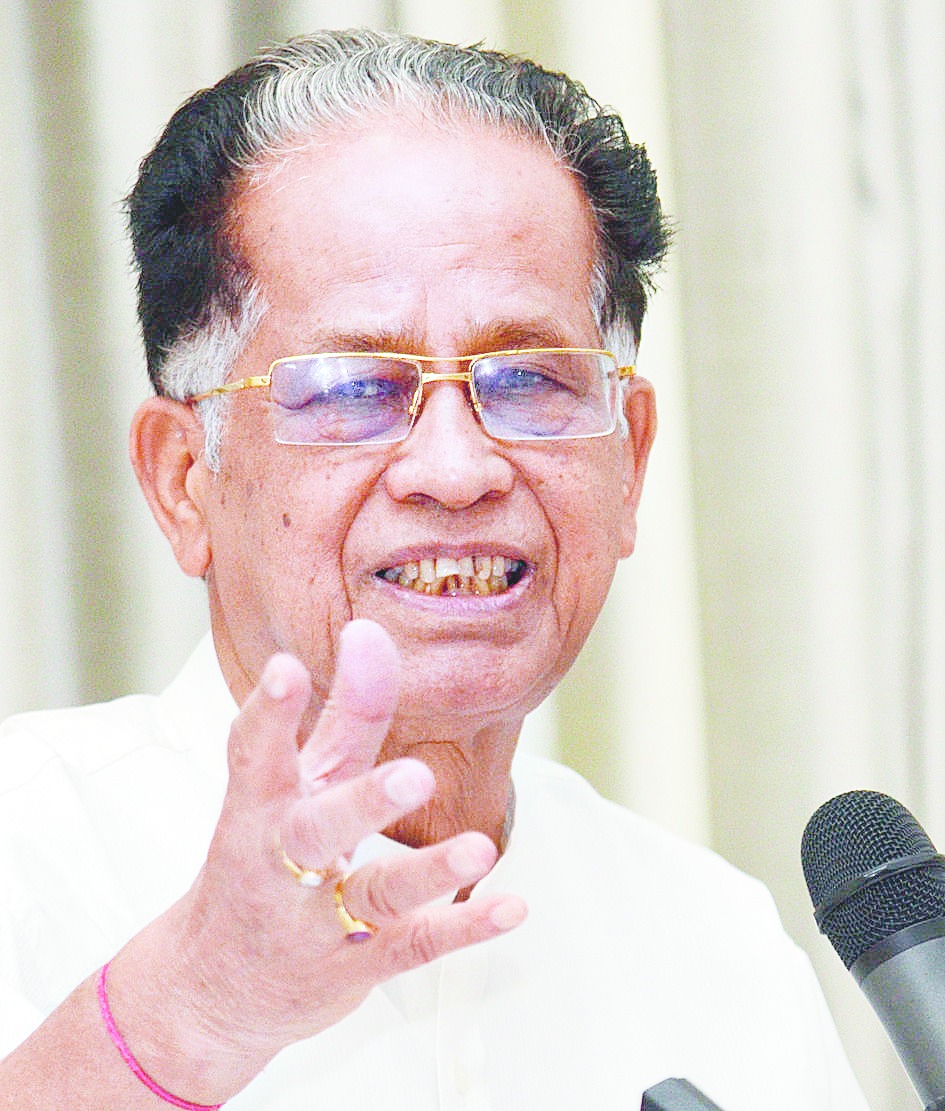

Guwahati, Oct. 17: Assam chief minister Tarun Gogoi today welcomed the Supreme Court's judgment that declared the constitution of the National Judicial Appointment Commission "unconstitutional and void".
In a statement issued here, Gogoi said the legislature, the executive and the judiciary have to work in tandem for a strong and healthy democracy.
He said the independence of the judiciary has to be maintained to ensure justice, uphold the fundamental rights of the people and remove the inequities from which the anti-democratic forces derive their sustenance.
"The manner in which the central government tried to have some sort of a control over the judiciary by trying to replace the collegium system is not in consonance with the spirit of our democratic polity. The legislature, the executive and the judiciary have to work together for a healthy democracy and that is the cardinal principle of our Constitution," the chief minister said.
Gogoi also criticised the Modi government for its alleged attempts at influencing education and culture with Hindutva ideology.
"The central government's attempts at saffronising education and culture with Hindutva ideology are not in conformity with the Constitution's cultural diversity and pluralism."?
In this context, the chief minister also took a dig at Assam governor P.B Acharya for nominating RSS ideologues to the Dibrugarh University court.
Eminent person plan
The inclusion of two "eminent persons" in the selection panel and a veto power were among the components in the judges' law that drew the maximum glare of the apex court yesterday.
"It is also difficult to appreciate the wisdom of the Parliament to introduce two lay persons in the process of selection and appointment of judges to the higher judiciary, and to simultaneously vest with them (with) a power of veto," the majority view said.
"The second proviso under Section 5(2) and Section 6(6) of the NJAC (National Judicial Appointments Commission) Act clearly mandate that a person nominated to be considered for appointment as a judge of the Supreme Court, and persons being considered for appointment as chief justices and judges of high courts, cannot be appointed, if any two members of the NJAC do not agree to the proposal."
The court added: "Not just that, the two eminent persons would also have the absolute authority to reject all names unanimously approved by the remaining four members of the NJAC. That would obviously include the power to reject the unanimous recommendation of the entire judicial component of the NJAC.
"In our considered view, the vesting of such authority in the eminent persons is clearly unsustainable in the scheme of independence of the judiciary. Vesting of such authority on persons who have no nexus to the system of administration of justice is clearly arbitrary, and we hold it to be so."
The apex court said that the grant of veto power to eminent persons under the NJAC Act amounted to conferring them with "monarchical power" as they could then "stymie" the decision of the President as well as the Chief Justice of India on the appointment of judges.
Justice M.B. Lokur said eminent persons could be consulted but empowering them to veto the decisions of the Chief Justice of India or the President was "unthinkable".
"The sum and substance of this discussion is that in principle, there can be no objection to consultation with eminent persons from all walks of life in the matter of appointment of judges, but that these eminent persons can veto a decision that is taken unanimously or otherwise by the Chief Justice of India (in consultation with other judges and possibly other eminent persons) is unthinkable."
Additional reporting by our legal correspondent and PTI