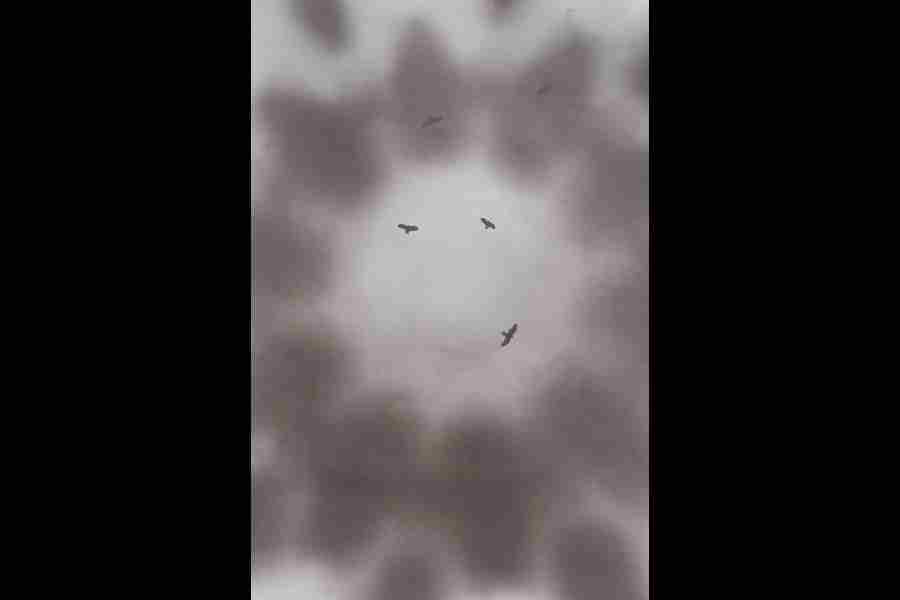
Hasnain Soomar’s solo show, Shifting Revelations, at Ganges Art Gallery presented a body of work that understood something that many contemporary exhibitions forget: process is not extraneous; in fact, process can be content. The exhibition rests on the 19th-century technique of salt printing, a slow and unstable process wherein images are formed within the paper itself and not just placed neatly on top of it. That structural fragility becomes the quiet grammar of the show.
Soomar’s oeuvre has long been concerned with order, balance, and the invisible structures that shape inner and outer worlds. His photographs rarely chase the spectacular. Instead, they move inwards, favouring geometry, repetition and symmetry. This show was no different; although Soomar achieves a level of abstraction in this show that is rare in photography and deeply meditative. Whether working with architectural fragments, natural forms, or abstracted spatial patterns, his images tend to function as sites of contemplation rather than statements. They ask the viewer to slow down.
The works in this show draw on sacred geometry, Vedic mathematics, mandalas, and yantras, all recurring interests within Soomar’s wider practice. Here, however, they are not treated as symbols to be decoded or diagrams to be admired. The salt print’s tonal gentleness prevents the images from becoming rigid or ornamental. Precision remains, but it is tempered by vulnerability.
Salt printing refuses speed and reproducibility. It requires attention, repetition, and touch. The care of that labour is clearly visible in the finished works. The surfaces are matte, tactile and almost skin-like. They ask to be looked at slowly. There is also an intelligent resistance to the contemporary image economy. These photographs do not float well on screens. Standing before them, it becomes obvious why this process was chosen — a digital print would have undermined the contemplative premise of this body of work.