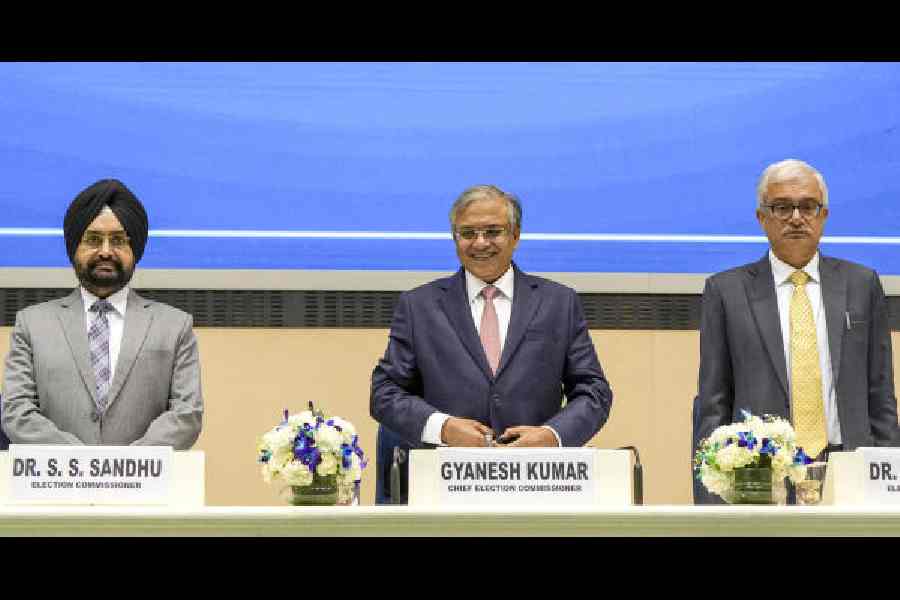
Assembly elections in Bengal will be held on April 23 and 29, the Election Commission declared on Sunday, while announcing polls also in Assam, Kerala, Tamil Nadu and Puducherry.
Calcutta and the rest of southeast Bengal will vote in the second phase on April 29; the rest of the state will do so on April 23. The three other states and Puducherry will have single-phase polls.
NDA-ruled Assam and Puducherry and Left-ruled Kerala will vote on April 9. Tamil Nadu, governed by the DMK, will go to the polls on April 23.
The poll panel also announced Assembly by-elections in six states: Two seats in Karnataka and one each in Goa, Nagaland and Tripura will vote on April 9. Two
seats in Maharashtra and one in Gujarat will do so on April 23.
Counting for all the Assembly polls and by-elections will be held on May 4.
Poll panel sources said that a two-phase election had been decided for Bengal at the request of the state’s Opposition parties.
While multi-phase polls allow the commission to make heavier deployments of central forces during each phase to prevent violence, longer periods for campaigning tend to benefit the party with the most resources.
Bengal has in recent decades witnessed heavily staggered elections. The previous Assembly polls in 2021 were split into eight phases during the peak of the Covid pandemic.
A total of 8.5 lakh security personnel — both central and state forces — will be deployed for these polls across India. The poll panel has avoided giving state-wise breakups for several years now. In 2021, Bengal saw a record deployment of more than 1,200 companies of central forces.
Chief election commissioner Gyanesh Kumar did not answer a question on the Opposition’s attempt to impeach him in Parliament.
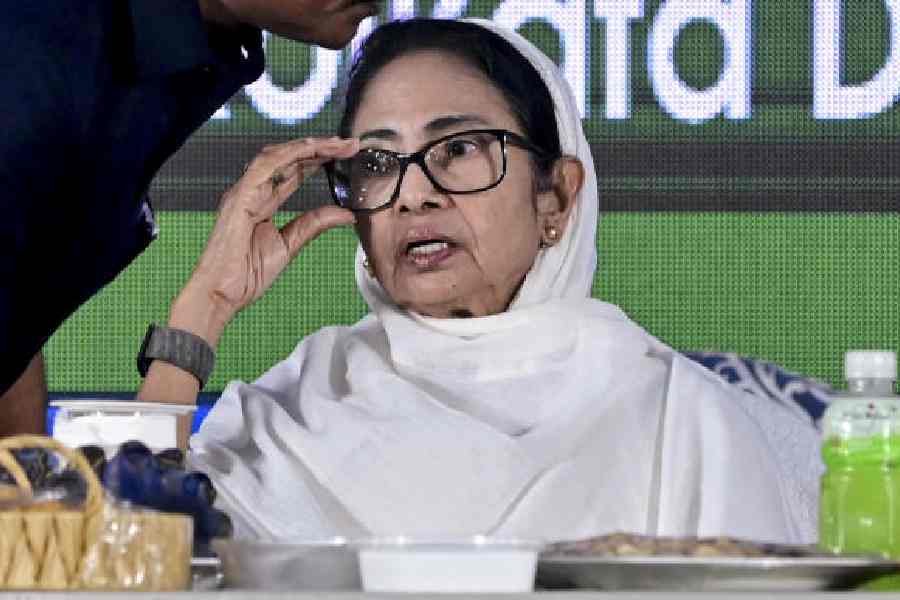
On the Trinamool’s allegations of malpractice against him for his role in the controversial SIR, Kumar replied: “The Election Commission of India is constitutionally bound by Article 326 to include in the electoral rolls electors who are above 18 years of age, who are citizens of India, and who are residing in that specific Assembly constituency.
“The Election Commission of India has been discharging this responsibility through a process known as special intensive revision. With regard to political statements made by certain political leaders or political parties, the commission does not wish to engage itself in such dialogues.”
Kumar was asked about the welfare measures announced in Bengal and Tamil Nadu just before the polls were declared, and the financial grant for women that had been announced during the Bihar elections late last year.
Bengal chief minister Mamata Banerjee’s announcement of increased honorariums for Hindu priests and Muslim clerics had come after the poll panel had put out that it would hold a news conference on Sunday.
Kumar replied: “Regarding decisions taken by certain governments just before the Model Code of Conduct came into force: I have already explained earlier that, in a democratic setup, the state and central governments — exercising their own wisdom — may take any policy decision or other measure that they deem appropriate.
“However, once the MCC comes into operation, any decision that affects the outcome of the elections, or functions as a form of inducement, is not permitted; and the MCC has just now come into force.”