
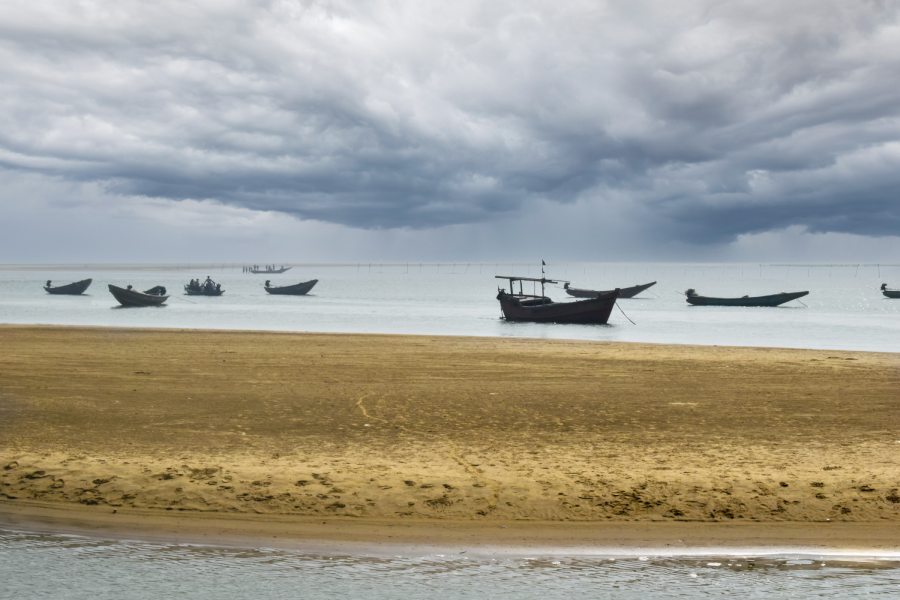
“Unlike an indoor set, the sea is impossible to control,” Rahul Arunoday Banerjee had told The Telegraph Online in an interview last year, while recounting his experience of shooting for Srijit Mukherji’s Shotyi Bole Shotyi Kichhu Nei on the sea.
In a tragic twist of fate, the actor passed away on Sunday after allegedly drowning at Talsari beach in Odisha.
The incident has put the spotlight on safety standards in Tollywood, with industry stakeholders pointing to persistent gaps in preparedness, uneven enforcement of safety protocols and a culture that often normalises risk while shooting.
Filmmaker Ranjan Ghosh, who recently shot his independent film Adamya extensively in Sundarbans, said any shoot happens under the guidance of the Federation of Cine Technicians and Workers of Eastern India.
“Proper rules and regulations are put in place, and they have to be adhered to,” he told The Telegraph Online. “You need certain permissions, you need to have safety precautions in place, especially when you are shooting in remote areas and into the sea.”
“When we shot the trawler scene for Adamya, we had to inform the coast guards, the local police station and we had to ensure that all the proper life-saving equipment were present,” he said, adding that they had also followed the tide cycles to avert any accident.
Calling Bengali filming industry an “unorganised sector”, television actress Arijita Mukhopadhyay said there is often a disparity in how safety is prioritised.
“A life does not come only with stardom,” she said, adding that established actors are more likely to be provided with proper safety backing, trained personnel and equipment.
“There should be adequate provisions so that if there is any emergency, help can come immediately,” said singer Bonnie Chakraborty, stressing the need for awareness and periodic reviews of safety compliance.
“Industries across India, and even globally, should ensure that they are at par with international safety standards.”
Several actors underlined that risk-taking is often built into the profession, but said the onus of safety should not fall on performers.
“It is not always possible to follow all safety protocols on a set. I, too, have shot on a rooftop without a harness. There was just a rope,” said actress Solanki Roy. “As actors we forego safety protocols and we take risks to give our best shot… but the makers should make sure that the protocols are in place.”
She added that accidents may still occur despite precautions, but they are “still very important and indispensable,” and called for accountability if negligence is found.
Highlighting the unpredictability of outdoor shoots, actor Rahul Mazumdar said working in natural and rough environments like the sea significantly increases risk.
“If divers would have been present, such a situation might have been averted,” he said, while cautioning that multiple, conflicting accounts of Banerjee’s drowning incident have made it difficult to determine what exactly transpired.
Others pointed to structural issues in how action and technical sequences are executed. Actor Judhajit Sarkar said inadequate preparation time is a recurring concern.
“The time to grasp action choreography is extremely less… just knowing how to pull a trigger is not enough,” he said.
Recalling a personal injury during a shoot, Sarkar said last-minute improvisations and faulty equipment can prove dangerous. “A scooter I had to ride was not proper, and was malfunctioning… there were no safety guards as such,” he said.
Filmmaker Bidula Bhattacharjee flagged the absence of even basic safeguards on many sets. “There are no safety arrangements… not even first aid kits are made mandatory on sets,” she said, adding that safety measures are often limited to specific departments rather than being uniformly enforced.