The first time I watched Satyajit Ray’s last directorial, Agantuk (1991), I remembered only fragments, as a 14-year-old student trying to make sense of a film that almost runs counter to what I perceive it to be today.
If I were genuinely honest with my opinions back then, I had found it somewhat ‘un-Ray’ like, yet pretended to like it anyway.
There was no romantic and gentle strokes of landscapes in the backdrop — no sunlit Rajasthan like in Sonar Kella (1974), no misty Darjeeling afternoons like Kanchenjungha (1962). There was nothing overtly lyrical to hold on to, no regal elegance of Charulata (1964) or Ghare Baire (1984).
All pictures: YouTube
Instead, what unfolded was a series of evening addas — conversations steeped in history and philosophy — circling around a quiet but persistent question: who really was Manomohan Mitra?
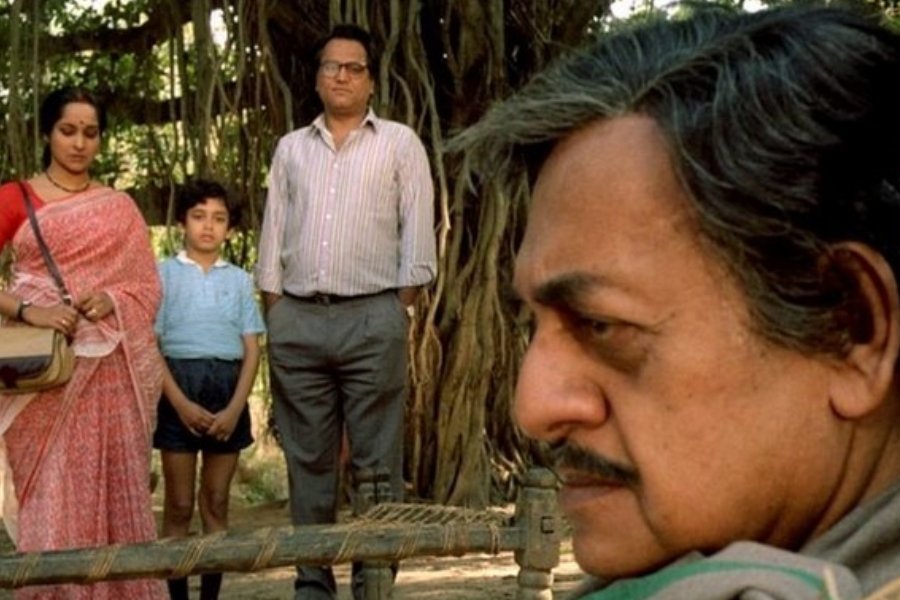
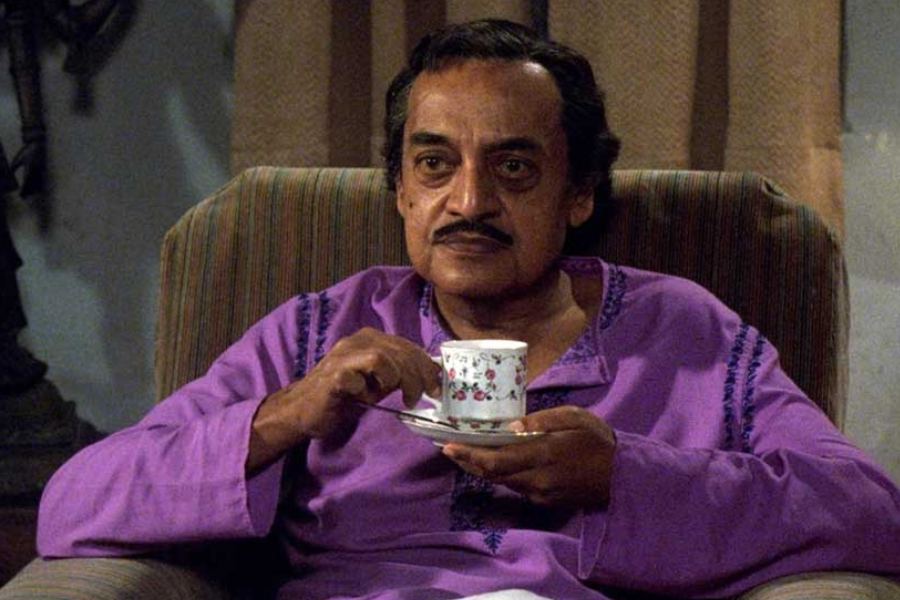
Adapted from Satyajit Ray’s short story Atithi, Agantuk unfolds as a quiet yet probing drawing-room drama. Anila (Mamata Shankar) receives an unexpected letter from a long-lost uncle, Manomohan, whom she hasn’t seen in 35 years, expressing his wish to stay with her family in Calcutta.
Her husband, Sudhindra (Dipankar De), is immediately sceptical, suspecting the man might be an imposter.
When the enigmatic stranger (Utpal Dutt) finally arrives, he is met with intense scrutiny — not just from Sudhindra, but also from friends(Rabi Ghosh) and even the family lawyer (Dhritiman Chatterjee), who subject him to a series of probing questions.
The only one who accepts him without hesitation is Anila’s young son, Babloo (Bikram Bhattacharya), who becomes captivated by the man’s tales of travel and distant worlds, mirroring the viewers’ curiosity.
The premise is direct — no heavy mysteries, no enemies to chase, no catastrophe to avert, no journey to embark upon… and yet, the film holds within it everything that often stays invisible to the naked eye.
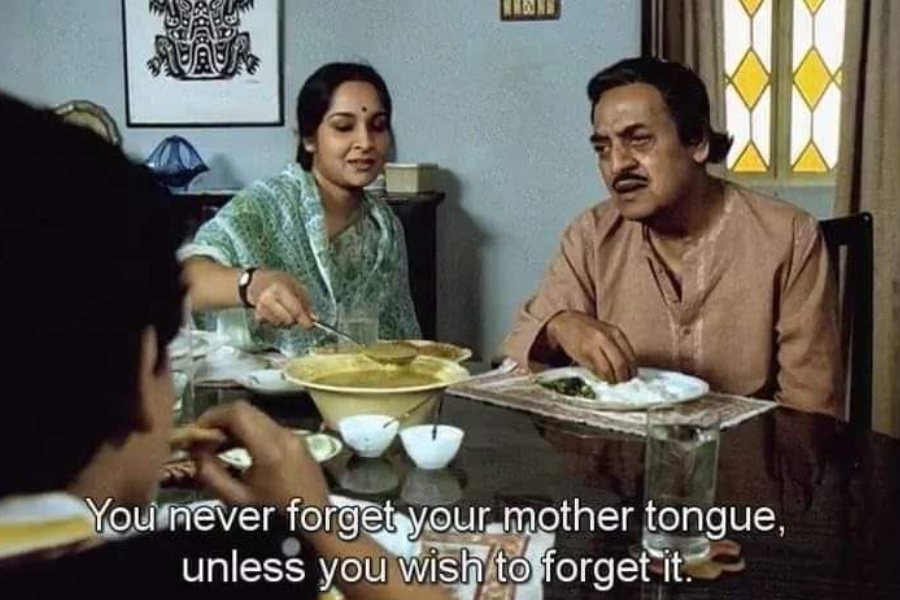
The film today remains widely remembered for a single dialogue by Manomohan — a candid reflection on the Bengali language and its significance — a ‘screenshot-worthy’ moment that resurfaces on social media every International Mother Language Day.
To me, however, this feels like a hackneyed tribute, one that overlooks the film’s far subtler rejection of the profound greed embedded in modern civilisation.
But Agantuk never exists just as a philosophical or moral lesson for me. If I put it bluntly, the film is a comfort watch.
What stays with me, every time I keep going back to Agantuk over and over again, is not just the film itself, but the quiet urge it created — the need to return, to sit with it once more.
It isn’t just a film I have watched over ten times (or maybe more). It is a journey that made me come back to the second viewing, when I was 18, and then it never quite let me stop, thanks to my mother.
Somewhere between those conversations and silences, Agantuk began to feel less like a cinema and more like a lived-in memory that evolved along with each revisit.
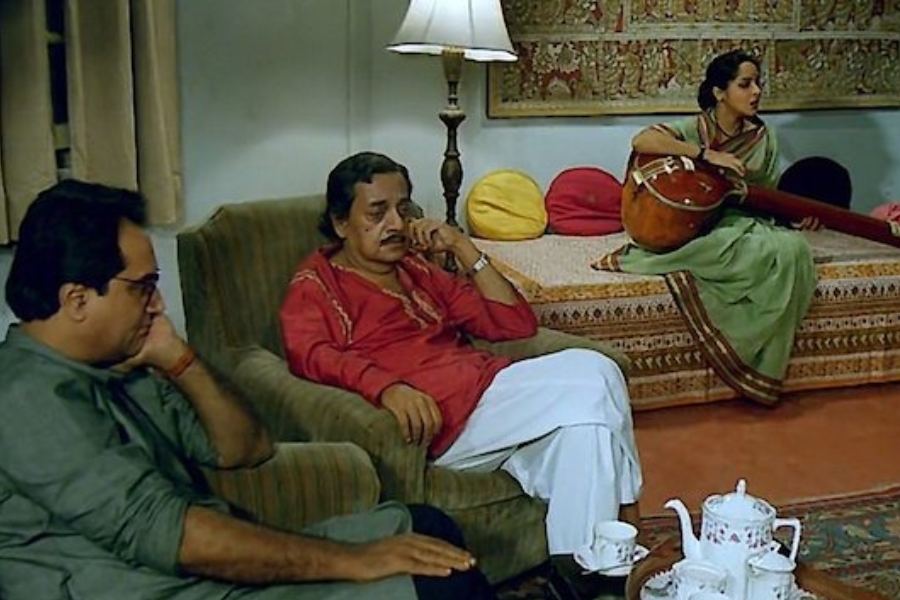
In its softest undertones lie fleeting glimpses of an old Kolkata — a world that I never got to live in, but only experienced through a virtual window to the past — the quintessential laal mejhe, sketching in the garden, the distant rhythm of Durga Puja that exists without demanding devotion, the comfort of a mangsho-bhaat afternoon that stretches lazily.
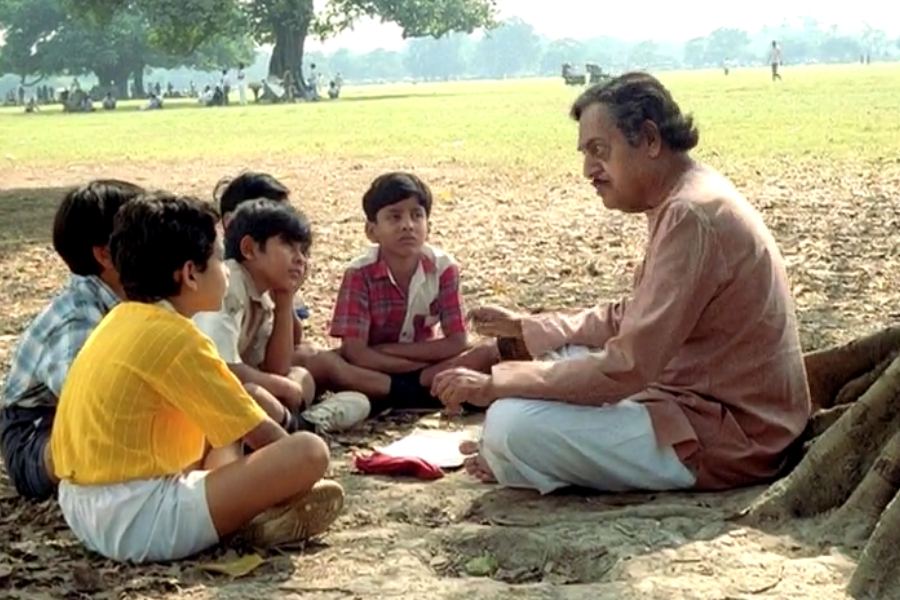
There is a certain stillness to it — a quiet stroll, an autumn-tinted Maidan and Manomohan ‘Chhot-Dadu’ narrating stories about Incan civilisation and the wonders of the universe to Babloo and his friends, a sequence that is almost absent these days.
It is, in many ways, a life — unhurried, curious, rooted yet wandering — that one finds oneself longing for.
In many ways, Agantuk is a tale of quiet bliss — one that finds rest in Santiniketan, where the distant echoes of Santhal music and dance bridge the ancient with the modern.
And then there is the much-underappreciated Rabindra Sangeet Bajilo Kaharo Bina, rendered by Sromona Chakraborty — a moment that lingers between urban crudeness and an unspoken thread that binds a niece to her estranged uncle.
But Agantuk is more than all of this. It is a life, crafted by Satyajit Ray marking the beginning of a new decade — leaving behind a question I return to every single time, searching for the answer within myself: Who was Manomohan Mitra to us? And why is it important for us to know him in order to understand the unfiltered core of humankind?
Have I found the answer yet? No. Will I ever? Perhaps. Maybe it will take a dozen more rewatches to finally arrive at a conclusion.
But if I am ever given the choice to watch just one film by Satyajit Ray all over again — just one — it will always be Agantuk.