
New Delhi, March 23: As many as 25 amendments related to regulatory bodies such as the EPFO and Trai were part of the 40 amendments to the Finance Bill 2017 passed by the Lower House yesterday.
By including amendments to key acts such as the companies act or the EPFO act in the finance bill, the government hopes to bypass scrutiny and possible blocking in the Upper House where the bill will come up next.
According to the Constitution, in the case of money bills, the Rajya Sabha may recommend changes but the Lower House is not bound to accept them.
Finance ministers in the past have slipped in an amendment or two in one or the other act in the finance bill on the grounds that they were related to the budget. However, including so many amendments to key acts in the finance bill is unprecedented.
"This is unprecedented... so many amendments to acts related to regulatory bodies are being lumped with the finance bill is unfair," said Sukhendu Sekhar Roy, Rajya Sabha MP of the Trinamul Congress.
Trinamul MPs yesterday objected to such changes and wanted these regulatory tweaks to be excluded from the finance bill. However, their demand was brushed aside by finance minister Arun Jaitley, who argued that these changes were "incidental" as they indicated the government's spending plans for the year ahead.
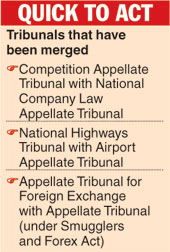
Around eight tribunals had been merged with other existing ones. Some mergers, such as that of the Copyright Board with the Intellectual Property Appellate Board and the Railway Rates Tribunal with the Railway Claims Tribunal, are felt to be justified. However, questions have been raised about merging the Airport Economic Regulatory Authority with the Telecom Disputes Settlement Amendment Tribunal or the Employees Provident Fund Appellate Tribunal with the Industrial Tribunal (see chart for other mergers).
"The rationale behind merging the airport economic regulator with TDSAT beats me. Airport tariff and telecom tariff are certainly not similar in either accounting or in legal terms," said Sudipto Bose, an independent telecom consultant.
Questions are also being raised about the independence of these regulators. At present, the terms of service of chairpersons and other members of the tribunals or authorities are laid down in the respective acts. However, their inclusion in the finance bill will give the executive the right to make rules on qualifications, appointments, term of office, salaries, allowances etc.
Dipak Bhattacharya, a senior counsel of the Supreme Court, said, "Despite the Supreme Court verdict that tribunals should be headed by judicial members and have technical experts, we find that the government is appointing retired IAS officials to these bodies... that trend could well increase with these changes."