Sunday, 05 July 2026
Sunday, 05 July 2026
Sunday, 05 July 2026
Astronauts aboard NASA’s Artemis II mission have captured striking images of Earth as they journey toward the moon, offering a vivid glimpse of the planet’s beauty as it recedes into the distance during the first crewed lunar mission in over 50 years.
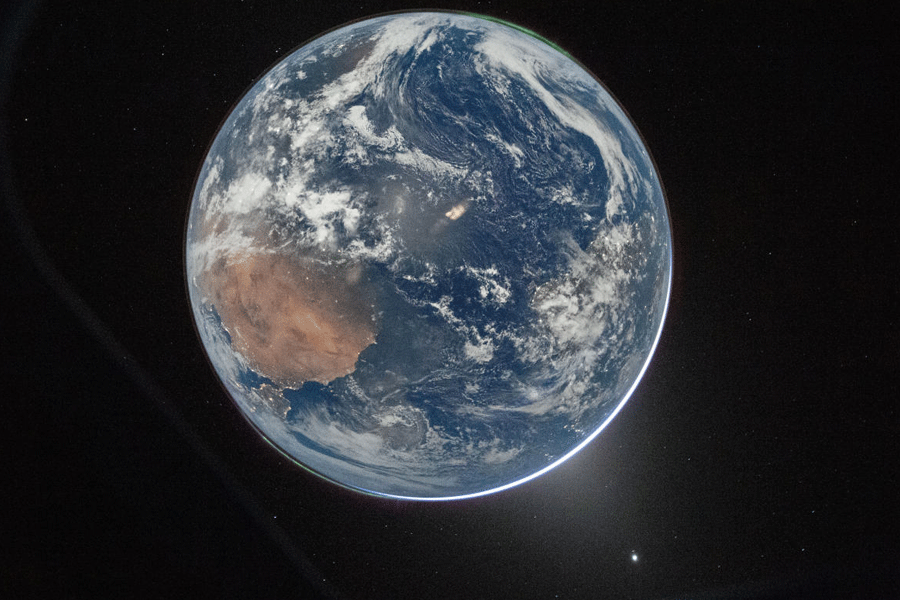
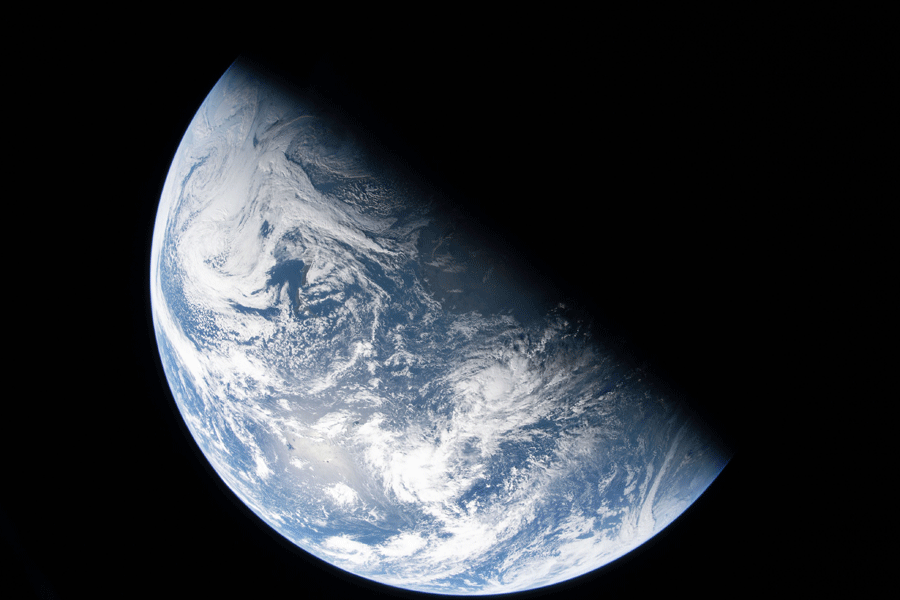
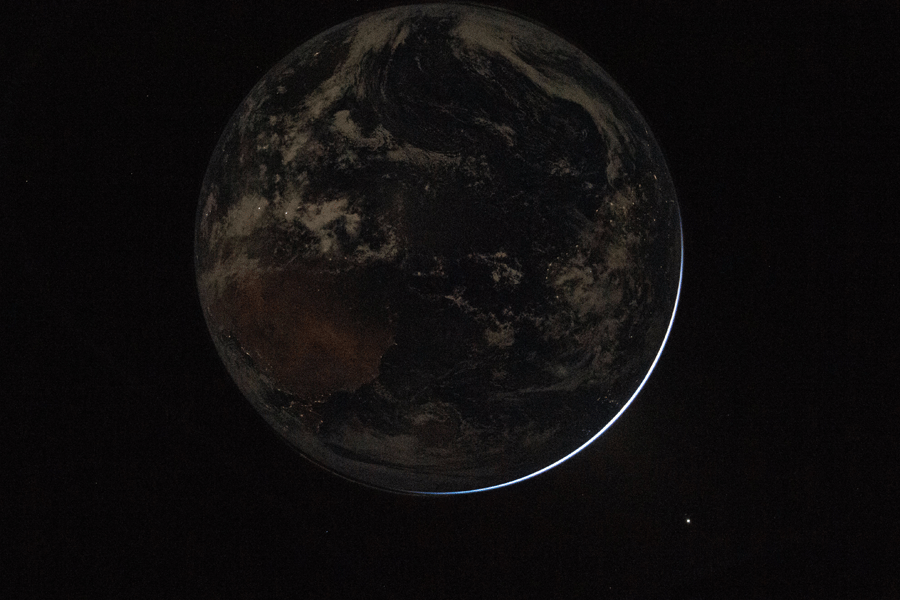
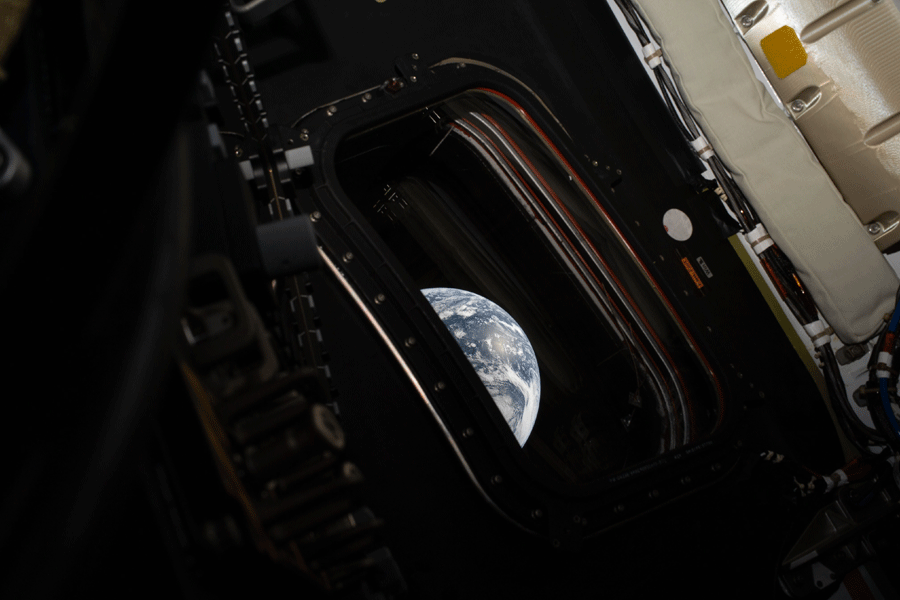
NASA on Friday released the crew’s first downlinked images, taken about one-and-a-half days into the mission. The photographs show a curved slice of Earth through the Orion capsule’s window and a full view of the glowing blue planet, its oceans streaked with swirling white clouds and even a green aurora shimmering above.
"It’s great to think that with the exception of our four friends, all of us are represented in this image," said NASA’s Lakiesha Hawkins, an exploration systems leader, adding that the mission was progressing smoothly.
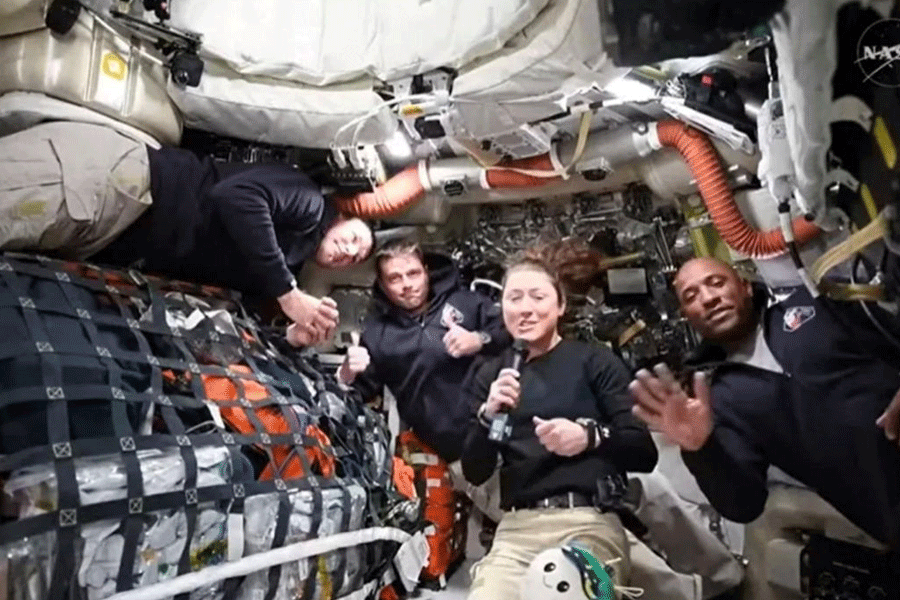
Commander Reid Wiseman and his crew — three Americans and one Canadian — have been documenting their journey using a range of devices, including GoPros, iPhones and Nikon cameras. As the spacecraft moved farther from Earth, the astronauts described both the technical challenges and the emotional impact of photographing their home planet.
"It’s like walking out back at your house, trying to take a picture of the moon. That's what it feels like right now trying to take a picture of Earth," Wiseman told mission control in Houston.
From tens of thousands of kilometres away, capturing clear images proved difficult due to exposure settings, but the views left the crew in awe. Mission Specialist Christina Koch described the level of detail visible from space.
"You can actually make out the coastline of the continent, you can make out rivers because of the sunglare, you can see high thunderclouds ... and you can see the South Pole lit up. It’s just phenomenal," she said.
At one point, after Mission Control adjusted the capsule’s position, the entire Earth filled the astronauts’ windows, creating a moment of collective pause.
"It was the most spectacular moment, and it paused all four of us in our tracks," Wiseman said in a TV interview.
As of late Friday, the Orion capsule was more than 180,000 km from Earth and continuing its rapid approach toward the moon, with another 240,000 km to go. The spacecraft had earlier fired its main engine to set itself on a trans-lunar trajectory after exiting Earth’s orbit.
The crew is expected to swing around the moon without landing before beginning their return journey. At its farthest point, the mission will take astronauts roughly 252,000 miles from Earth — farther than any humans have travelled before — where the planet will appear as a small sphere in the distance.
Despite the mission’s success so far, the journey has not been without minor technical issues. A toilet malfunction, flagged by Koch shortly after launch, and initial problems with Wiseman’s Microsoft Outlook email access were both resolved by mission engineers.
The Orion spacecraft is equipped with a modern $24 million Universal Waste Management System, designed for long-duration missions, a significant upgrade from the rudimentary waste solutions used during the Apollo era.
The Artemis II mission, launched from Florida on Wednesday evening, marks a major step in NASA’s renewed push for lunar exploration. Among the anticipated highlights is a potential “Earthrise” image, reminiscent of the iconic photograph taken during the 1968 Apollo 8 mission.