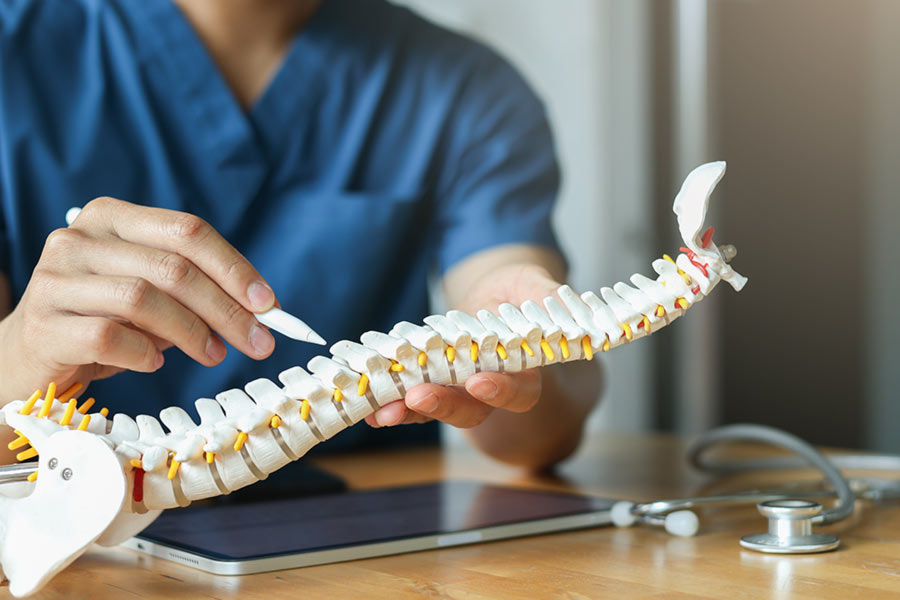
Spending long hours in front of a laptop and skipping physical activity can take a toll on your spine. But is this problem limited to office workers? Not at all. So then, who all are affected by spine issues?
Specialists from Manipal Hospital, Mukundapur discussed spine-related problems. Dr Anindya Basu, Senior Consultant and Clinical Lead - Spine Surgery, MBBS, MS (Orthopaedics), MRCS, MCh (Orthopaedics), DNB (Orthopaedics), MNAMS, AO Global Spine Diploma; Dr Sourabh Ghosh, Specialist Spine Surgeon, MBBS, MS (Orthopaedics), Fellowship in Spine Surgery (Australia, Pune), Advanced Pain Medicine Fellowship, Specialised in Minimally Invasive and Endoscopic Spine Surgery, and Dr Pratyush Shahi, Associate Consultant - Spine Surgery, MBBS (MAMC, New Delhi), MS Orthopaedics (GTB Hospital, New Delhi), AO Global Spine Diploma (Switzerland), Fellowships in Minimally Invasive and Endoscopic Spine Surgery (HSS - New York, Wooridul - Seoul, Kolkata, Pune) were present at the discussion.
Click the link below to learn more:
Dr Anindya Basu stated that spine-related problems can affect anyone, regardless of age. Some children are born with spinal conditions, while younger people may also experience such issues. Even middle-aged individuals who exercise regularly or are involved in sports can suffer from slip disc or, in some cases, tumours. However, spine-related problems are most commonly seen in individuals above the age of 50.
What types of problems can be seen in the spine?
Dr Pratyush Shahi explained that people with spine-related issues may experience shoulder pain that often radiates to the arms. Some suffer from lower back pain that spreads to the legs. In certain cases, individuals may face difficulty walking, struggle with balance, or even experience urinary problems.
So, are these problems curable?
Dr Sourabh Ghosh said that these problems are treatable. If addressed in time, most spine-related conditions can be effectively cured. He also highlighted that physiotherapy plays a crucial role in treatment. Many spine issues can be managed successfully with medication and physiotherapy under the guidance of specialists.
However, in some cases, patients may not recover with medication and physiotherapy alone. In such situations, treatment may involve injections or surgery.
When it comes to surgery, many people fear the risk of paralysis. However, with advancements in medical technology, the treatment process has become much safer. Procedures are now performed using intraoperative neuromonitoring and ‘O’ Arm 3D Navigation, which makes the chances of paralysis almost negligible.
When patients and their families hear about surgery, they often assume that it will require prolonged bed rest and involve severe pain. However, modern spine surgery is performed using endoscopic and microsurgical techniques or through very small incisions. In many cases, patients are encouraged to walk within a few hours after the operation and can return to normal life within 2–3 weeks.
If spine problems require surgery, do not let fear hold you back. Advanced technology and expert care can help you return to normal life.
This article has been produced on behalf of Manipal Hospitals by ABP Digital Brand Hub.