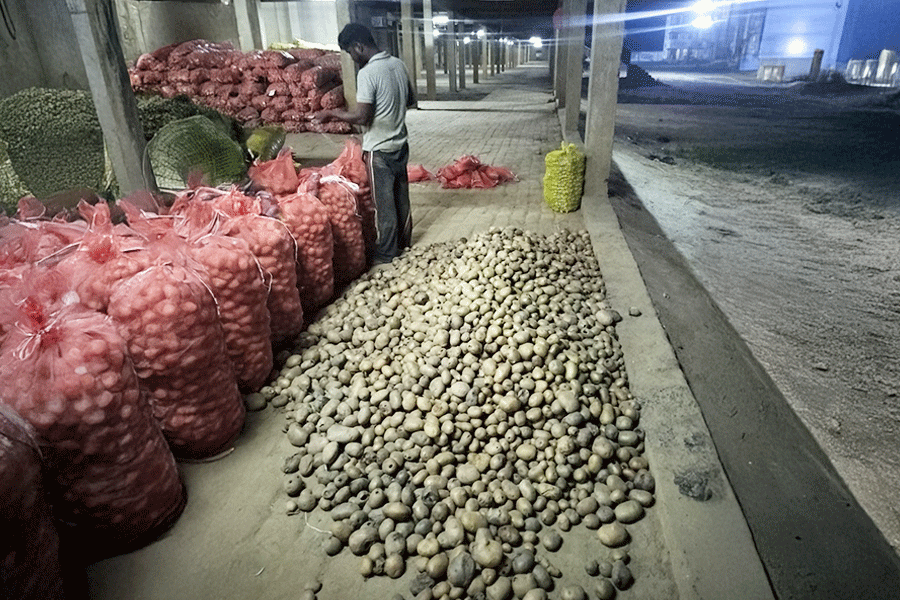
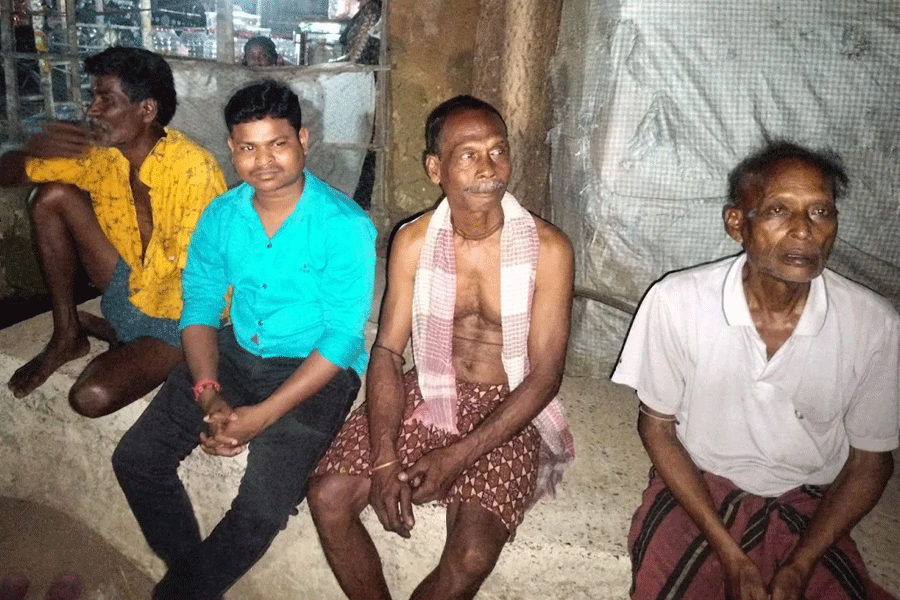
At the edge of Bhatar Assembly seat, around 130 kilometres from Kolkata, potato farmers sat at a tea stall discussing the grind of survival, barely noticing the SUVs speeding on the highway carrying tourists towards Birbhum and Election Commission officials on duty in Bengal.
The potato farmers’ troubles have suddenly become central to Bengal’s Assembly election season.
Prime Minister Narendra Modi and Union home minister Amit Shah have repeatedly invoked the plight of potato growers in campaign speeches, turning one of Bengal’s most common vegetables into a political weapon.
“Potato farmers are crying. We will have to drink poison. But let them feed Kolkata at our cost. Even Uttar Pradesh farmers are better than us,” said Jatin Majhi, a farmer from the area. “Potatoes are still lying in the fields. Not only in Bardhaman, in Birbhum district too.”
On April 29, a total of 38 Assembly seats across Purba Bardhaman and Hooghly will votein the second phase of the Bengal election. Both districts form the heartland of Bengal’s potato economy. Around 15 lakh farmers are engaged in potato cultivation, with heavy concentration in Hooghly and Bardhaman.
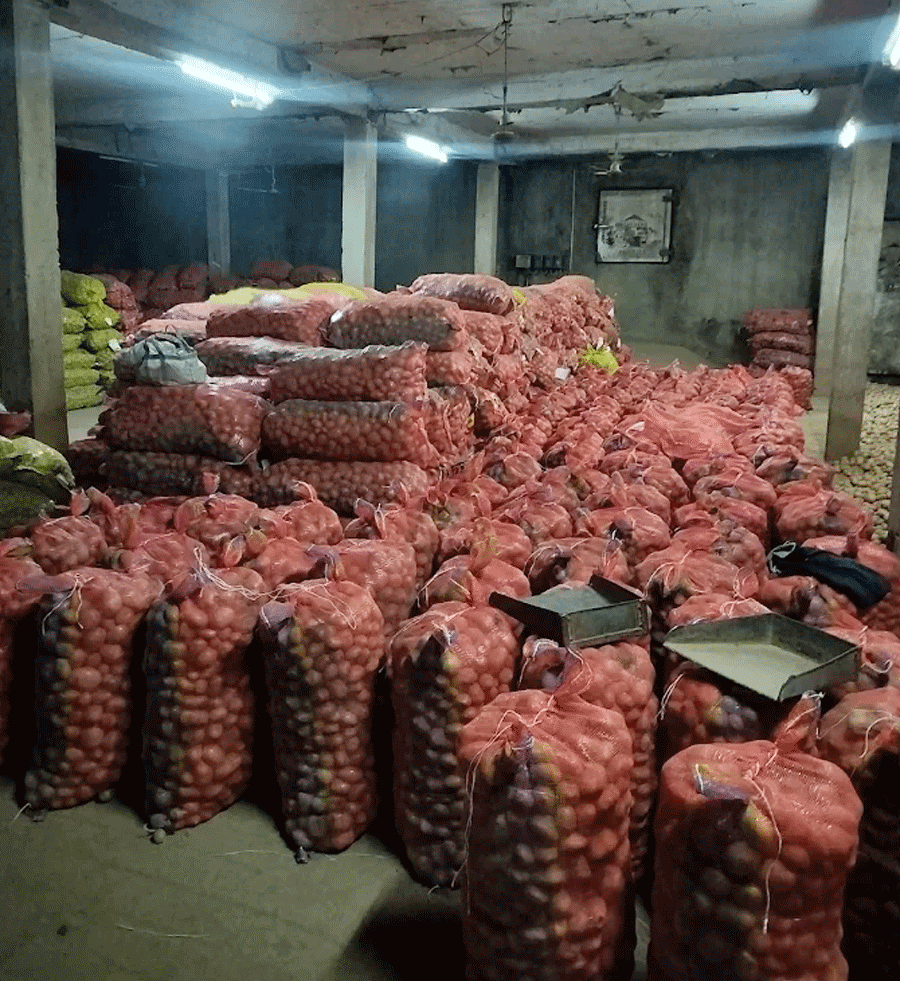
Along the banks of the Damodar river, whose porous, alluvial soil supports cultivation, are constituencies such as Memari, Jamalpur, Bardhaman Uttar, Bardhaman Dakshin and Arambag. For decades, these belts have supplied potatoes across Bengal and beyond. But bumper harvests have increasingly become a curse.
Last year, Bengal produced around 110 lakh tonnes of potatoes. Yet, lakhs of farmers were forced to sell produce at losses, with prices crashing to nearly Rs 3.50 a kilo soon after harvesting began. The Bengal government last year announced a minimum support price (MSP) of Rs 9 per kg. Farmers say the production cost is around Rs 8-9 per kg.
In earlier years, too, whenever production crossed the 100 lakh tonne mark, growers complained of price collapse and debt.
This year, many farmers blame the Mamata Banerjee government’s decision to restrict interstate exports, arguing that it trapped supply inside Bengal and further depressed prices.
The BJP has seized the issue.
“The deceit of this ruthless TMC government has ruined the potato farmers,” Modi said at a rally on April 11. “They had promised to procure potatoes at the MSP [minimum support price], yet today, the farmers' produce is left to rot... Farmers in Bengal will receive Rs 9,000 under the PM-Kisan Samman Nidhi — Rs 6,000 from the Centre and Rs 3,000 from the BJP government in Bengal. Potato-based industries, such as chips manufacturing, as well as other agro-industries, will be encouraged.”
The same day, Shah told another rally that potato farmers were being forced to sell produce cheaply because of restrictions on interstate trade. He promised freer movement of agricultural produce and said a BJP government would “completely dismantle” what he called the syndicate system in Bengal.
Bengal chief minister Mamata Banerjee hit back two days later.
“They claim potato farming in Bengal is rotting. I ask, when floods destroy the lands, where are you? You sleep and snore,” she said.
Signs of potato policy rethink
Signs of a policy rethink had emerged earlier. On March 31, Mamata Banerjee said farmers facing losses would be compensated through crop insurance and the state would purchase potatoes. She also added that cultivators would be free to sell produce outside Bengal.
The state had earlier reimposed restrictions amid fears of soaring local prices, which touched Rs 35-40 per kg in Kolkata. Traders had protested too. The Progressive Potato Traders’ Association announced a statewide strike on December 3 last year after talks with the government failed.
Many in the Bardhaman-Hooghly belt now speak of Uttar Pradesh as the new winner in the tater race.
“This has given Uttar Pradesh the chance to capture markets,” said one trader.
The comparison comes up repeatedly in farm belts and cold storages.
“Ask questions to the government. Farmers don’t get prices for their produce and we are running at a loss,” said the owner of one of the largest cold storages in East Bardhaman.
One bigha of land can yield around 100 packets of potatoes, each weighing 40-50 kg. But cultivation costs may touch Rs 40,000 per bigha, including tractor rent. Farmers must also buy seed potatoes from Punjab because Bengal does not produce enough quality seed stock.
Yet sale prices can sink to Rs 2-3 per kg.
“Cold storage numbers are also less in Bengal,” said Bivas Saha, associate professor at Durham University Business School. “Cold storages consume a lot of electricity, there are land issues, and it is a major investment. Then there are vested interests and political control. Many applications lie with the district administration. Thus, potato farmers are dependent on middlemen for selling and then there is the business credit angle. The middleman is the creditor.”
Saha, a native of Bardhaman, said there was little economic logic to the export ban.
“Because of government policies, farmers lose, consumers gain. It seems it is done to placate urban consumers who are sensitive to potato price. So, rural farmers are basically subsidising urban consumers,” he said.
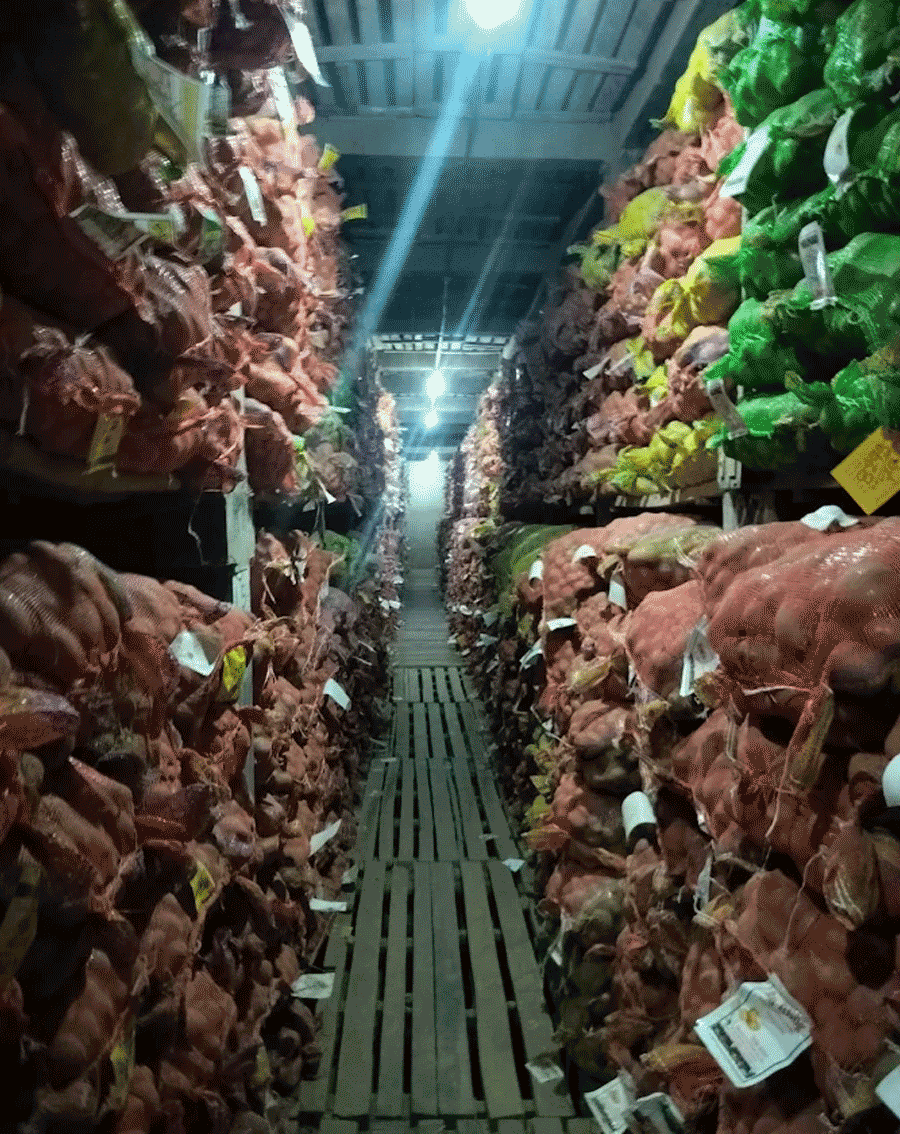
“Kom poishay Kolkata ke alu khawabe [They will feed Calcutta potatoes for cheap],” echoed Goutam Mondal, a cold storage manager.
He said the decline became visible after 2018-19.
“Earlier, there were talks to export potatoes to Malaysia and Singapore. Now we feed Kolkata,” Mondal said as he switched on the electricity at a cold storage that can house 3.56 lakh packets.
Farmers say whenever Bengal gets a bumper crop, prices collapse, debts mount and some growers take their own lives. This year too, such deaths have been reported.
Some economists argue Bengal needs to move beyond price controls and short-term bans towards storage expansion, food processing and organised procurement.
“The Left Front set up cold storages, Buddhadeb Bhattacharjee brought in PepsiCo. Mamata Banerjee could have built on that with political will and long-term planning,” said Indraneel Dasgupta, professor at the Indian Statistical Institute, Kolkata.
“There is no economic reason why Bengal should not attract mega investment in food processing. Yet, apart from ITC in Uluberia, precious little large-scale has happened on that front.”
Dasgupta said potato traders may prefer keeping out organised food processors, who could buy directly from farmers and weaken middlemen networks.
Former chief minister Bhattacharjee, who broke with orthodox Left economics by inviting PepsiCo and Metro Cash and Carry into Bengal, faced fierce criticism from comrades at the time. Some in the Left still blame those reforms for the party’s eventual fall.
Back at the tea stall, such debates felt distant. Asked whether they would support something like contract farming, one farmer shrugged: “Do we decide such things?”