Expressing displeasure over the state’s “vague reply” on National Rural Health Mission (NRHM) funds expenditure, the high court on Monday asked the government to file a supplementary affidavit giving minute details of the spending.
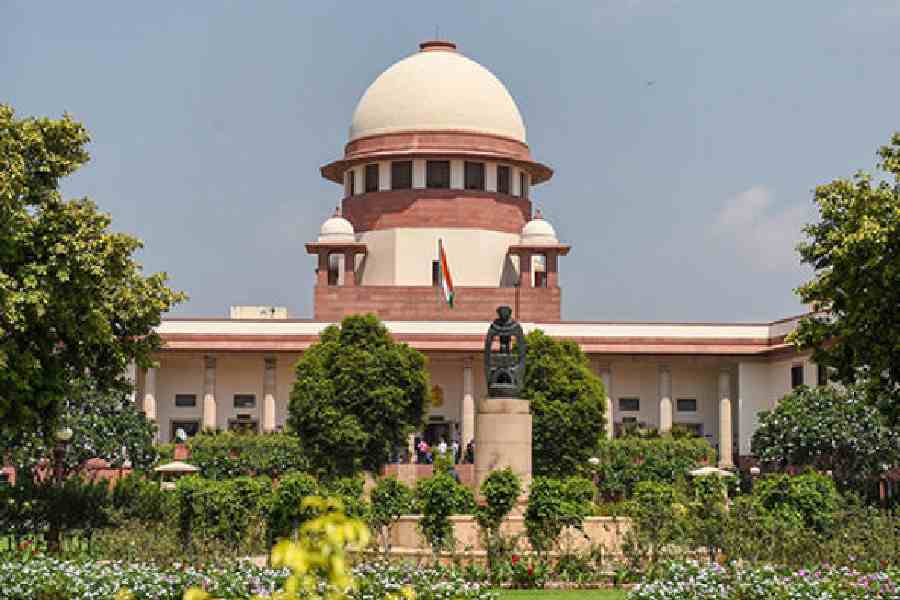
A division bench comprising Justice T. Meena Kumari and Justice Chakradhari Sharan Singh also asked the state government to file a quarterly report to the court giving details like how much money was spent on different heads, including infrastructure and medicines.
The court passed the directive while hearing a PIL filed by Centre for Health and Resource Management (CHARM) through its director Dr Shakeel. The petition claimed that the delivery of service under the NRHM scheme was dismal.
The court had directed the state government on March 20 to give details of the expenditure of Rs 3,500 crore funds it received under the scheme that provides maternal and child healthcare facilities. But it was not satisfied with the counter-affidavit filed by the state giving the broad details like how much money it (government) received in a particular year and spent.
The vague reply irked the court. “We are not satisfied with the counter-affidavit filed by the government,” the bench observed.
Earlier, the court gave the state government three opportunities on last three hearings to file its detailed report but it failed to come out with a proper reply.
The petitioner’s counsel, Vikash Kumar Pankaj, submitted that the government instead of minute details filed the audit report till March 2012, which tells nothing except the money it received and spent in the past four years. Pankaj submitted that the Centre had released Rs 3,500 crore under the NRHM scheme to the state government but the facilities had not reached the beneficiaries.
Out of Rs 3,500 crore, the petitioner gave the year-wise break-up of funds allocation. The state received Rs 423 crore in 2007-08, Rs 783.19 crore in 2008-09, Rs 826 crore in 2009-10 and Rs 1,434 crore in 2010-11.
Pankaj had contended that CHARM, an NGO, conducted a survey in Munger district and found that the implementation of the scheme was utterly poor. Some photographs were attached with the survey report in support of the contention. The petitioner submitted that Munger was chosen as one of the districts for implementation of the scheme. Several districts were not brought under its ambit.
The court expanded the ambit of the petition to the entire state, which was initially confined to Munger only. The court had on February 6 made an oral observation as to what happened to all these funds.