Among those whose voter status has been called into question by the Election Commission during the electoral roll revision is Reverend Sunil Michael Caleb, 62, the principal of Bishop’s College in Calcutta.
He wrote for Metro about what he felt.
I came to Calcutta in 2000, and I have voted in every election since.
But my name is under adjudication now in the electoral roll revision.
I think I know why. Because my father is Maqbul.
It is Muslim-sounding, but a common Urdu name among Punjabi Christians born before 1947. My father was born in Karachi in undivided India in 1930.
The Election Commission of India can’t accept this so-called “logical discrepancy”.
Because it is a Muslim-sounding name, their algorithm has flagged this.
Then, suddenly, I was asked to attend a hearing on December 28. It was a Sunday, and I could not attend church service or mass because of the hearing.
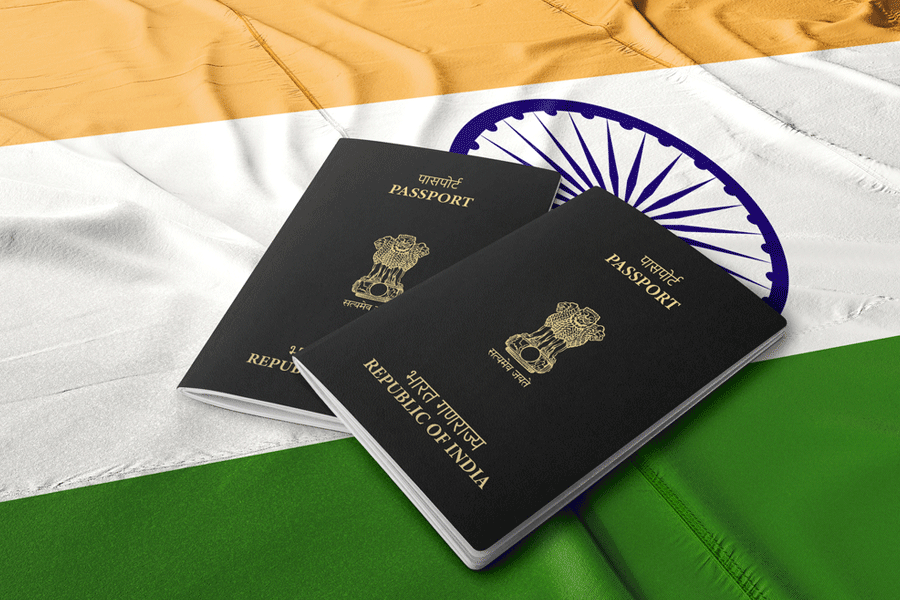
There, I showed the officials that I was already on the 2002 electoral rolls and showed my passport.
Even then, my name on the final SIR 2026 has “under adjudication” written on it. Inspite of going to the hearing, my name is under adjudication.
Whether this is going to be resolved before the election is my question.
If they don’t allow me to vote, it would be a terrible thing.
This is our constitutional right — the right to vote, the right to choose our representatives in the Assembly or Parliament.
I am not a Bengali, but I have lived here and I have a stake in Bengal so why should I not be allowed to vote in the Assembly elections. I have voted
for every single election — whether it is the municipal corporation, Assembly or Lok Sabha.
If I am not allowed to vote now, it’s a shame. Taking away my right as a citizen upsets me.
When I saw my name under adjudication, I felt so utterly frustrated. This whole SIR process seems to be to exclude people, rather than include. The election commission should be trying to include people, make as many people participate in the voting as possible, because everybody has a right to choose their representative.
You are making me an outsider, which is hurtful.
The first time I had voted was in December 1984, when I turned 21 (the minimum voting age then). I was in Delhi when Indira Gandhi died. Our house was next to the Gurdwara, and people took refuge in our home. My father was a bishop in Delhi.
I have voted in different institutions in the city. Now, Bishop’s College itself has six polling booths.
I just have to go downstairs to vote, but ironically, I might not be allowed to vote. It is
a pity.