Snakebites are common on the outskirts of large cities where uninhabited land and agricultural tracts are being cleared for human habitation. It is vital to know how to respond in case of a snakebite, doctors and activists told a workshop on Tuesday.
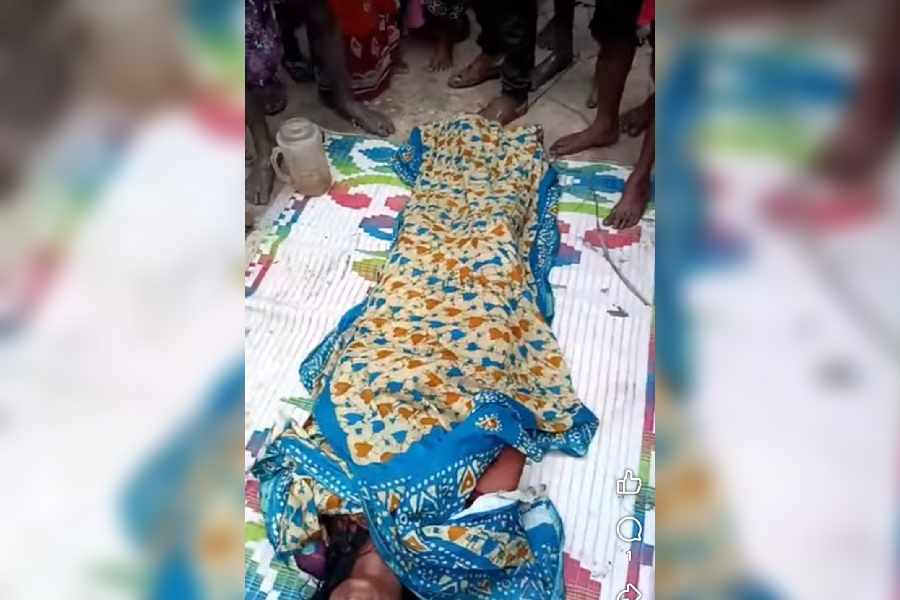
Often, a large housing complex stands next to a vacant plot with trees, bushes and undergrowth. In 2023, two men in their 20s died from snakebites within two weeks in New Town.
Heaps of garbage around large housing complexes are infested with rodents. With their natural habitats gone, snakes roam such areas in search of prey.
According to doctors, the first hour after a snakebite is considered the golden hour. The time taken to rush a
person to hospital after a snakebite often decides the outcome.
All state government hospitals in the city provide anti-snake venom (ASV), the only life-saving treatment against snake bites.
The ward health clinics of the Kolkata Municipal Corporation do not provide ASV, though the primary health centres in rural areas are supposed to provide the service.
“We are transgressing into their territory. Garbage often accumulates outside large housing complexes and in pockets of an expanding city, which attract rodents,” said Jaideep Menon, principal investigator of Snake Awareness Rescue and Protection App (SARPA), a project launched by Kerala’s forest department to manage human-snake conflicts.
“The rodents will naturally draw the snakes into these territories because human invasion has destroyed snakes’ natural habitats and food source,” said Menon, also the head of preventive cardiology at Amrita Institute of Medical Sciences, Kochi.
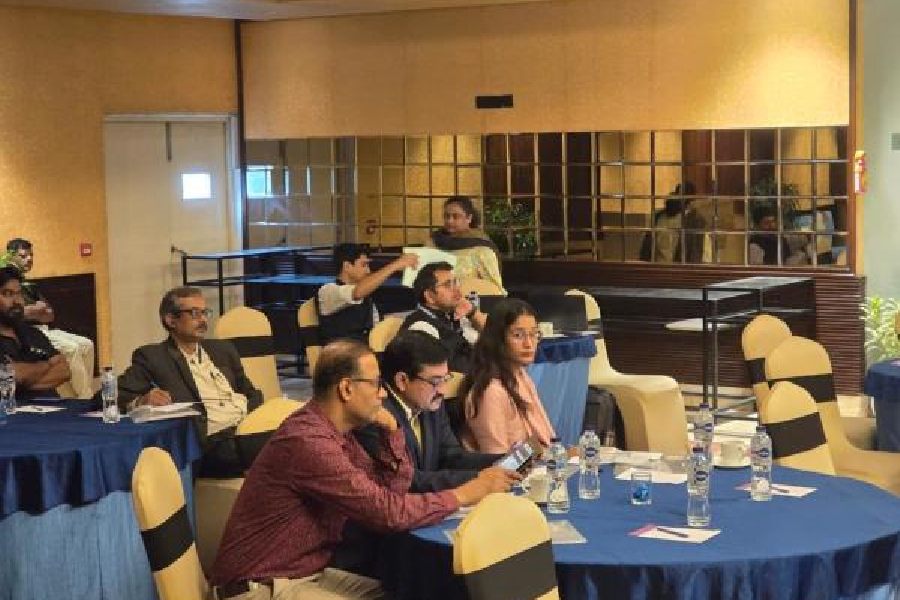
Menon was speaking at a workshop organised by the NGO Manbhum Ananda Ashram Nityananda Trust (MANT) on reducing snakebite deaths recently.
Sayantan Banerjee, in charge of infectious diseases services at AIIMS, Kalyani, said that Rajarhat reports a large number of snakebite cases. These are neighbourhoods in Rajarhat where rapid urbanisation is taking place, even in panchayat areas. Thus, large housing complexes and marshy land coexist in proximity.
According to doctors, Russell’s Viper (Chandrabora), Indian Cobra (Gokhro), Common Krait (Kalach) and Saw-scaled Vipers (Afai) are the four big venomous snakes in India. In Bengal, the Monocled Cobra (Keute) is a species of concern and is responsible for a large number of deaths.
The available anti-snake venoms do not neutralise the venom injected by the Monocled Cobra.
“It is difficult to ascertain a Monocled Cobra bite. In such cases, the ASV is provided, but if the anticipated results are not obtained, doctors
deduce that it could potentially be a Monocled Cobra bite. The treatment that follows is supportive, which
entails managing the symptoms. If needed, the patient is given ventilation,” said a
doctor.
Experts said that gaps in community awareness and a delayed response to snakebites often lead to deaths.
A snakebite victim should be taken to a hospital as soon as possible.
“A lot of people still depend on alternative medicine and faith healers after a snakebite. The antivenom will be able to neutralise the snake venom as long as it is in the blood and in circulation. Once the venom binds with the tissues, it is too late,” said Menon.
Not all snake bites are lethal. In nearly 70% of cases, the snakes are found to be non-venomous, or the bites are dry. Dry bites mean even if bitten by a venomous snake, the venom was not released into the bloodstream.