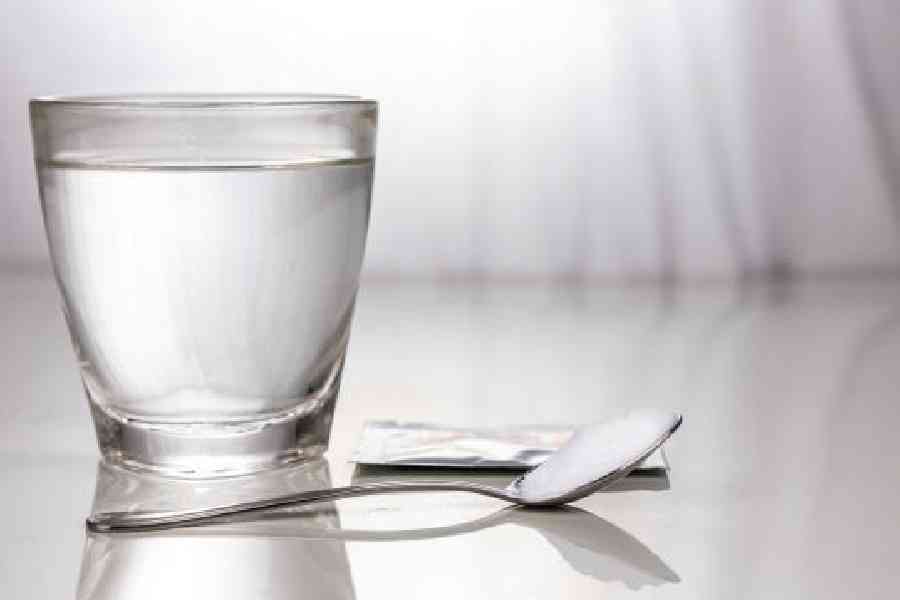
Oral Rehydration Solution or Salts (ORS) has revolutionised the treatment of dehydration and electrolyte imbalance caused by diarrhoea.
It is considered the most important medical advance of the 20th century. ORS has been approved by the WHO and UNICEF.
According to reports, ORS has saved more than 70 million lives worldwide, especially in low-income countries.
Controversy arose when some companies started using the term ORS for their brands as a standalone term or in combination as a prefix or suffix.
These fruit-based, non-carbonated or ready-to-drink beverages contained high sugar. It did not conform to the ORS formula as recommended by WHO.
Common people mistook these branded drinks for ORS and consumed them in acute diarrhoea. It was a form of misleading branding.
Persistent protests spearheaded by a paediatrician from Hyderabad finally yielded results.
The Food Safety and Standards Authority of India (FSSAI) issued an order in mid-October 2025, withdrawing permission to use the term ORS along with brand names.
It had far-reaching implications.
This order was challenged in Delhi High Court. The honourable court upheld the FSSAI order.
The legal battle may continue, but the common people have become aware of this.
Delhi High Court made some very significant observations. It mentioned: “Complaints have been received that such products have been mistakenly consumed by patients, particularly children, in place of WHO-recommended ORS, resulting in adverse health outcomes. The ingestion of a high sugar electrolyte drink can worsen dehydration rather than alleviate it by drawing water out of body cells through osmotic imbalance. The risk is further aggravated among children, diabetic patients and elderly persons who represent the most vulnerable category of consumers.
Accordingly, the said product poses a direct and immediate risk to human health as it induces consumers to believe that the product is intended for medical or rehydration use.”
Fluid and electrolyte loss due to diarrhoea remains a significant cause of mortality among children less than five years. Adults are also affected.
Thus rehydration and correction of electrolytes is extremely important.
ORS is inexpensive and easily available as a powder, which needs to be dissolved in 1litre of drinking water.
It reduces the need for hospitalisation and overall mortality. It should not be confused with other drinks.
ORS helps the small intestine to absorb water and salts more effectively.
For every episode of diarrhoea, at least 200 to 400ml of ORS is necessary.
Mild to moderate dehydration can be managed at home with ORS.
However, in severe dehydration, hospital admission is necessary.
Persistent vomiting, loss of consciousness, tachycardia, confusion or no urine for many hours can be ominous.
In such situations, medical attention is necessary.
Presently, the WHO-approved ORS has glucose (anhydrous) 13.5gm, sodium chloride 2.6gm, potassium chloride 1.5gm and trisodium citrate dihydrate 2.9gm.
This already prepared powder needs to be dissolved in 1litre clean water and consumed within 24 hours.
In low-resource settings or where access to healthcare is difficult, ORS can be homemade. This is a major advantage.
Six teaspoons of sugar with half a teaspoon of salt must be mixed in one litre of water and consumed.
However, ORS should be acquired quickly as it provides the precise composition.
ORS has been widely used since the 1960s with excellent results.
Over the years, there have been some changes in the composition, and it has become more effective.
Even today, it is used worldwide.
Dilip Mahalanabis, a paediatrician, pioneered the use of ORS in the refugee camps near Calcutta during the Bangladesh War of Independence in 1970-71.
During that time, there was a massive outbreak of cholera and mortality varied from 20 to 30%.
According to reports, with the use of ORS the mortality came down to 3.6%.
Resources were limited, and there was an extreme shortage of intravenous fluids. It was also difficult to get access to quality healthcare, even if admission was necessary.
The composition of ORS was somewhat different from what is available today.
Gradually, ORS received widespread acceptance. It became a part of global health strategies. Not only was it highly effective, but also simple and inexpensive.
Mahalonabis was an alumnus of Medical College Kolkata. He received further training in the UK.
Mahalonabis received many international awards for his contribution.
The government of India conferred him with the Padma Vibhushan posthumously.
Many other scientists, like David Nalin, Richard Cash and Dhiman Barua, played an important role in the development of ORS.
ORS has saved innumerable lives all over the world in diarrhoea related diseases.
Usage of the term ORS overtly or subtly for the promotion of commercial brands is extremely unfortunate.
It is important to be cautious before using any such product.
Gautam Mukhopadhyay is a surgical oncologist trained at Tata Memorial Hospital, Mumbai. He is the clinical lead of surgical oncology at Narayana Health