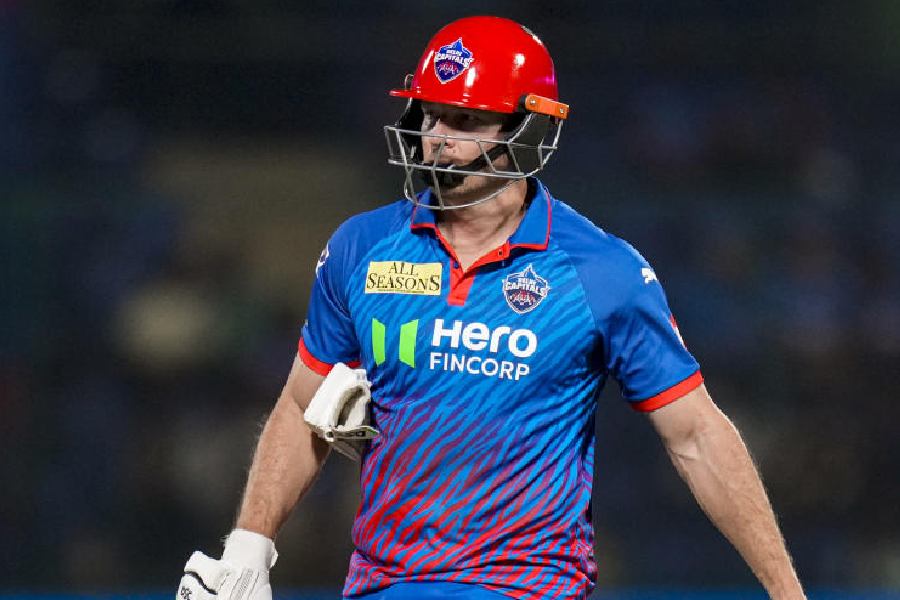
There is something almost contractual about South Africa’s David Miller and heartbreak. Put him in a chase, raise the stakes, thin the margin to absurdity, and he will do everything right except win.
And yet, it happened again.
In Delhi Capitals vs Gujarat Titans, Miller staged yet another late assault that felt less like batting and more like a man arguing with fate.
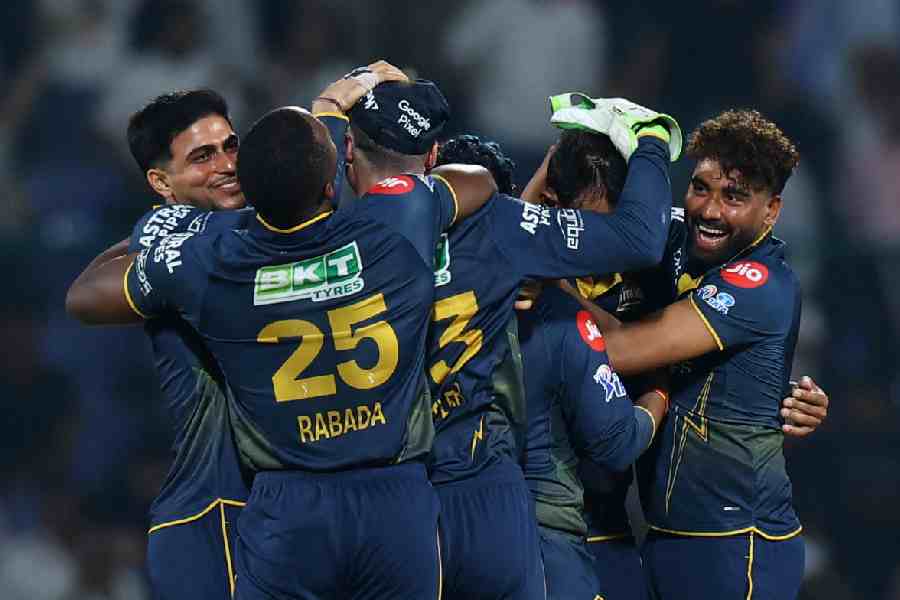
Boundaries flew, equations shrank, belief swelled. For a few overs, he made the game bend to his will. And then, as it so often does with Miller, it snapped back.
If this feels familiar, that’s because it is. Cricket has seen this script before. In fact, South Africa has been remaking it since the 1999 Cricket World Cup, when Miller’s own countryman Lance Klusener played the innings of his life in a semi-final that still refuses to end in memory. Klusener, like Miller, did everything, except cross the finish line.
Different eras. Same heartbreak.
What makes Miller’s latest chapter both delicious and cruel is that it can be dissected, not just emotionally, but mathematically.
As cricket analyst Joy Bhattacharjya laid it out with almost surgical precision, taking a single in that moment (when two was needed in two balls) would have tilted the odds heavily in Miller’s favour: a 75 per cent chance of winning outright or via a Super Over, versus a riskier, ego-flavoured gamble otherwise. In other words, cricket’s oldest cliché, “take the easy one", was also the smartest one.
But Miller didn’t take it.
Why?
Because cricket, like tragedy, is rarely about logic. It is about belief.
Enter the “hot hand" logic.
As cricket analyst Omkar Walunj pointed out, Miller was likely backing the seductive illusion that momentum compounds, that a batter “in the zone” bends probability itself. It’s an idea. It’s also, statistically, a lie. Walunj’s calculation pegs the probability of a boundary in such a scenario at 0.274. Not quite destiny. Not even close.
But tell that to a man who has just dismantled an attack.
Miller’s career is littered with these almosts. The most haunting, of course, came in the 2024 ICC Men's T20 World Cup Final against India. Chasing a modest target that suddenly felt mountainous, Miller launched one final assault, only for it to end in that catch, that silence, that sinking inevitability.
It was not failure. It was theatre.
And that is where Miller differs from most finishers. M.S. Dhoni made a career out of closing games with the calm of a banker signing cheques. Miller, in contrast, turns them into Shakespeare. The soliloquies are breathtaking. The endings are… negotiable.
If Klusener was South Africa’s original tragic hero – muscular, unstoppable, doomed – Miller is his modern echo. Both men operated in that peculiar space where control feels absolute and yet the outcome remains stubbornly out of reach.
Klusener had Allan Donald. Miller has sheer probability.
One ran into a mix-up. The other runs into the limits of belief.
But the essence is identical: the sense that the game is theirs to win, until it isn’t.
It is tempting to reduce this to poor decision-making. To say Miller should have taken the single, should have trusted the percentages and Kuldeep Yadav, should have been less human.
But then, what would be left?
A clean finish. A tidy narrative. Another box ticked.
Instead, Miller gives us something far more compelling: the reminder that sport, at its highest pressure point, is not governed by statistics but by instinct, ego, and the dangerous allure of feeling invincible.
He doesn’t just play the game. He challenges it face on. Mind you, this is a player who was playing with an injury in the latest game.
And loses, just enough, to make it unforgettable.
In another universe, Miller takes that single. South Africa wins that final. Delhi Capitals sneak home. The numbers nod.
But in this one, he swings.
Because tragic heroes don’t hedge. They commit. And they keep committing every single time, despite the odds.
And David Miller, cricket’s most reliable tragic hero, will keep committing, right up to the moment the story refuses to let him win.