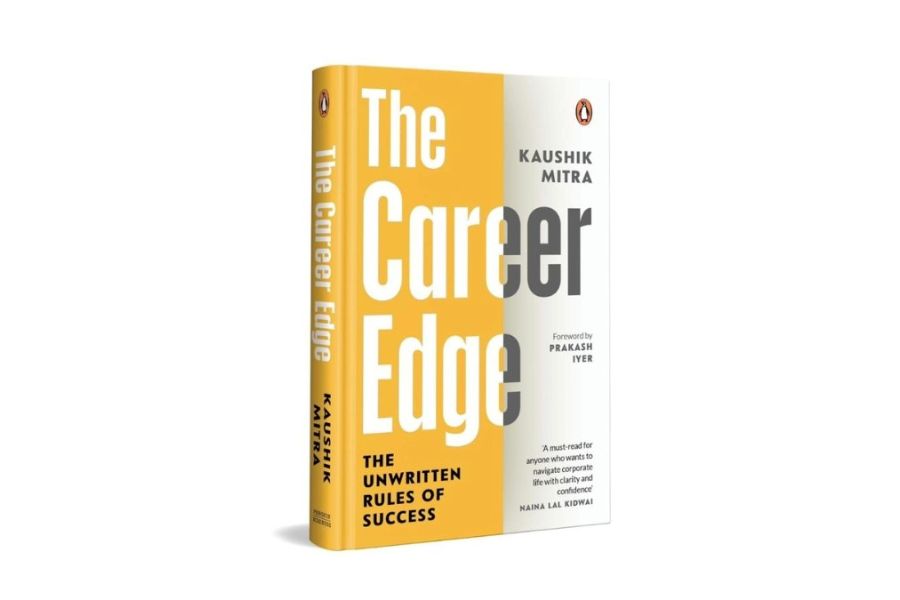
In the sprawling, often cacophonous bazaar of corporate self-help literature, it is rare to find a voice that cuts through the noise with genuine warmth and actionable pragmatism. The Career Edge, authored by Kaushik Mitra and published by Penguin Random House India, is one such gem. Far from being a dry recitation of management theories, this book reads like a mentorship session with a seasoned veteran who has not only survived the corporate jungle but thrived in it with his integrity intact.
Kaushik Mitra, currently the Vice President and CFO at PepsiCo India, brings over three decades of rich, global experience to the table. His professional journey is a tapestry woven with stints at diverse conglomerates such as the RPG Group, Tata Group, GE, and Reckitt Benckiser, spanning geographies from the bustling streets of Kolkata to the skyscrapers of Dubai and the dynamic markets of Vietnam. It is this depth of experience that lends The Career Edge its distinct authority. Mitra writes not from the detached vantage point of an academic observer, but from the trenches of real-world business battles.
The book is thoughtfully structured into four parts, Self-Development, Working with Others, Getting Things Done, and Building Careers in Finance—mirroring the natural progression of a professional’s life. It begins by turning the lens inward. In the section on Self-Development, Mitra introduces the Japanese concept of Shoshin, or "beginner's mind." He argues compellingly that in a world of rapid disruption, the ability to unlearn and relearn is more valuable than accumulated expertise. His personal anecdotes, such as his struggle to adapt his communication style when moving to Vietnam, are refreshingly honest. He admits to his own missteps, like alienating a team with "designer English", transforming what could have been a lecture into a relatable lesson on humility and cultural intelligence.
A significant portion of the book is dedicated to the art of working with others, a critical soft skill that often determines hard success. Here, Mitra dismantles the archaic "command and control" model of leadership, advocating instead for the "Triangle of Influence", a framework built on Ethos (credibility), Logos (logic), and Pathos (emotional connection). He champions the cause of empathetic leadership, arguing that true influence stems not from positional authority but from the ability to connect with people on a human level. His insights on diversity are particularly poignant; he moves beyond the buzzwords to present a robust business case for inclusion, sharing his own initiatives like the "RevolutioNari" movement at PepsiCo to empower women in the workforce.
For those focused on execution, the section "Getting Things Done" offers a masterclass in operational excellence. Mitra introduces the "Six Ds of Execution", Drive, Direction, Discipline, Decisiveness, Delegation, and Doing things the right way. This framework provides a practical roadmap for converting strategy into results. The author does not shy away from the darker realities of corporate life, discussing the ethical dilemmas leaders often face. His unwavering stance on integrity, doing the right thing even when no one is watching, serves as a moral compass for young professionals entering a landscape often fraught with compromise.
While the book is universally applicable, the final section, "Building Careers in Finance," is a treasure trove for finance professionals. As a veteran CFO, Mitra peels back the curtain on the role, dispelling the myth of the CFO as merely a "gatekeeper" or "number cruncher." Instead, he paints a portrait of the modern CFO as a "Pathfinder" and "Transformer", a strategic partner to the CEO who balances risk with growth and drives digital transformation. He discusses the future of finance, predicting a shift where automation handles the routine, freeing up finance leaders to focus on value creation and strategic foresight.
What sets The Career Edge apart is its tone. Mitra’s writing is conversational, empathetic, and laced with a quiet wisdom that stems from reflection. He seamlessly blends references to pop culture, from the movie Invictus to the philosophy of The Last Samurai, with hard-nosed business strategy, making the book accessible to a wide audience. Each chapter concludes with a "Career Tip," distilling complex narratives into bite-sized, actionable takeaways that busy professionals will appreciate.
In conclusion, The Career Edge is more than just a guide to climbing the corporate ladder; it is a manual for building a sustainable and fulfilling career. Kaushik Mitra successfully bridges the gap between the technical demands of a job and the human skills required to excel in it. Whether you are a fresh graduate stepping into your first role or a mid-level manager looking to break through to the C-suite, this book offers the tools to sharpen your professional edge. It is a timely addition to the library of anyone who believes that professional success and personal decency are not mutually exclusive, but rather, are the twin pillars of a life well-lived.
This is a PR article which has been published as received without any editorial enhancement, or modification.. The Telegraph Online does not endorse or guarantee the accuracy, reliability, or completeness of any information presented in the article. The organisation is not responsible for any errors or omissions in the content or for any losses, damages, or injuries arising from the use of the information provided in the article.