
India under the Narendra Modi government has made no secret of its desire to play a more assertive role in the larger Indo-Pacific. As Modi himself underlined in his address to the joint session of the American Congress last month, "A strong India-US partnership can anchor peace, prosperity and stability from Asia to Africa and from Indian Ocean to the Pacific. It can also help ensure security of the sea lanes of commerce and freedom of navigation on seas." Therefore, it should not be surprising that India now seems ready to sell the supersonic BrahMos missile, made by an Indo-Russian joint venture, to Vietnam after dilly-dallying on Hanoi's request for this sale since 2011. Although India's ties with Vietnam have been growing in the last few years, this sale was seen as a step too far that would antagonize China.
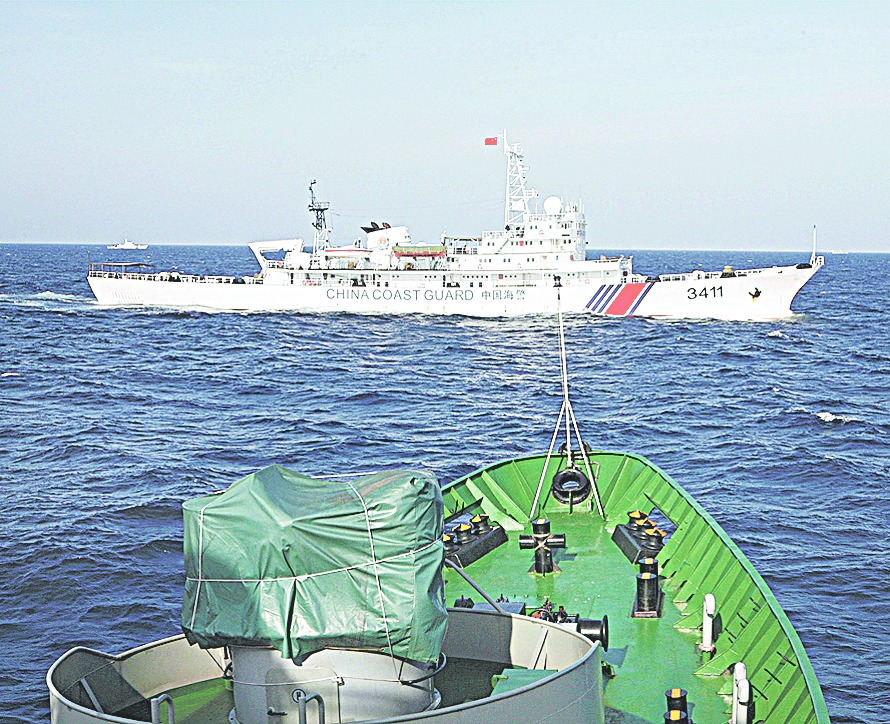
But now the Modi government has directed BrahMos Aerospace, which produces the missiles, to expedite this sale to Vietnam along with four other countries including Indonesia, South Africa, Chile and Brazil. India is already providing a concessional line of credit of $100 million for the procurement of defence equipment and, in a first of its kind, has sold four offshore patrol vessels to Vietnam which are likely to be used to strengthen the nation's defences in the energy-rich South China Sea. Other defence projects are also being expedited. Delhi will be helping Vietnam in the weaponization of two of its Petya class frigates for an anti-submarine role as well as providing Hanoi at least 10 new patrol boats under the line of credit route. India has provided Vietnam with a $100 million line of credit, which is being utilized by Vietnam for procurement of offshore patrol boats for their border guards. Hanoi is also interested in India's high-speed heavyweight torpedo, Varunastra.
India's latest move comes at a time when the United States of America has also lifted its long-standing ban on sales of lethal military equipment to Vietnam. New Delhi's abiding interest in Vietnam too remains in the defence realm. It wants to build relations with States like Vietnam that can act as pressure points against China. With this in mind, it has been helping Hanoi beef up its naval and air capabilities.
The two nations also have stakes in ensuring sea-lane security as well as shared concerns about Chinese access to the Indian Ocean and the South China Sea. Hence, India is helping Vietnam to build capacity for repair and maintenance of its defence platforms. At the same time, the armed forces of the two states have started cooperation in areas like Information Technology and English-language training of Vietnamese army personnel. The two countries potentially share a common friend, the US. New Delhi has steadily built relations with Washington in the past decade, while Vietnam has been courting America as the South China Sea becomes a flashpoint. As these three countries ponder how to manage China's rise, they have been drawn closer together.
It is instructive that India entered the fraught region of the South China Sea via Vietnam. India signed an agreement with Vietnam in October, 2011, to expand and promote oil exploration in the South China Sea and then reconfirmed its decision to carry on despite the Chinese challenge to the legality of Indian presence. Beijing told New Delhi that its permission was needed for India's State-owned oil and gas firm to explore for energy in the two Vietnamese blocks in those waters. But Vietnam quickly cited the 1982 United Nations Convention on the Law of the Sea, to claim its sovereign rights over the two blocks in question. Hanoi has been publicly sparring with Beijing over the South China Sea for the last few years, so such a response was expected.
What was new, however, was New Delhi's new-found aggression in taking on China. It immediately decided to support Hanoi's claims. By accepting the Vietnamese invitation to explore oil and gas in Blocks 127 and 128, India's State-owned oil company, ONGC Videsh Ltd, not only expressed New Delhi's desire to deepen its friendship with Vietnam, but ignored China's warning to stay away. This display of backbone helped India strengthen its relationship with Vietnam. If China wants to expand its presence in South Asia and the Indian Ocean region, New Delhi's thinking goes, India can do the same in East Asia. And if China can have a strategic partnership with Pakistan ignoring Indian concerns, India can develop robust ties with states like Vietnam on China's periphery without giving China a veto on such relationships.
Hanoi is gradually becoming the lynchpin of this eastward move by New Delhi. Hanoi fought a brief war with Beijing in 1979 and has grown wary of the Middle Kingdom's increasing economic and military weight. That is why in some quarters of New Delhi, Vietnam is already seen as a counterweight in the same way as Pakistan has been for China.
The Modi government's decision to sell BrahMos missiles to Vietnam underscores the evolution in India's policy on the Indo-Pacific. Delhi seems ready to challenge Beijing on its own turf. For the moment at least, this stance is being welcomed by states like Vietnam that fear the growing aggression of China. A more engaged India will also lead to a more stable balance of power in the region.
The author is professor of International Relations, Department of Defence Studies, King's College, London