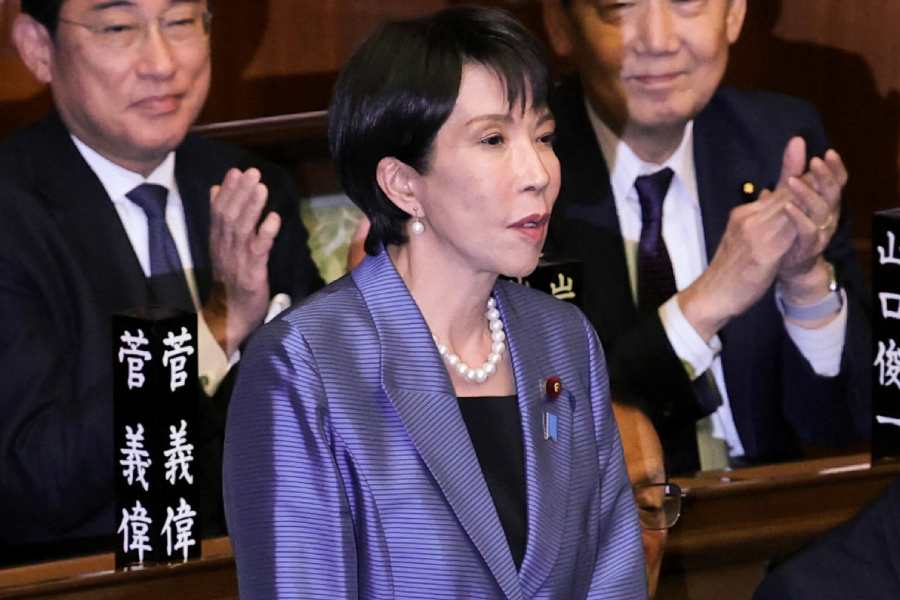
For more than a decade, Japan's pre-eminent, post-World War II political force, the Liberal Democratic Party, had been losing support in Parliament in successive elections amid growing predictions from experts that the LDP might be in terminal decline. On Sunday, Prime Minister Sanae Takaichi put these theories to rest with a landslide win in the snap polls that she had called to elect the country's Parliament. The mammoth win, almost four months after she took office, gives Ms Takaichi a clear mandate to pursue both domestic and foreign policies that could transform how Japan looks, and how it looks at others. Domestically, she has promised to return Japan's anaemic economy to growth. For that, she has vowed to cut taxes and increase public spending. Her agenda had spooked the markets. But she won the support that matters most in a democracy: of the people. The same markets that doubted her economic strategy are now bouncing back following her win. Admittedly, the electoral win will on its own not erase concerns over the inherent risks in her moves — greater public spending could spark inflation. But the giant mandate will buy her time to try this approach.
While Japan's economic health is a matter of concern for the rest of the world too — it is, after all, the fifth-largest economy on the planet — it is Ms Takaichi's foreign policy approach that most other countries will monitor closely. In November Ms Takaichi locked horns with China after suggesting in Parliament that if Beijing were to attack Taiwan, Japan would intervene. Beijing hit back diplomatically and scaled back economic and tourism relations. But while trying to engage with China, Ms Takaichi did not apologise or walk back on her comments. She has also refused to stay equidistant between the United States of America and China, citing Japan's strong traditional ties with Washington. At the same time, she has indicated that she wants to build on the robust relations with India that her mentor, the late prime minister, Shinzo Abe, had helped build. All of this points to a resurgent Japan in its neighbourhood. Ms Takaichi is evidently a risk taker. Her early gambles as prime minister appear to have largely paid off. Japan's first female prime minister has already defied the odds to get to her post. Now she faces the only downside of a large mandate: great expectations.