The Donald Trump administration, social media, and Artificial Intelligence are making it tough for America’s news media to convince itself that it still has a role to play in reporting this war, other than strenuously defending its right to do so. The president and his staff have little use for conventional journalists or journalism, news consumers are increasingly turning to a range of alternative media to figure out whom and what to believe, and AI is generating enough fictional war imagery to make fact-checkers more important to newsrooms than journalists.
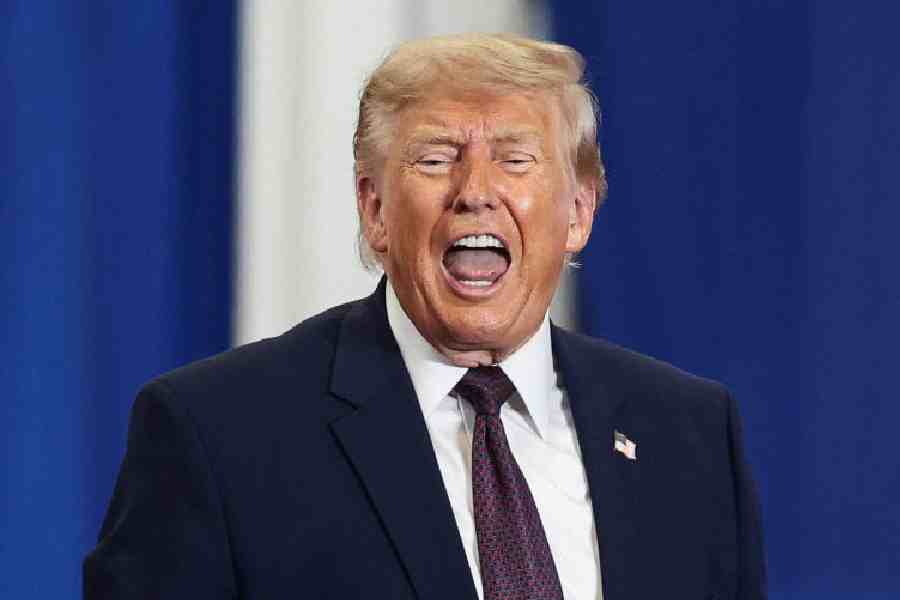
In press briefings in recent weeks, President Trump and his staff have repeatedly accused journalists accredited to the White House of peddling fake news, of treason, and of being unpatriotic. A former Fox News anchor is now the secretary of defense, lecturing the media on how it should report, while Trump stands by watching. Pete Hegseth harangued reporters: “... behind every fake news story you write, there is an F-35 pilot executing a dangerous mission… My message to the media is, get it right.” Be patriotic, he means. The White House press secretary, Karoline Leavitt, can be both rude and blunt, telling a reporter, “you are not a reporter, you are a left-wing hack. The media supports the enemy. They always do…”
Last Monday, the department of defense announced that it was removing reporters from their working spaces in the Pentagon building which they have used for decades to cover the US military. Instead, they would be given an annexe outside the building to work from, whenever it was ready. This followed an ongoing dispute in which a federal judge sided with The New York Times in a lawsuit over limits on reporters’ access to the building. The NYT said the action violated the judge’s order and announced that it was going back to the court. Reporters are expendable to this presidency, but right-wing influencers get a ‘hot pass’, a media-watch programme reported.
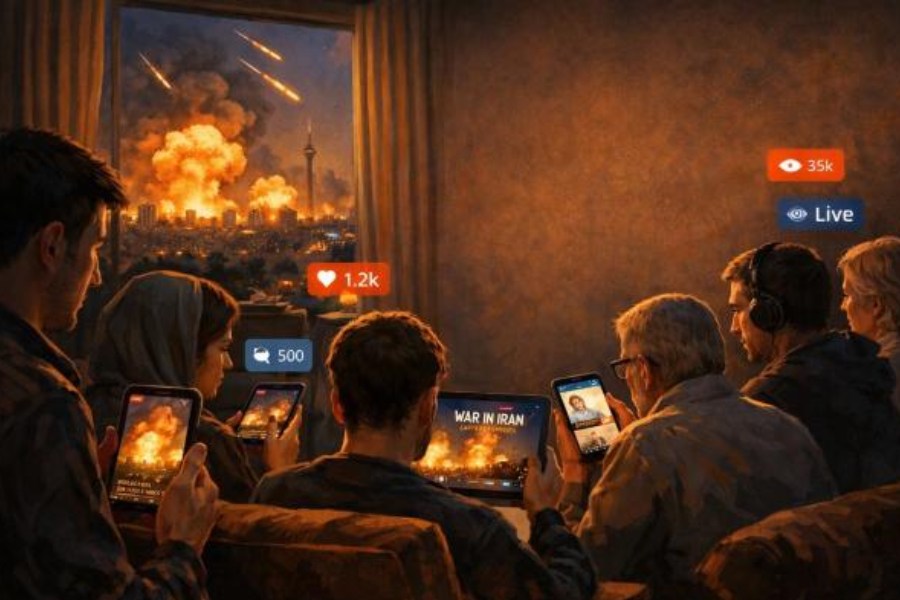
Some of the fake news allegations stem from AI’s contribution to this war. The New York Times identified over 110 unique AI-generated images and videos from the early weeks of war coverage. In those weeks, the internet was awash with what the newspaper called a torrent of fake videos and images generated by AI, including explosions that never happened. Unsurprisingly, some of those images of destruction were making the Trump administration apoplectic. A sophisticated new wave of AI tools makes the fakes possible, the paper said.
And yet, the department of defense has also been compiling a video of the biggest, most successful Central Command strikes on Iranian targets over the previous 48 hours — a series of clips of “stuff blowing up”, to prepare its daily two-minute intelligence briefings for the president, NBC learnt from his officials. It ran a report: “Inside Trump’s daily video montage briefing on the Iran war.” Curated video clips of the biggest strikes put together.
It is a mind-boggling scenario. A war whose repercussions are being felt in countries around the globe and whose trajectory is already extracting a devastating human and economic toll is being waged on military intelligence being provided by two-minute videos. Leavitt has countered this by saying that the president also receives a range of other briefings, including from allies.
Chris Hayes, on his show on MS Now, said dryly, “The president has an intelligence problem. Both the military intelligence from his advisors and ‘the other kind.’ Given what we know about how much reading this man does, it is fair to have questions about how much he actually understands.” There has been gleeful speculation on the source material for these briefing videos. AI? Video games? Or bona fide military strike footage?
In the meantime, there has never been a war before this where mainstream media coverage has mattered less to news consumers, even as shaping the narrative has mattered more to those waging the war. Propaganda has become as important as military might. In the United States of America, the fight for the American mind is being waged between social media and news outlets. A Reuters Institute survey found in 2025 that social media had overtaken mainstream media as a source for Americans to get their information — 54% to the latter’s 50%. Both categories carry both information and disinformation. Both kinds of information served up are unapologetically partisan. Both legacy networks and cable networks are losing audiences, but podcasts are riding high. If social media is replacing TV and newspapers, podcasts are replacing radio. A Gallup poll found that American trust in the media is down from around 70% in the 1970s to 28% in 2025. One of the biggest ironies of war coverage in the US is that many Americans are watching the Qatari channel, Al Jazeera, seen as both reliable and non-partisan, and headquartered in the West Asian region.
It has been a while since anyone has described journalists as being vital for the polity.
The notion of being guardrails of democracy is difficult to sustain when widely consumed podcasts and Instagram reels have no filter, no editor, and are just a direct channel to viewers. The notion of the media being a separate estate is also disappearing when TV anchors and politicians, at least in the US, go back and forth between podcasts and TV and being in government or politics. Pete Hegseth is one example. The Democratic governor of California, Gavin Newsom, has a very highly ranked podcast on Spotify. Steve Bannon, a former political strategist, hosts the War Room podcast. Pod Save America is a liberal, left-leaning podcast staffed by former Obama officials, with 1.5 million listeners per episode.
And yet there is real destruction and suffering on the ground begging to be reported, obscured by censorship and indifference. Military censorship is in force in Israel. Benjamin Netanyahu says in a news clip, “We are watching from above.” Israel does not want its people to see footage of depleted munitions stockpiles. Iran’s police chief announces that 500 citizens have been arrested over a week for sharing information from hostile entities, including foreign news outlets.
And, in Lebanon, when one in five Lebanese citizens has been turned out of his or her home, half of Beirut is being asked to evacuate, and Israel is dropping leaflets which ask the Lebanese to join Israeli army WhatsApp groups, there is little or no international coverage, a Lebanese outlet called Megaphone reported.
Sevanti Ninan is a media commentator. She also publishes the labour newsletter, Worker Web.