|
|

In Shakespeare?s Measure for Measure, a magistrate asks a pimp about his occupation: ?What do you think of the trade, Pompey? Is it a lawful trade?? And the pimp replies, ?If the law would allow it, sir.?
We may often be reminded of that exchange when looking at actual laws. Innocent acts can turn criminal through a stroke of the legislator?s pen. Equally, heinous and destructive measures can acquire legitimacy. Such seems the purpose of the current East Calcutta wetlands (conservation and management) bill. It is being reviewed by the assembly?s standing committee following an outcry, but is still very much alive. Firm information about it is hard to come by. One has to go by persistent, uncontradicted reports in the press.
Whatever publicity the bill has received was for the wrong reason: a round of political bickering. The land and land revenue minister protested that the bill describes certain water bodies as settlements, thus regularizing two unauthorized housing estates. If that were all, the matter could easily be rectified before the bill became law.
The real danger lies elsewhere. By all accounts, the bill empowers the executive to modify (hence to exclude or curtail) any area under wetland cover and its land-use pattern. There is specific mention of ?the greater interests of urbanization and infrastructure?, and a provision to replace one water body by another ? presumably elsewhere, while the East Calcutta site is depleted. Some reports even suggest that such moves will be immune from legal scrutiny. In other words, the survival of the wetlands will be at the mercy of local politicians and officials for all time to come. Violating the law might attract draconian punishment; but one could effectively destroy the wetlands without any violation at all.
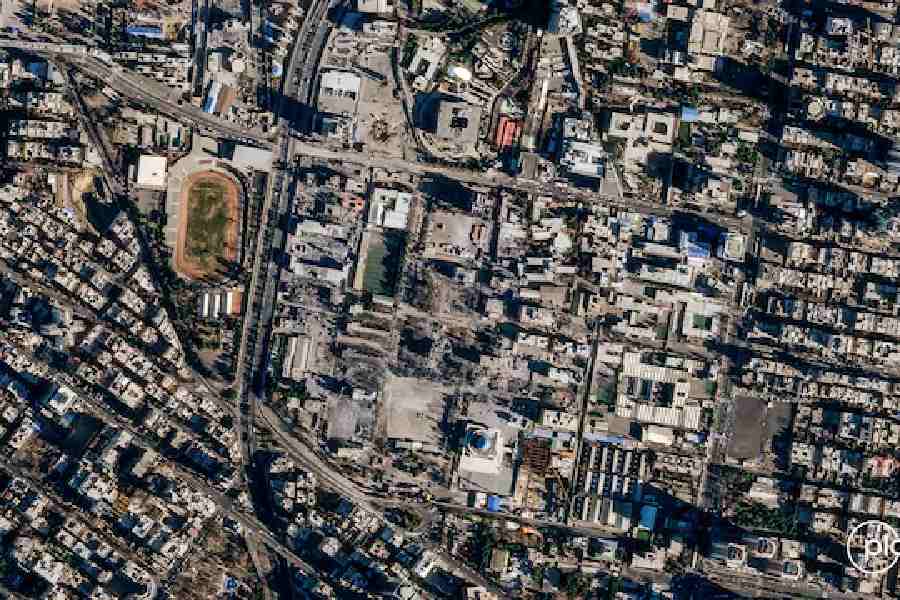
The East Calcutta wetlands provide a unique model for natural management of urban waste. People from across the world come to study it, though enlightened Calcuttans drive past it uncaringly down the Eastern Bypass. Calcutta has no mechanical plant to treat either solid or liquid waste. The entire city?s waste is directed eastward, to vast dump- ing grounds where it fertilizes kitchen gardens; and even more importantly, to a network of canals that purify the water, support fish farms, and finally drain into the Sundarbans.
The whole system costs amazingly little. It generates immense gainful activity ? so much so that people fight and kill to create or seize fisheries. Above all, it positively sustains the environment. If we replaced it by sewage treatment plants, we would need hundreds of crores to set up and run them ? if we could run them. The only such attempt, at Bagjola, broke down soon after commission.
In 1928, the system was in danger of collapse. The river Bidyadhari, which used to take the outflow, was declared a ?dead river?. Mayor Chittaranjan Das persuaded Dr Birendranath Dey to leave a lucrative career in London, join Calcutta Corporation, and devise an alternative outflow through the Kultigong. This is substantially the system still in use. If it silts up, we have no alternative left. The city will choke on its own filth.
Obviously, this is not a case of ?development versus beautification?. The wetlands are different from, say, the Maidan, indispensable though that is too. We need the wetlands, not simply to provide some empty green space (though that is needful enough) but to keep the city functioning at its most basic physical level. Without it, there could be no software parks, no corporate houses, no shopping malls, no condominiums. Besides, the wetlands generate enough economic activity to match any of these sectors, and proportionately more employment than some of them.
Much damage was done in an era when we were less environmentally conscious. It was not foreseen that the Salt Lake reclamation scheme would blank off a whole segment of the area, or the Eastern Bypass block drainage flow. We have less excuse for letting Rajarhat New Town jostle the wetlands, or the Bantala Leather Complex virtually encroach on it (ironically, in the name of environmental protection). The latest addition is the Salt Lake-Rajarhat Bypass; and we are hearing of two more expressways that will cut deeply through the wetlands.
It is not a matter of the actual area occupied by these projects, but the way they impede the natural outflow, break up the total space within which ecological processes operate, and thus reduce a viable biosphere (also a vibrant agro-economic sphere) to unsustainable fragments. This has happened already to the western flank of the wetlands ? i.e., the area west of the Eastern Bypass. If the rest of the belt goes the same way, residents of Park Street and Ballygunge will have to install septic tanks and burn their rubbish on their rooftops. Barabazar might need to be evacuated.
Worse ecological vandalism is endemic in Calcutta?s outer suburbs, unremarked by the media and the elite. Huge water-bodies like Bodai Bil are seriously depleted. The river Sonai has virtually disappeared; even the Churni and the Ichhamati are threatened. Small streams and ponds are routinely filled up from Kalyani to Baruipur. Nearer home, the Metro extension may throttle the Adi Ganga. Even the outflow channels flanking the VIP Road and Eastern Bypass have been filled up with impunity, under the noses of our most influential citizens driving to the airport.
Blessed with abundant water, Bengal seems set to annihilate nature?s gift. Our underground water reserves, the envy of most other regions, have been over-tapped to create the world?s biggest arsenic zone. The countless ponds, lakes and streams across south Bengal provide ? even more crucially than water to use (which may be unhygienic) ? micro-level, cost-free, natural drainage outfalls. By blindly filling them up, we have crammed the suburbs with sewerless middle-class slums. If the wetlands are impaired, high-rise Calcutta will go the same way: the wetlands are to the inner city what ponds and lakes are to the region as a whole.
The people destroying this most vital, most neglected urban space ironically constitute the ?development? lobby. No responsible developer will destroy the urban environment he builds in. Many external investors ? IT firms in Salt Lake or Rajarhat, for instance ? may not know of the environmental support needed to keep their turf physically viable. As for the realtors themselves, some are small-time players with an eye to nothing beyond today?s profit. Others are giant operators who, having brought Calcutta to choking-point within decades, will move their money elsewhere. It is like acquiring tea gardens or jute mills to wring out their resources and leave them terminally sick.
This, one assumes, is where the law should play a part. But the proposed bill would confer immunity on what can now, at least, be challenged in law. It also defies the Ramsar Convention whereby the East Calcutta wetlands, of clearly defined extent, are protected under state guarantee from encroachment and change of land use. This anomaly might prevent the bill from becoming law. One fears all the more the mindset that could even consider such a bill, and wonders what other means it might seek to have its way.
We rightly condemn George W. Bush for placing his compatriots? myopic well-being before humankind?s future by refusing to sign the Kyoto Protocol. If we do not behave differently in our own backyard, we shall have forfeited the moral right to call him names.