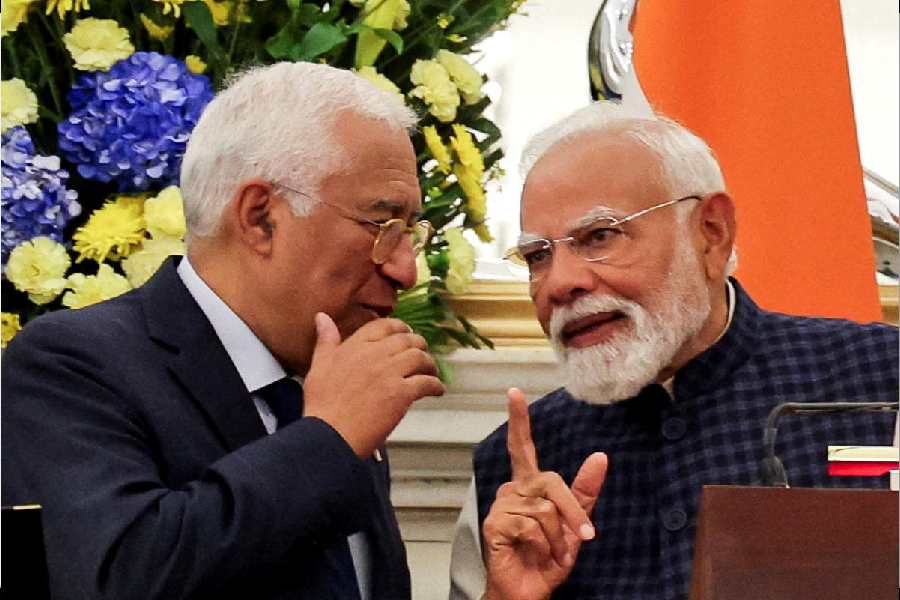
India and the European Union have finalised what is being labelled as the ‘mother of all trade deals’ that promises to remove tariffs on more than 90% of Indian exports to the EU when the accord comes into force early next year. The benefit will be extended to the remaining products over the next seven years. India will reciprocate by lowering tariffs on 97% of the goods it imports from the EU. Initially, New Delhi will slash import duties to zero on 30% of the products it imports from the 27-nation trade bloc, gradually extending it to cover 93% of the trade value over the next 10 years. The deal with Brussels, which will create a market comprising 2 billion consumers and account for almost a quarter of the global economy, sends out a strong message to the United States of America with which talks on a trade agreement have been stalled over a number of prickly issues. The deal with the EU will not cover dairy, cereals, poultry, and sugar in deference to India’s unyielding red lines that Washington has been trying hard to breach. The EU is India’s biggest trading partner with overall trade in goods and services amounting to $212 billion in the year ended March 2025. India currently has a merchandise trade surplus of just over $15 billion with the EU — much smaller than the $40.8 billion with the US, according to commerce ministry data for fiscal 2025. Labour-intensive sectors like textiles, leather goods, footwear, gems and jewellery, tea, coffee and spices will gain duty-free access to the EU market, easing the pangs they have suffered after the US slapped 50% duty on Indian exports last August. India will create a quota-based regime under which it will pare duties on cars imported from the EU from 110% to around 35% in the first year. The duties will eventually go down to 20% but this benefit will not be extended to cars retailing for less than Rs 25 lakh — a barrier designed to protect domestic car-makers. The deal will also slash duties on EU wines and spirits under a quota system. There is also a big relief for Indian students who have been granted visa concessions, including commitments on the issue of post-study work visas.
Some structural challenges remain. The deal will go through a vetting process on both sides and will have to be ratified by the European Parliament which could take up to six months. The EU accounts for 17% of India’s total exports. The hope is that the deal will crank this up to 22% in the next five years.