Hollow symbol
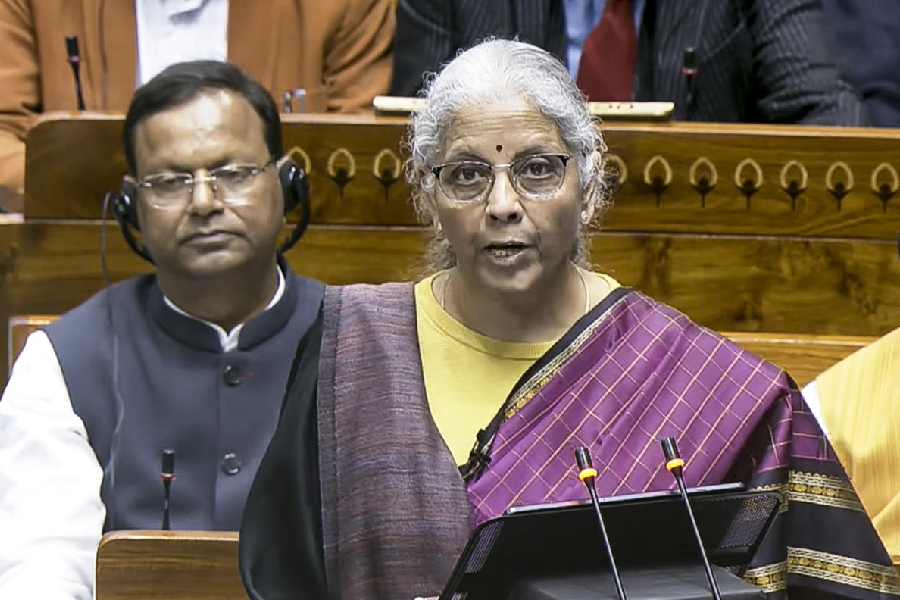
Sir — The annual commentary on the finance minister’s sarees now feels like a parallel budget ritual — one fails to think of a time when the attire of male finance ministers drew such attention. There is another irony in the attention given to Nirmala Sitharaman’s drapes. A majority of Indians cannot afford such handwoven silks. The weavers who produce Kanjivaram, Bomkai, or Pochampally sarees rarely find themselves centre stage in fiscal announcements. Admiration for craft is welcome. Yet admiration does not pay wages. Such symbolism is meaningless without support for artisans.
Shreya Basu,
Nainital
Merely aspirational
Sir — The Union budget for 2026-27 claims to be prudent. Yet it avoids confronting structural weaknesses. Fiscal discipline at 4.3% of the gross domestic product sounds reassuring but it rests on optimistic growth assumptions in an unstable global climate. Export stress, tariff shocks, and weak private investment demand deeper reforms. Capital expenditure alone cannot be a substitute for confidence in policy consistency. The markets reacted sharply — the Sensex fell by over 1500 points — because ambition appeared muted. Stability without reform risks stagnation, especially when households and small businesses face prolonged uncertainty.
Rai Sengupta,
Calcutta
Sir — At first glance, the emphasis on capital expenditure in the Union budget appears sensible. However, repeated reliance on government-led investment exposes the lack of private sector participation. Roads, railways, and defence spending create assets but they do not automatically generate jobs at scale. The slow revival of private investment reflects unresolved issues in access to credit and regulatory burdens. Without clearer signals to bring in private capital, public spending risks becoming a stopgap rather than a growth engine.
Aranya Sanyal,
Calcutta
Sir — The treatment of taxation in the budget feels cautious to a fault. Direct tax reform has been deferred, once again, leaving households dependent on bank deposits with little relief. The omission of changes to interest taxation weakens incentives for financial savings. Meanwhile, the expectation that goods and services tax rationalisation has done enough ignores compliance stress faced by small traders. A budget that seeks balance should address everyday taxpayers.
M.R. Jayanthy,
Chennai
Sir — Market volatility after the budget speech exposed a credibility gap. The hike in securities transaction tax on derivatives may curb speculation; yet it was poorly communicated. Retail investors remain exposed to complex products with limited safeguards. Stronger surveillance would serve households better than incremental tax increases that surprise markets without preparing participants.
A. Bandyopadhyay,
Calcutta
Sir — The support for micro, small and medium enterprises in the budget is welcome, though its scale is modest. A Rs 10,000 crore MSME growth fund sounds substantial but access remains uncertain for firms struggling with delayed payments and weak demand. Linking the Trade Receivables Discounting System to public sector procurement is overdue. Without strict timelines, the budget risks becoming aspirational rather than transformative.
Som Sarkar,
Calcutta
Sir — Subsidy reform remains the budget’s unfinished business. Fertiliser support has been trimmed, yet food subsidies continue without a clear exit plan. Rising minimum support prices inflate fiscal costs year after year. A transparent roadmap is essential to protect beneficiaries while restoring fiscal space.
Fakhrul Alam,
Calcutta