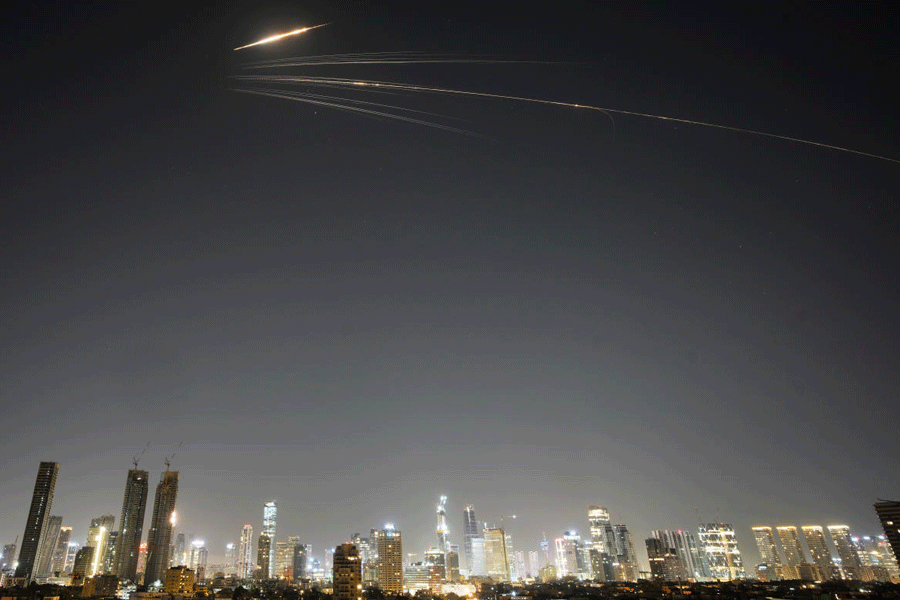
Amid missile and drone attacks, blaring sirens, and mounting uncertainty, countries across the Gulf are preparing for an unprecedented Eid on Friday, with celebrations overshadowed by an escalating regional conflict and its far-reaching economic impact.
The crisis, triggered by attacks on Iran by Israel and the United States on February 28, followed by a wave of assassinations, targeted bombings, and retaliatory strikes, has cast a long shadow over the holy month of Ramzan. The conflict continues to reverberate across the Gulf, raising fears of a wider escalation.
Its cascading effects have begun to disrupt global energy flows, with the Strait of Hormuz nearly at a standstill, threatening energy security worldwide. The fallout is already being felt in countries like India, heavily dependent on Gulf energy supplies. Liquefied natural gas (LNG) shipments from Qatar have been significantly impacted, affecting millions of households across South Asia reliant on cooking gas.
Against this backdrop, Eid festivities are expected to remain muted. Many families have largely stayed indoors due to repeated warnings, with schoolchildren attending online classes. Some residents have ventured out occasionally to maintain a semblance of normalcy, but uncertainty looms large.
“It’s the long-term impact that everyone is worried about. They know they are not the primary targets of these attacks, but it’s the ecosystem that would need some confidence going forward,” said an Abu Dhabi-based Indian engineer on the condition of anonymity.
A healthcare professional in Jeddah said the Indian community has remained calm despite the situation. “They are aware that this is a passing phase and that they have too high stakes to just desert the region.” He added that while the immediate concern is ending hostilities, the crisis could eventually create opportunities, though a resolution does not appear imminent.
Some residents, however, have opted to return to India after securing flight seats and extended work-from-home arrangements. Air India and Air India Express have announced scheduled and special flights focused on the UAE, Saudi Arabia, and Oman, even as certain Gulf routes remain “temporarily suspended.” The airlines confirmed continued operations to Jeddah and Muscat, including 16 flights between India and Jeddah.
Authorities across the Gulf are tightening security measures to ensure safe observance of Eid. In the UAE, Eid-ul-Fitr prayers will be held exclusively “inside mosques, instead of the traditional outdoor gatherings, in light of regional security concerns.” The General Authority for Islamic Affairs and Endowments (GAIAE) said the move “aims to ensure the safety and security of worshippers.” Qatar has also decided to hold Eid prayers indoors at mosques nationwide.
Despite the tense atmosphere, signs of resilience persist. Shopping malls remain crowded with last-minute buyers, particularly women preparing for the festival. Leaders and officials have exchanged Eid greetings, while authorities continue working to maintain order and security amid heightened aerial threats.
This year’s Eid stands apart—one defined not by celebration alone but by uncertainty and hope. For many in the region, it carries a quiet wish: that the festival may bring not just greetings and gatherings, but news of peace or at least a ceasefire.