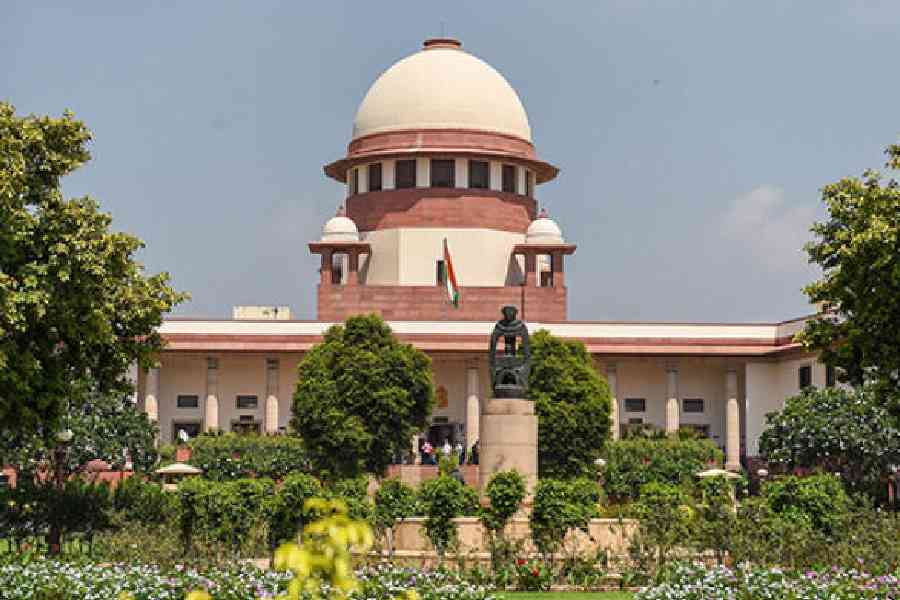
The ‘creamy layer’ concept applies to certain categories of other backward classes candidates whose families have acquired social and economic privileges. Such candidates are excluded from reservations. This month, the Supreme Court ruled that parental income alone cannot be the criterion to determine whether an OBC candidate belongs to the creamy layer or not. The ruling resolves a confusion regarding the application of the income or wealth test that the regulations require. It would apply specifically to candidates whose parents work in public sector undertakings or private enterprises where the equivalence of these posts with government positions is not established. The ruling seems to indicate that it is the status of the post that is more important than the income. In 1993, the department of personnel and training issued an office memorandum listing the categories of OBC candidates who would fall under the creamy layer concept — the children of people holding constitutional positions, such as president and vice-president, or those in the higher judiciary, or Class I and II government officers and so on. This indicated the kind of social privilege that would exclude OBC candidates from reservations.
The confusion arose in the income test. While the limit was set at an annual income of eight lakh rupees in 2017, the DoPT in 1993 had said that income from salaries and agricultural land would be excluded from the test, and only income from property, business and capital gains should be considered. In 2004, however, the DoPT seemed to include all income above eight lakh rupees for three years running in the wealth test. The Supreme Court said that merely including the income from salaries of parents employed in PSUs without regard to the status of their posts would lead to discrimination between their children and the children of parents in government posts. Equals would be treated unequally. Income, therefore, cannot be a criterion without the associated social status in determining the creamy layer. The Supreme Court has restored balance in the creamy layer concept. Meanwhile, the Bharatiya Janata Party-led government has tended to deal delicately with the issue, having faced opposition even internally regarding the inclusion of salary and agricultural income in the wealth test. It is, however, professedly committed to never allowing the introduction of the creamy layer concept to scheduled caste and scheduled tribe reservations.