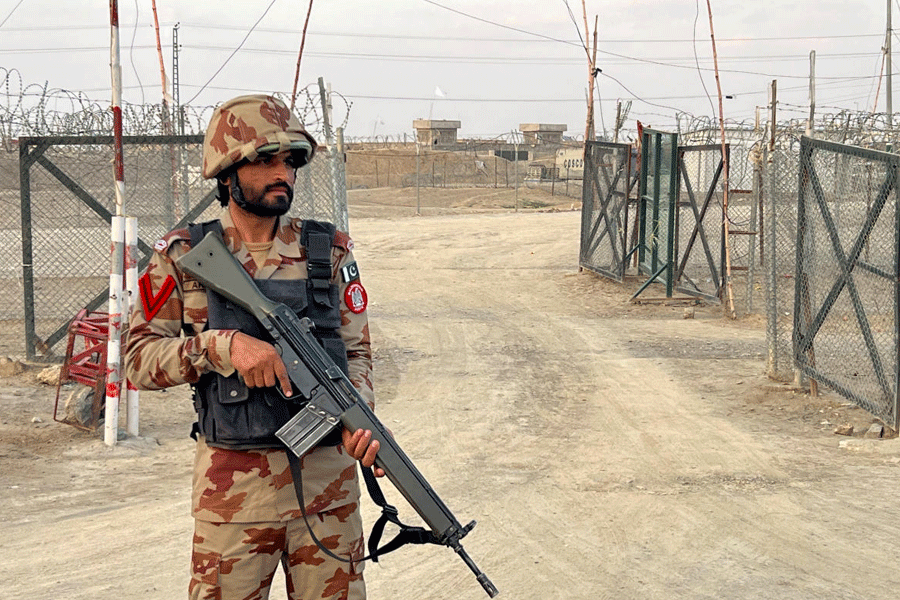
Afghanistan’s accusation that Pakistan bombed a de-addiction hospital in Kabul, killing at least 400 people, is the latest instance of one of modern warfare’s most critical casualties: international law and the rules-based order. Pakistan has denied the allegations by the Afghan Taliban. But evidence from the ground, including images and videos, paints a gory picture of death and devastation caused by missile explosions. Earlier this month, a missile rammed into a school in Iran on the first day of the joint war launched on that country by Israel and the United States of America. There, too, the US president, Donald Trump, initially claimed that Iran might have been behind the attack on its own children, even though independent analysts have converged on the conclusion that a US Tomahawk missile was responsible for it. In Gaza, Israel has killed more than 70,000 people — a vast majority of them civilians, including tens of thousands of women and children — during a war that continues under the guise of a supposed ceasefire. In Ukraine, Russia has repeatedly targeted civilian infrastructure, including power plants, while its bombs and missiles have also hit residential apartments.
These are all clear violations of international law and the rules of war that were painstakingly put in place after the Second World War through the United Nations and its institutions. To be sure, war crimes have been committed ever since, in multiple conflicts. Yet, those occasions were widely called out in the court of public opinion and, occasionally, in courts of law. Governments that abused international law tried to pretend they were in the right, and that war crimes were acts carried out by individual offenders or were mistakes. In 2026, the global landscape looks very different. The US secretary of defence, Pete Hegseth, has publicly said that his country’s military will give “no quarter” to its Iranian enemies — a comment that, if followed through on, would represent a clear war crime under the Geneva Conventions, according to many legal experts. Mr Trump has casually spoken of how he could, if he wanted, order the bombing of Iran’s electricity grids. Both the US-Israel campaign and Iran have already struck desalination facilities crucial for the survival of people in the Gulf. Democracies that claim to care about the rules-based order must take the lead in pressuring all aggressors to return to the rules of engagement during conflict. If the war on international law continues, no one will be immune.