Woolly armour
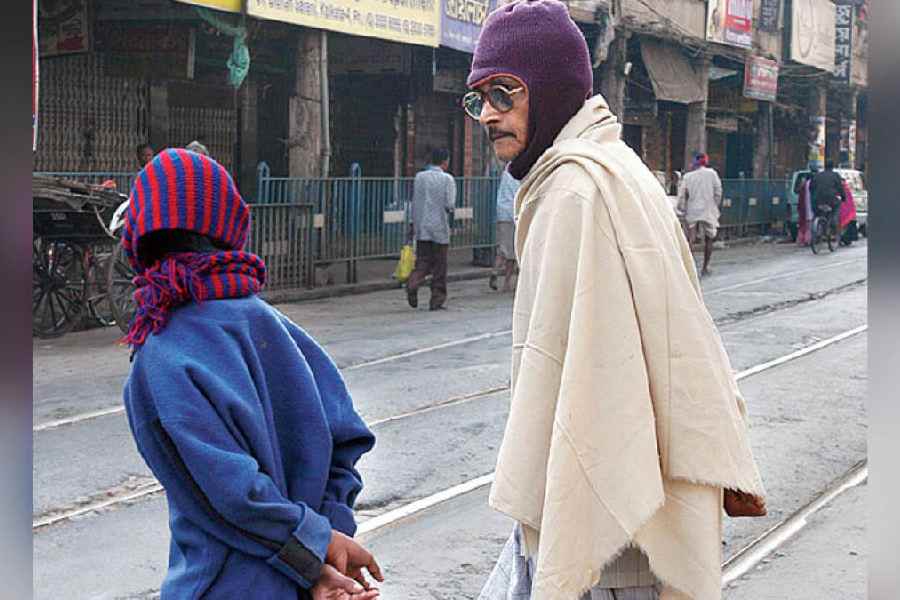
Sir — Just when Calcuttans had packed away their heavy woollens and ruled out the use of room heaters, the weather gods hit the city with a surprise chill. For a city that is accustomed to mild winters, the mercury plunged to 10.2°Celsius on Tuesday morning — the coldest January day Calcutta has experienced in years — sending an unexpected chill down spines. But fear not — the sheetkature Bengali population remains unshaken in the face of this ‘formidable’ weather. While everyone else has been taking to social media to marvel at the sudden cold, uploading reels with doctored images of city landmarks blanketed in snow, Bengalis seem to reach instinctively for their trusted monkey tupis — the legendary woolly armour that covers head, ears, and dignity.
Debottam Bose,
Calcutta
Ironic parallel
Sir — The Dera Sacha Sauda chief, Gurmeet Ram Rahim Singh, who is serving a 20-year jail term for raping two of his disciples and is convicted in the murder of a journalist, was granted a 40-day parole, once again. This is the 15th time that Singh will be released from jail since his conviction in 2017 (“Dera chief gets 15th parole”, Jan 6). The repeated leniency extended to a high-profile convict raises serious questions. Similar indulgence is seen in cases involving other so-called godmen, such as Asaram Bapu and Nithyananda.
What is striking is that many of Singh’s paroles have coincided with assembly elections in states like Punjab, Haryana, and Delhi, fuelling suspicions that his large follower base is being politically leveraged. This reflects a deeper malaise: the political shielding of criminals under the garb of religious expediency. The mishandling of cases involving powerful godmen exposes how faith is weaponised.
Bidyut Kumar Chatterjee,
Faridabad
Sir — It is ironic that bail was denied to two prominent activists, Umar Khalid and Sharjeel Imam, on the same day when Gurmeet Ram Rahim Singh was granted his 15th parole in nine years.
G. David Milton,
Maruthancode, Tamil Nadu
Sir — Gurmeet Ram Rahim Singh will stroll out on his 15th parole as though imprisonment were merely a minor inconvenience. Endowed with privileges that would be the envy of bureaucrats — postings closer home, assured tenure and generous leave — he appears to enjoy surprising entitlements while the supposed stigma of jail is effortlessly erased by his loyal followers. At the same time, social activists remain behind bars.
A society flourishes when governance prioritises fairness over favouritism and justice over influence. Until that balance is restored, irony will continue to script the nation’s headlines.
R.S. Narula,
Patiala
Written empathy
Sir — The article, “Two cosmopolitans” (Jan 4), by Mukul Kesavan on Zohran Mamdani’s letter to Umar Khalid was beyond impressive. Kesavan sought to draw a comparison between the two figures. The former is the newly-appointed mayor of New York City and the latter an activist who has been in prison for more than five years. Though strangers to each other, Mamdani’s words conveyed a profound sense of empathy, acknowledging the pain and the suffering endured by Khalid during incarceration.
Murtaza Ahmad,
Calcutta
Sir — Zohran Mamdani and eight other American lawmakers who appealed for bail for the activist, Umar Khalid, should also bear in mind the nature of the case. While it is true that under Indian criminal jurisprudence, bail is the rule and jail the exception, this principle does not automatically extend to cases involving grave offences or allegations of destabilising activity against the nation.
Mamdani, having just taken the oath as mayor of New York, has made several ambitious promises to his electorate. It would perhaps serve him better to focus on fulfilling these commitments rather than intervening in a legal matter that has been placed before the Supreme Court
of India.
V. Jayaraman,
Chennai
The fall guy
Sir — The Board of Control for Cricket in India’s decision to bar the participation of the Bangladeshi pacer, Mustafizur Rahman, seems to be a fallout of the simmering tensions between the two neighbouring countries (“BCCI takes ‘Fizz’ out of KKR”, Jan 4). Rahman was among seven Bangladeshi players who had registered for the Indian Premier League and the Kolkata Knight Riders secured him for 9.2 crore rupees. This triggered outrage from the right-wing who targeted the KKR co-owner, Shah Rukh Khan, for his Muslim identity and questioned his loyalty to the nation.
The absence of similar criticism against the BCCI itself for allowing Bangladeshi players to register in the first place is baffling. Targeting Khan neither eases tensions with Bangladesh nor reflects well on India. It is ironic that India aspires to host mega sporting events like the Olympics while displaying such intolerance towards its neighbours.
Aayman Anwar Ali,
Calcutta
Sir — By no stretch of logic can Mustafizur Rahman be made to answer for the crimes perpetrated by communal elements in Bangladesh. The BCCI deserves the strongest condemnation for capitulating to the pressures of the Hindutva brigade and directing KKR to drop the Bangladeshi pacer from the squad.
Kajal Chatterjee,
Calcutta
Sir — The removal of Mustafizur Rahman from KKR has elicited strong reactions from several quarters in Bangladesh. This comes just as the ties between New Delhi and Dhaka were beginning to thaw after months of tensions.
Khokan Das,
Calcutta