“He who lives by the sword dies by the sword,” says the Bible. Hussain Ustra lived for women and died because of them.
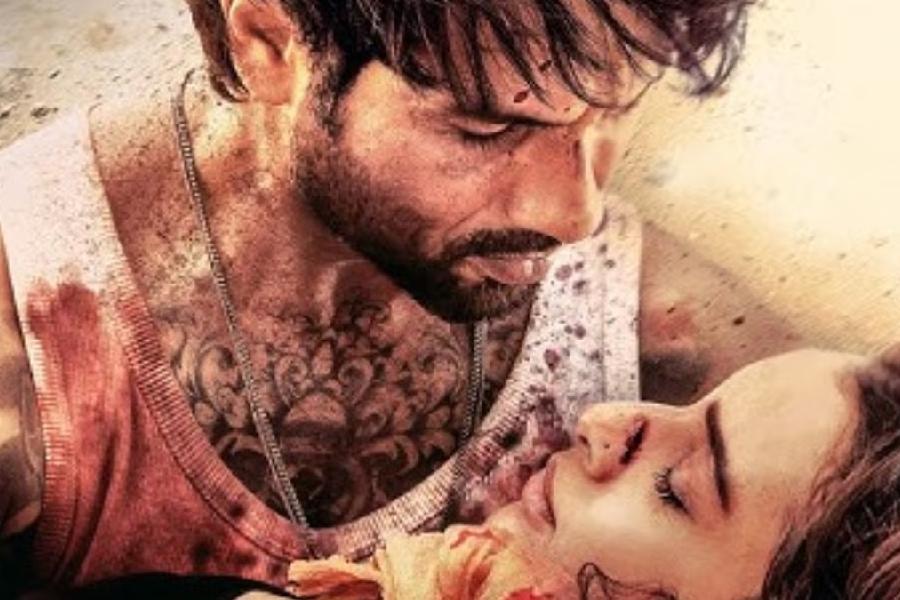
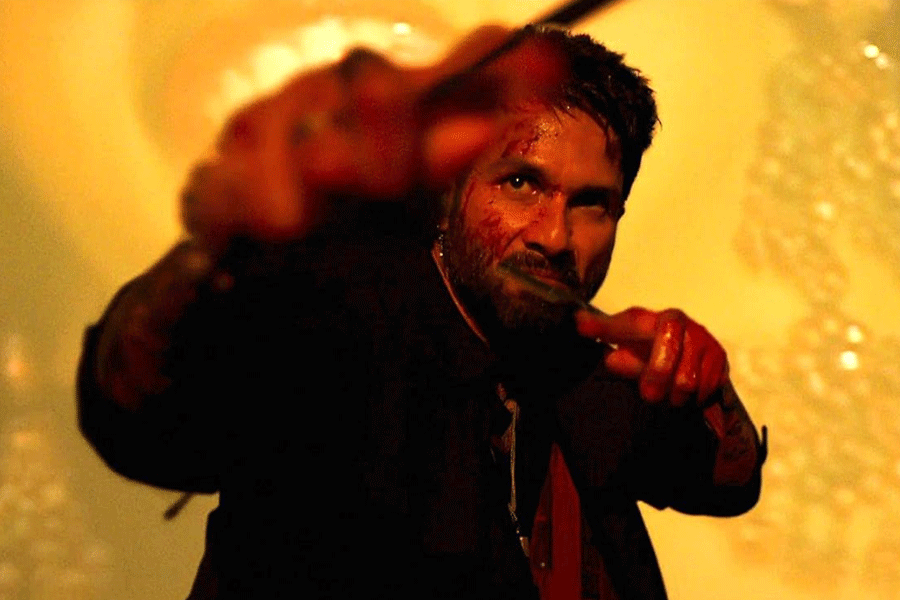
The movie O’ Romeo, reportedly based on the life of Ustra, was released in theatres last weekend. Directed by Vishal Bhardwaj, it stars Shahid Kapoor as Ustra.
But how was Ustra in real life?
A snippet of it can be found in author Vikram Chandra’s essay titled Cult of Authenticity, published in the Boston Review.
Ustra lived in the narrow, crowded lanes of Dongri, which can be touted as Mumbai’s Bronx, in a locality called Jamri Mohalla.
“A brown door opened for us, and as I went in, I touched it with my hand and realised that it was metal,” wrote Chandra.
Inside was a bank of closed-circuit television screens switching through multiple cameras.
Fearing for his life because of Dawood Ibrahim’s threats, Ustra watched everyone who came up the street.
In the movie, Avinash Tiwary essays the role of Dawood.
Unlike Shahid Kapoor in the movie, Ustra himself was a paunchy man who dressed in a tailored white shirt and trousers, quite typical of a reel villain like Ajit from 1970s films.
But Chandra writes, “He would have been completely at home at a Nariman Point lunch for stockbrokers.”
He was “dapper”, spoke refined Urdu and had an “elegant haircut”.
Ustra was patting cologne on his cheeks when they met. The brand was Paco Rabanne.
“He told me about his life, about his early use of straight razors to settle arguments, and his rise to commanding his own company, or gang. He told me about his war with Dawood Ibrahim,” Chandra wrote.
Ustra took pride in the fact that his boys followed Islam and that none smoked or drank.
The visitors asked Ustra about his rules when it came to women.
“Who doesn’t like women?” he said.
And this is what did him in.
Six months later, Ustra went for a rendezvous with a woman.
The woman was reportedly related to Dawood, Ustra’s bête noire. But he took the risk and went alone, with no bodyguards, only a driver.
He went up, spent time with her, and then came down.
“He opened the door to the car, bent to get in, and somebody stepped up close behind him and fired two bullets into his temple, one into his neck as he fell, and one more into his back. And that was the end of Hussain Ustra,” wrote Chandra after speaking with the police.
“Why did he go there? And after all his closed-circuit televisions and metal doors, why alone?” Chandra asked the cop.
“Who knows?” the cop said. “How many times I told him not to go there. He had become a Majnoon.”
Majnoon, meaning “madman” in Arabic, lost his sanity because of grief and roamed the desert, crying out his lover’s name. In the end, he dies along with Laila, his lover.
The cop added that even Bholenath could not escape the clutches of love — a reference to Shiva, who once fell for Mohini.