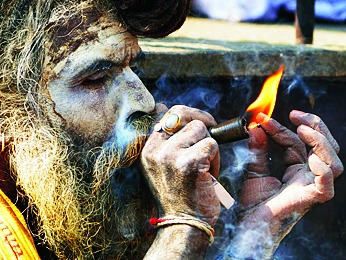

Like the proverbial, myth-ridden ostrich, they are known to bury their heads under the earth for days and emerge unscathed. Sometimes they stand, limbs akimbo, supposedly performing miracles like bringing rain to drought-stricken villages, communing with fauna (the monkey-whisperer or jumbo-jabberer), or helping distraught youths find soulmates. Meet the Naga (unclad) sadhus who grace Kamakhya temple in Assam for the annual Ambubachi mela. The four-day fair, beginning today, attracts lakhs of devotees and tourists. Last year, the footfall had exceeded 10 lakh.
This year, the state's tourism department has splashed advertisements on the national media of its "Ambubachi Special Tour Package" to "Awesome Assam," offering tented accommodation on Nilachal hill in Guwahati, home to the renowned shakti peeth temple, or on the five-deck luxury liner, MV Mahabaahu, anchored at the Kamakhya foothills. No one had factored in the landslides on this hill over the past week, or the surging Brahmaputra, on which the ship is supposed to 'cruise'.
If that wasn't enticing enough, the advertisement highlights that "the tour will be guided by specially trained pandas". The proximity to China may prompt the uninitiated to think of the cuddly black-and-white creatures that share this nomenclature, but actually refers to the homo sapien temple hands whom I have always avoided with alacrity.
Bearing the brunt of the tourism promotion effort this year are the Naga sadhus, with the Kamakhya temple authorities deciding not to allow them at the main venue of the mela, because "such elements can hamper Assamese culture." They will be relegated to a separate zone in Abhayananda ashram in the western part of the temple. "This type of spiritualism will not be allowed at the main venue of the fair from this year. Many people visit the temple premises during the fair with their families and they feel uncomfortable at the sight of these sadhus. So we have decided not to allow them to move around; instead, we will arrange a separate place for them," said the head priest of the Kamakhya temple, Pabindra Prasad Sarma Doloi. Isn't it amazing that while most of the photo shoots revolve around these sages every year, it is only now that the visitors' comfort quotient is being considered?
Those of us familiar with the nuances of contemplative photography have found merit in the stunning portraits of ascetics smoking pot or drinking country liquor out of a buffalo horn. The stark pictures of saffron-clad or ash-covered torsos, conch or pepa in hand, with the dome of the Kamakhya temple in the backdrop have been associated with the Ambubachi mela from time immemorial. Last year, Kamakhya was declared a no-nicotine zone, but the message had certainly not percolated to the seers who probably see in the trails of wispy ganja smoke a shortcut to nirvana.
Researchers from all over the globe, having savoured a rendezvous with Kamakhya's annual ritual on a midsummer's new moon phase, have returned with photographic mementos of the colourful Himalayan hermits. As promotionals go, the russet advertisement of the Assam tourism department, with the word 'SEEK' in capital letters, is certainly eye-catching. One only wonders why the authorities have chosen to prohibit the sadhu parade and hide the seers, a primary attraction. Will this tacit hide-and-seek at Kamakhya add a new dimension to the sun-and-cloud monsoon chiaroscuro now ravaging Assam?