There is a useful thought experiment for understanding what is at stake in the West Bengal assembly elections that begin today. Imagine a state that has, for nearly two centuries, been one of the prominent laboratories of Indian modernity: the site of the Bengal Renaissance, of Rammohan Roy’s reformism, of Tagore’s cosmopolitan pluralism, of Subhas Chandra Bose’s fierce, anti-colonial militancy, of the Left Front’s three-decade experiment in electoral Marxism. Now, imagine that laboratory is being methodically besieged. The question the election poses is whether a distinctive, citizen-led, argumentative tradition of politics can survive the most centralised concentration of institutional power India has seen since the Emergency.
As of early 2026, the Bharatiya Janata Party governs 15 Indian states outright, while its National Democratic Alliance controls governments in 19 of 28 states and holds 293 Lok Sabha seats, translating to 54% of the chamber. Never since the Congress’s hegemony in the first decades of Independence has any political formation simultaneously controlled so much of India’s federal landscape. At its core, Bengal tests whether a proudly progressive state led by a strong regional party can withstand a sustained BJP expansion and whether India’s federal democracy retains any meaningful plurality at all.
What I have elsewhere called the jurisprudence of fait accompli, the use of constitutional institutions not to uphold law but to engineer political outcomes and, then, present those outcomes as facts on the ground, has been deployed against Bengal with particular intensity. The Election Commission of India’s Special Intensive Revision of electoral rolls has become intensely contentious, with reports of large-scale scrutiny and deletions. The Enforcement Directorate and the Central Bureau of Investigation have been active. The BJP has framed corruption cases as evidence of systemic governance failure; the Trinamool Congress has countered by alleging political targeting, turning enforcement itself into a political issue. In West Bengal, the TMC portrays itself as the last major eastern citadel resisting BJP expansion, a framing that has proven electorally effective before. This resilience stems from the fact that political consciousness, once embedded in the grain of social life, is hard to circumvent through institutional manipulation.
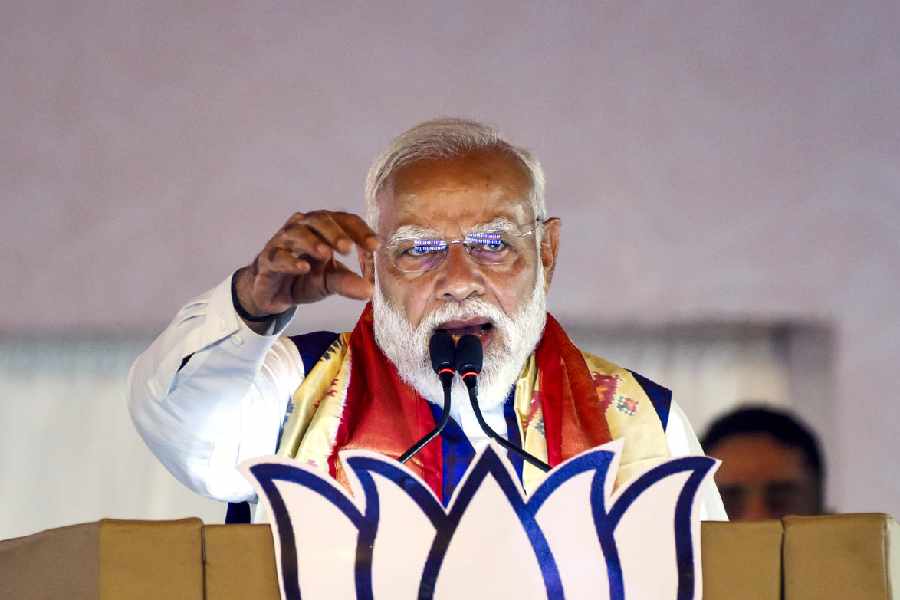
In almost every political rally during the 2021 campaign, Prime Minister Narendra Modi repeatedly addressed the chief minister, Mamata Banerjee, with the now-infamous refrain, “Didi, O Didi.” The catcalling did not sit well with women in a state where traditions of social equality and self-respect run deep. Bengal responded at the ballot box as the taunt had landed in a political culture that prizes argument as a way of life. As Amartya Sen recalls, drawing on Raja Rammohan Roy, the true horror of death in the Bengali imagination lies in the inability to argue back. To be denied the dignity of response is, in a sense, to be silenced into non-existence.
A society that has historically placed reasoned disagreement at the centre of its intellectual and political life does not respond kindly to condescension or derision. The discomfort was not merely political but was civilisational as well. Significantly, the BJP appears to have recalibrated its approach this time, largely avoiding direct personal attacks on the chief minister.
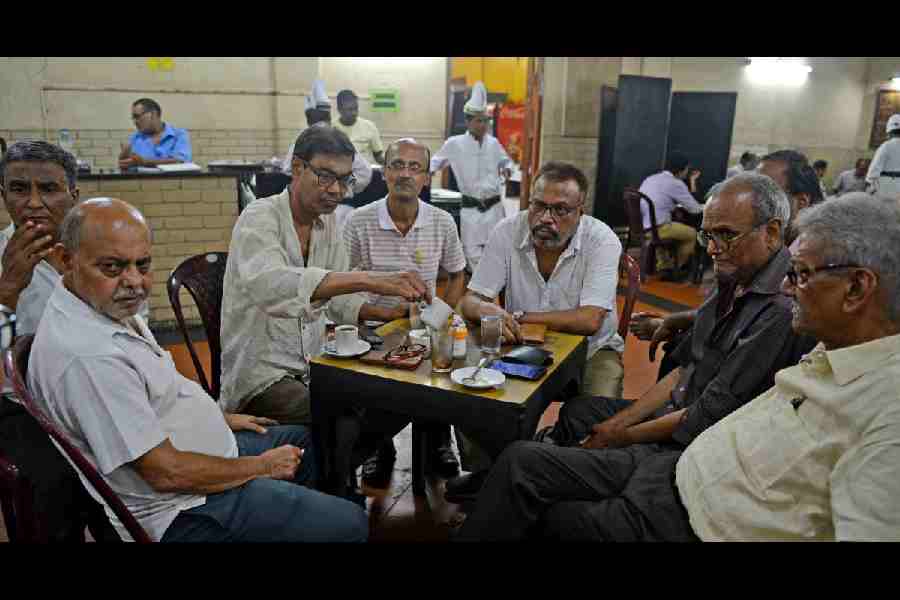
To understand why Bengal is different, one must begin with what Amartya Sen famously called the argumentative Indian, the idea, drawn from two millennia of Indian intellectual life, that public reasoning and democratic dissent are not Western imports but indigenous habits of mind. Sen argues that this tradition is critically important for the success of India’s democracy, the defence of its secular politics, the elimination of inequalities related to class, caste, gender and community, and the pursuit of subcontinental peace. Bengal has been the most sustained institutional expression of this tradition. It gave us the adda, the informal but politically-charged conversational gathering, as much a form of public sphere as any newspaper or Parliament. The infusion of politics into every domain of Bengali life, spanning literature, cinema, commerce, and the domestic sphere, is a civilisational achievement.
Bengal has a long tradition of intense ideological politics, transitioning from the Left Front’s 34-year rule to the current TMC dominance. Political polarisation has rarely succeeded in creating lasting social discord because in Bengal, polarisation has traditionally been embodied in the exchange of ideas. Even the Supreme Court’s recent characterisation of Bengal as India’s “most polarised state” misreads this history. To pathologise an argument is to confuse a living democracy with a disorder requiring management.
The liberal commentariat, that chorus of editorialists and economists who celebrate market efficiency above distributive justice, has long been uncomfortable with Bengal’s politics, and the discomfort is instructive. What it means, when it complains about Bengal, is that the state has been inhospitable to the kind of unimpeded capital accumulation that passes for development in the dominant national imagination. The labour movement has historically been strong. Land has not been easily available for dispossession. The adda has produced a citizenry that knows the difference between a model of development that treats land and labour as inputs to be acquired cheaply, and one that insists those who own the land and supply the labour have a prior claim on the terms of the transaction.
What the commentariat chooses not to say is that Bengal produced some of postcolonial India’s most significant land reform. It does not engage seriously with the fact that the Kanyashree, Swasthya Sathi and Lakshmir Bhandar schemes represent a redefinition of development in which the woman at the base of the household, not the industrialist at the top of the value chain, is the primary unit of policy. Female literacy, infant mortality and life expectancy in Bengal have tracked improvements that many high-growth states have failed to match. The fact that BJP, a right-wing party built on market ideology, has had to adopt this grammar, however instrumentally, tells us that Bengal has won an argument the commentariat wished it would lose.
The probashi Bengali, scattered across the country and the world, tends to oscillate between nostalgia and detachment. That detachment is a luxury the moment no longer affords. What is being contested in Bengal right now is whether India’s federal democracy can sustain genuine pluralism, or whether it will settle into a managed uniformity in which every public sphere is flattened to a single register. The Bengali diaspora must bear witness. Document it. Argue about it in its own addas, however virtual. The argumentative tradition is not a relic to be preserved in amber. It is a living practice that must be exercised, or it will atrophy. As a Bengali villager told Amartya Sen just before the 2004 elections: “It is not very hard to silence us, but that is not because we cannot speak.”
Bengal is speaking. The republic should be listening.
Manoj Kumar Jha is member of Parliament (Rajya Sabha), Rashtriya Janata Dal