 |
Prasanna Acharya looked frazzled. The chairman of the Lok Sabha Committee on the Member of Parliament Local Area Development Scheme (MPLADS) had clearly not bargained for this when he went for a meeting early in the morning.
It was January 25 and the parliamentary committee was to meet a few television journalists who had been reporting on the alleged misuse of the development funds. It was part of an inquiry carried out by a team of MPs headed by Pawan Kumar Bansal, the Congress parliamentarian from Chandigarh.
Shortly before the meeting began, a former BJP MP, however, dropped a bombshell, accusing Bansal, now Union minister of state for finance, of donating development money to a golf club in his constituency. It was, ironically, the very abuse of the scheme he had been asked to probe by Lok Sabha speaker Somnath Chatterjee. As television channels kept playing the news, Bansal ? seething with rage ? threatened to resign from the inquiry committee, turning the meeting’s agenda upside down.
Bansal admitted giving Rs 5 lakh from the MPLADS to the golf club to build a squash court but said the money was returned after the club near the Raj Bhavan failed to build it for security reasons.
“It’s one controversy after another. I did not know what to do,” says Acharya, a Biju Janata Dal MP from Orissa, with a hint of frustration in his voice.
To be sure, the scheme has been dogged by controversies ever since its launch in 1993. If the media are reporting of its growing misuse by Members of Parliament, the Comptroller and Auditor General of India (CAG) has detected frauds, irregularities and misappropriation of funds under the scheme.
But to cap it all, MPLADS’ critics say that the scheme has ? openly and brazenly ? violated the country’s Constitution, squarely undermining elected local bodies. The scheme provides each MP with Rs 2 crore a year to carry out development work in his or her constituency, which, however, are primarily the jobs of local gram Panchayats and municipalities under the 73rd and 74th amendments to the Constitution.
As if this was not enough, the scheme, critics note, has blurred the constitutional line that separates the legislatures from the executive, allowing lawmakers to “usurp” the role of officials who are supposed to plan and spend at the bidding of local government. It also gives sitting MPs an unfair edge in electoral politics as the money could be spent with a political end in mind.
The National Advisory Council headed by Sonia Gandhi recommended last year that the scheme be “dispensed with” or the funds be spent through panchayati raj institutions.
Needless to say, Members of Parliament ? Lok Sabha or Rajya Sabha ? are loath to part with the money provided by the scheme. For one, the money made available to them under the scheme is huge. A Lok Sabha MP, for example, gets Rs 10 crore under the scheme for five years in Parliament, while a Rajya Sabha member gets Rs 12 crore for a six-year tenure.
With so much money at their discretion, it’s little wonder that MPs of all shades and persuasions ? barring those from the Left parties ? are reluctant to see the scheme scrapped. For all the brouhaha that followed a recent television expose of misuse of MPLADS by some MPs, members of both houses who attended an all-party meeting in December ruled out bringing the scheme to an end.
It may be good news for MPs, but, plainly, bad news for the people of the country. The Union government can spend up to approximately Rs 1,580 crore a year for its 545 Lok Sabha and 250 Rajya Sabha MPs. By the Centre’s own admission, it has released more than Rs 14,527 crore in the last 13 years for the scheme. Many see it as a colossal squandering of taxpayers’ money.
“The CAG report (of 2001, the latest available) clearly shows the gross violation of the scheme, especially the way the funds have been spent and how accounts have not been maintained,” says senior Supreme Court advocate K.K.Venugopal, who is fighting a public interest litigation case filed with the apex court by Panther’s Party chief Bhim Singh questioning the validity of MPLADS.
Alarmingly, the scheme has spawned offshoots over the past decade, with MLALADS coming into effect in several states, including Delhi. According to Buddhadeb Ghosh, a Calcutta-based social scientist, even zilla parishad members in some states such as Sikkim have now come up with a similar scheme to carry out development in their areas.
“It’s really shocking especially when you compare the amounts the MPs get by way of MPLADS to what our local bodies get,” says George Mathew, director of the New Delhi-based Institute of Social Sciences (ISS), which released a study in 2005, tracing the evolution of the scheme and its pitfalls since inception. Mathew says the Panchayats and municipalities ? the real engines of local development ? have been starved of funds while “our lawmakers take away thousands of crores of rupees every year in the name of development.”
It’s perhaps a supreme irony that the P.V. Narasimha Rao government conceived the MPLAD scheme a year after it amended the Constitution in December 1992 to empower local bodies, something that Rajiv Gandhi had tried, but failed to bring about for want of support in Rajya Sabha in 1989. “It’s a classic case of a government giving with one hand while taking away with the other,” Mathew says.
When the scheme was launched in December 1993, an MP was given only Rs 5 lakh a year for development work. Within a year, the amount was jacked up to Rs 1 crore. By 1999, it had doubled to Rs 2 crore per MP a year.
Barring a few stray voices from the Left, the MPs were unanimous in raising funds for their constituencies.
Yet questions remain about the constitutionality of the scheme.
Articles 243G and 243W of the Constitution, which deal with the powers, authorities and responsibilities of the Panchayats and municipalities, entrust these “institutions of self-government” with the power to prepare and implement plans for economic development and social justice.
But when lawmakers take it upon themselves to “conceive and fund” development schemes in their constituencies, the move clearly runs counter to these constitutional provisions, legal experts say.
“MPLADS is patently unconstitutional as local self-governments have no say whatsoever in the way plans are prepared or the funds spent. It’s completely at the discretion of the local MPs,” Supreme Court lawyer Prashant Bhushan says.
The scheme, in fact, has long been facing criticism. E. S. Venkataramiah, former chief justice of the Supreme Court, called it a “sadistic interference with the legitimate contours” of the Constitution. “To involve individual MPs to exercise any discretionary power which is within the realm of the Union executive appears to be wholly outside the Constitution,” the jurist noted in an article in 1997, explaining how the scheme blurred the line dividing the executive from the legislature.
Former Parliamentarian Era Sezhiyan ? who studied the scheme for more than a decade and penned the ISS report called “MPLADS: Concept, Confusion and Contradictions” ? says the scheme goes against the basic tenets of the Indian Constitution, obstructing the process of decentralisation of authority and resources in the country. “It’s a fraud on our Constitution and a blot on our democracy,” Sezhiyan, who spent 22 years in Parliament as an MP, says.
If the CAG reports are any indication, the basic objective of the scheme ? to create “durable” community assets like roads, drinking water and sanitation ? has been defeated as well. The CAG report of 2001 refers to at least 13 cases of suspected fraud and misappropriation of funds detected in seven states.
 |
The CAG also detected several other “irregularities”. The funds meant for development were spent on building temples and mosques even though the MPLADS guidelines explicitly prohibit its use for any religious purposes. The report says that “contrary to the guidelines, in the audit sample of seven states involving 13 constituencies, the DCs allowed expenditure of Rs 74.12 lakh on 66 works belonging to places of worship such as development work of Ram Krishna Mission, construction of fishery tanks with masjids, boundary walls of temples, sarai/guest houses in temples, construction of Gumpa etc.” It regrets that the government had “ignored” similar findings in the 1998 CAG report as well.
Some MPs in Assam, Bihar, Karnataka and West Bengal were found to have used the funds to build memorials. In five states, the CAG found that some MPs had even given “loans, grants and donations” from MPLADS.
The CAG also chided the Union government for not laying down a “suitable accounting” procedure, which, it said, contributed to the financial “maladministration” of the scheme.
Still, most MPs insist that the scheme is “in the interest of the public at large” and thus should continue. Not all MPs have misused the funds, either. The MPLADS website carries several pictures of projects implemented by MPs who have followed the guidelines.
MPLAD committee chairman Acharya says the scheme has enabled MPs to meet the people’s rising expectations by funding development works done in their constituencies.
“In any case, would you scrap a government scheme because some people have misused it? In fact, it would be hard to find a single government scheme that has not been misused sometime or other in the country,” the Sambalpur MP argues. In the same breath, he however, regretted that the MPLAD funds diverted for tsunami victims have not been utilised at all in the Andamans.
Oscar Fernandes, Union minister of state for statistics and programme implementation, which oversees the scheme, says his ministry has taken a number of steps to bring about transparency and ensure proper utilisation of the funds. Fernandes says MPs’ proposals are now regularly being posted on the MPLADS website so that people can raise objections if they wish to.
In any case, Fernandes says an MP can only recommend a development project under MPLAD. It’s for a district collector (DC) to scrutinise and implement it. But even here, the scheme is pitted with gaping holes.
As an MP puts it, if you belong to the ruling party an obliging bureaucrat will be ready to sanction any project. “But they raise all kinds of objections when you belong to an opposition party,” the MP adds.
But Fernandes stresses that his ministry is “closely” monitoring the scheme. “We have asked the DCs to scrutinise a recommended scheme within 45 days and also furnish utilisation certificates for the funds quickly,” he adds. As a result, the utilisation of the MPLADS funds have gone up from 82 per cent to 89.54 per cent over the last year.
But Fernandes acknowledges that “contradictions” exist in the scheme when viewed against the other constitutional provisions. But he rules out its withdrawal. “Even the MPs who once opposed it want it to continue. They have all got used to it,” the minister says.
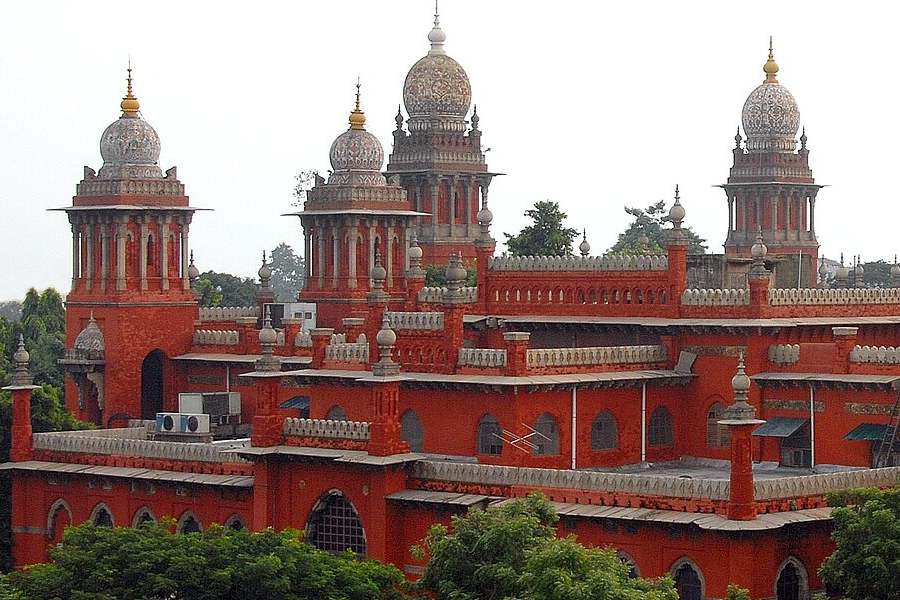
George Mathew of the ISS has not given up hope, though. He feels that all the efforts that had gone into making the report ? a scathing indictment on the scheme ? will not go down the drain. He mumbles a prayer each time he looks out of his car window at the sandstone fa?ade of the Supreme Court. After all, the public interest case is expected to come up for hearing shortly.