The charm of Calcutta’s book fair — the city is already awaiting its next edition — transcends the reading and the purchasing of books. The event is also a fertile occasion that witnesses the exchange of ideas, provocative and otherwise.
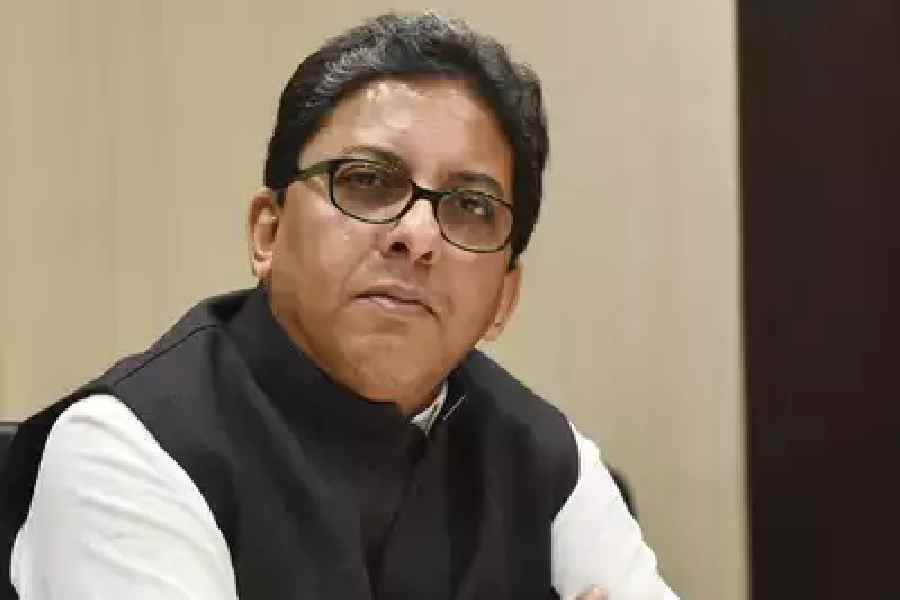
Consider the discussion that took place during the launch of a book by Alapan Bandyopadhyay in which the author, now chief adviser to the chief minister, argued that the remedy for the existential crisis of the Bengali bhadralok lies in the constituency’s ability to reject its signature exclusivity. But can the bhadralok truly embrace the Other?
The question is not being asked as a jibe or in jest. This is because the evolution of the bhadralok as a specific social construct was contingent upon a peculiar and complex encounter between colonialism on the one hand and caste, class, education and imperial employment on the other. The social niche created by the bhadralok was central to their positioning of a specific identity — a high-caste, English-educated, culturally aware people with refined taste and interest in literature, arts and politics — with an eye on mobility in a differentiated social order. While this Club of Gentlemen was ever eager to accommodate new members who met specific criteria, such as those of affluence and social privilege, the doors were firmly shut on hoi polloi. Any fraternising with the Other, it was naturally deemed, would lead to the defilement of the bhadra fiefdom. The irony is unmissable. The bhadralok’s canvas of interest and accomplishment may have been wide; indeed, Bengal’s renaissance would not have been possible otherwise. But their social milieu was far from expansive. Even after Independence, the bhadralok banded together to monopolise the, albeit diminishing, crumbs of privilege. Bengal’s political leadership — such as its long line of chief ministers — was concentrated in the hands of this class. But despite the success of their brethren in many fields — literature, art, social reform and women’s empowerment are notable areas — the bhadralok’s, especially the Marxist bhadralok’s, ‘skills’ in ushering in Bengal’s economic ruin remain quite unmatched.
The tides of time have since dealt the bhadralok further blows. The deepening of democracy in the republic accompanied by demographic shifts has led the subaltern to speak, at least electorally. Numbers, rather than sophistication and social privilege, now hold the key to power. The bhadralok’s numerical inferiority, which once enabled them to function as a tiny ‘chosen’ pool, has thus become a handicap, pushing this social group to the margins of political relevance. And given the years of cultivated coldness of the bhadralok towards other classes, Mr Bandyopadhyay’s recipe for their renaissance — a radical embrace of the Other — is unlikely to be reciprocated by constituencies competing for similar resources. Even some of the values once espoused by the bhadralok have become as threatened as themselves. Anglophilia is now frowned upon by the architects of New India; the market, which fetishises pace, is dismissive of the bhadralok’s sedentary pleasures; the ‘Others’ have, as it should be the case in a democracy, peopled art and literature as well.
The bhadralok’s resurrection should shun elitist trappings. But is a bhadralok sans his high brow even conceivable? What ought to be attempted instead is the democratisation of the bhadralok’s ideals: reform, intellectual fervour, liberalism, nationalism without shrillness, reason and modernity.