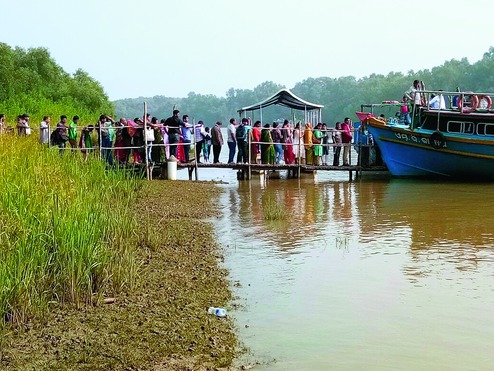

Kendrapara: Bhitarkanika National Park authorities have engaged unemployed local youths as tourist guides in an attempt to make them self-sufficient and reduce their dependence on forest resources for livelihood.
The youths guide the tourists around various eco-tourism destinations across the wetland. Being well-versed with the national park's topography, they are satisfactorily performing the role assigned to them, sources said.
"It is allowing them to earn a decent living with tourists thronging the national park in large numbers. The presence of these youths also enables the tourists to venture into inaccessible water-locked spots. The ground-level feedback is that the youths are doing their job well and are winning the visitors' appreciation," forest range officer Akshyaya Kumar Nayak said.
The youths were trained on the pros and cons of their assignment and were also being made aware of the diverse flora and fauna.
The forest department, however, does not bear their salary. The charge of each guide has been fixed at Rs 100 and varies depending on the duration and numerical strength of the tourist groups, Nayak said.
The tourists bank on the youths' guidance to relish the scenic beauty of the national park. The period between November and January is considered the peak season for visiting the park.
Mammals such as leopard, wild boar, jungle cat, fishing cat, hyena, sambar deer, striped-palm squirrel, Gangetic dolphin are abound at the site. Reptiles such as turtles, including the olive ridley, crocodile, lizard, water monitor, python, and king cobra are also found. Besides, the park houses 166 species of birds.
Bhitarkanika is one of the richest storehouses of mangrove genes. Researchers have come across 11 of the 70 mangrove species, which are at an elevated threat of extinction, in Bhitarkanika.