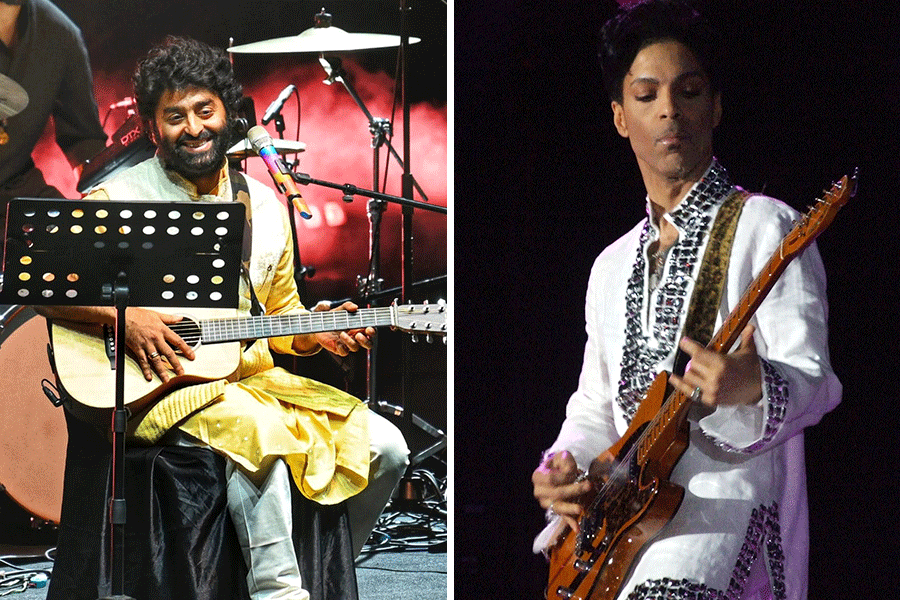
Creative control. These two words, which have haunted artistes across the globe and through the years, were behind Arijit Singh’s decision to announce a retirement from playback singing.
The most famous act of rebellion by an artiste to wrest creative control for himself was by the legendary late artist Prince, whom the jazz god Miles Davis regarded as one of the greatest musicians ever along with the likes of Mozart and Miles himself.
The Telegraph Online spoke to a wide range of people, from singers to musicians to lawyers to Bollywood insiders, to piece together the story of why Arijit Singh did what he did.
And it is in many ways similar to Prince’s.
By the early 1990s, Prince began performing with the word "SLAVE" written on his cheek to protest that his label, Warner Bros. Records., owned his name and his master recordings. On June 7, 1993, his 35th birthday, Prince officially retired the name "Prince" and replaced it with an unpronounceable symbol known as the "Love Symbol".
The media began calling him "The Artist Formerly Known as Prince". The strategy was simple: make it impossible for the label to sell "Prince". The label owned the trademark for the name "Prince" but the artiste was now a symbol. This allowed him to save his best new music for the day he was finally free of the contract.
Almost a fortnight ago, Arijit Singh, India’s most sought-after male Hindi playback singer, announced his decision to step away from singing for Bollywood movies and stay laser-focused on creating independent music.
A singer from Mumbai who requested anonymity said Arijit Singh’s decision to break away from playback singing is the biggest victory for the music fraternity, including composers, singers and lyricists, who have been waging an unequal battle with music labels for creative control, recognition and royalty.
Speculation has been rife over why Arijit did what he did.
Those close to Arijit, who have spoken to him since he made the announcement, said the reticent singer feels Hindi playback singing offers neither money nor respect to singers.
Arijit is not the only one to think so.
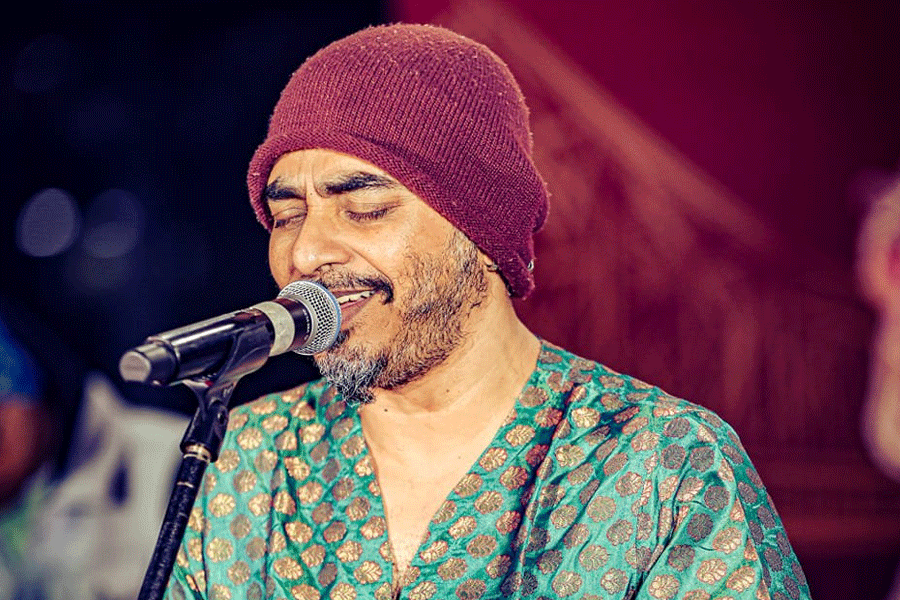
“Playback singing is not the place to earn money. You establish your voice, name and then you go to live shows. That is where the moolah is,” singer Bonnie Chakraborty told The Telegraph Online.
Bonnie started out as singer for the Calcutta-based rock band Crosswinds (now Krosswindz), moved to Bollywood where his credits include the rock version of the hit song Emotional Attyachar from the movie Dev-D, as well as working with music directors like A.R. Rahman. Bonnie is now a music director himself.
Other singers pointed out that entry into the playback scene in Mumbai for over two decades now has followed a formatted route that starts with music reality show competitions by private channels that are also heavily invested into film and music production. The contestants, at least those in the top five, end up in Mumbai’s suburbs, waiting for their time to come.
Then there are the contracts.
Several singers, who did not want to be named, said senior lyricists and music directors had warned them against signing any contract. That lands the performers in a Catch-22 situation. Without signing a contract they do not get to sing for movies. It does not take much for a singer to fall out of favour.
Intellectual property rights lawyer Debarghya Mitra of the Calcutta-based IPgyan consulting said such contracts are often balanced heavily in favour of the labels.
“Music companies mostly make unilateral contracts with singers and musicians. The artistes are signed as ‘work-for-hire’ or ‘assignment’. The company controls everything,” Mitra said.
“It will decide what to do with the music produced, where to use it, whether to release it or not. Most new musicians now prefer to produce their music independently,” Mitra added. “Why will they give up all of their creative rights over what they have created?”
Most labels demand exclusive rights to all singing performances, which stop performers from performing or recording even a cover version without permission. The rights are often in perpetuity. In some cases, the recording companies also demand a part of the fees generated from live performances. Most singers are handed over a lump-sum amount in lieu of royalties to be earned from the songs.
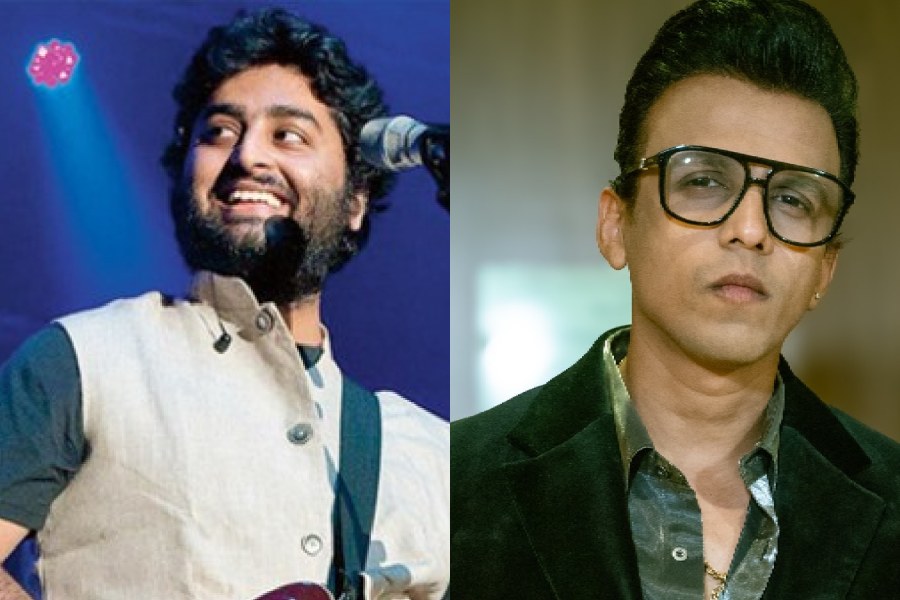
The stipulations in the contract sometimes make it binding on the musicians, among other things, perform in private parties and even odd locations.
According to the grapevine, Arijit had to perform at a private party organised by one of Hindi film industry’s leading superstars and was not too happy about it.
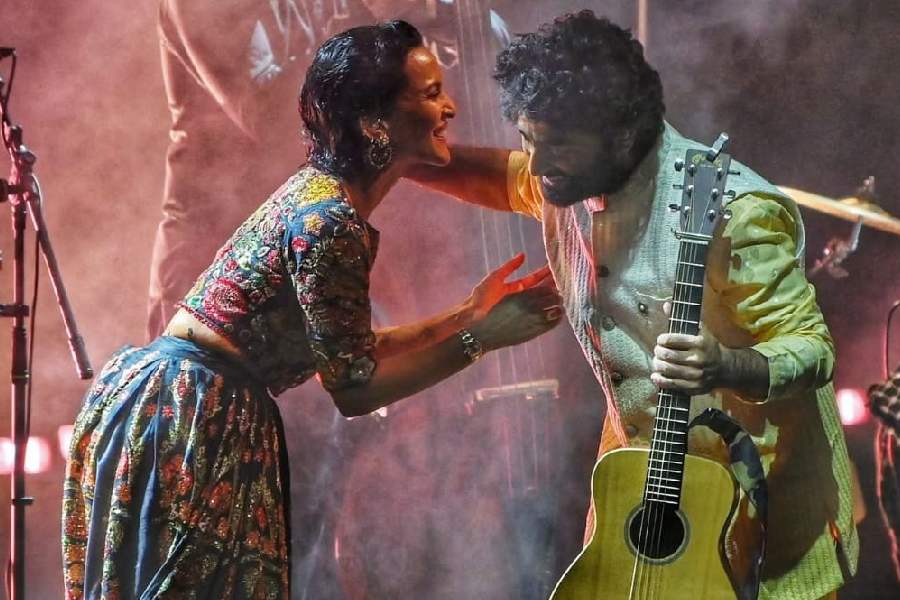
Those who caught a sight of Arijit up close on Sunday night at Calcutta’s Netaji Indoor Stadium saw the singer happy and relaxed.
Arijit, who joined sitar player Anoushka Shankar and percussionist Bickram Ghosh at the Chapters Tour 2026, spent time with the musicians backstage rather than being in the confines of a vanity van.
Playback singing, an Indian phenomenon
Since filmmaker Nitin Bose got professional singers to pre-record a song, and thus introduced lip-syncing for the screen in the mid-1930s, playback singing has been the chosen vehicle for those looking for money and fame through their voice.
That one decision by Bose guided Hindi films for several decades, until some years ago.
These days the concept of any one or two singers dominating as the voice for a lead actor is as dead as the dodo.
Singers now are mostly called to the recording studios and record a song. The same song is recorded by multiple singers and the final take that goes into the film’s album is decided by the star.
Few singers, male and female, possibly egged by Arijit’s decision, have spoken their mind on the pay disparity among playback singers, delayed and in some cases denied payments.
“This should stop,” said one singer. “For how long in the name of ‘giving a chance’ will the music companies keep the singers and musicians under their thumbs?. Arijit did the right thing.”
It has been more than 10 years since Arijit said goodbye to Mumbai and returned to his hometown, Jiaganj, on the banks of the Bhagirathi in Murshidabad.
Over the years international musicians like Ed Sheeran and many from Mumbai, the latest being Aamir Khan, have landed at the narrow lane near Shibtalaghat where Arijit lives.
Arijit Singh’s music has not stopped. It is just that he now is living the dream life of every musician – creating music on his own terms. With full creative control.