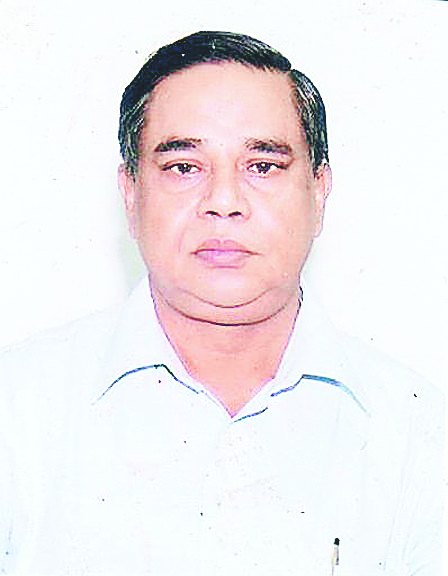
Hot seat - RP Sharma,
commissioner, Cuttack-Bhubaneswar commissionerate
 |
You are an MBBS doctor. What prompted you to join the all-India service? Are you happy being an IPS officer than a doctor?
My father was a teacher. He used to say that I would become a collector or an administrative officer from the childhood days. He took me everywhere to participate in debates and other activities. After I enrolled my name in the science stream, I opted to appear for the medical examination and later joined the profession. In my subconscious mind, I always wanted to become an administrative officer. I appeared for the civil services examination and was selected for the IPS. Happiness is an inner state of feeling. It is no way connected with the job. On the question of satisfaction, I can say I am satisfied, as the job has given me a big platform where I can do a lot for the society. At the same time, the doctor in me is still alive.
You have initiated yoga for police officers. Has it really made any effect on your officers in terms of increasing their efficiency and behaviour?
(Pauses) In the back of my mind, I always think about how to develop the behaviour and conduct of police personnel towards the common man. When I returned to the state after almost nine years of central deputation and given charge of the commissionerate police, I was free to experiment with a few ideas. I developed a training curriculum pertaining to self-development. Yoga and meditation are part of that curriculum. I strongly believe that one must respect the basic dignity of a person irrespective of the position he holds. The curriculum is an extension of that belief. It has been developed with the help of professionals and psychologists.
Your focus is on reforms and bringing the police and people closer. You have taken initiatives such as organising interaction with different sections of the society. Do you think this will make any improvement in the functioning of the police?
During my 27-year career in the police, I have realised that in the police functioning, the behavioural aspect is very important. People perceive the police from the way the policemen conduct themselves. Professionalism is equally important in dealing with specialised crimes. The police have to be tough with criminals. They must know the law and its proper application. At the same time, it has to be soft towards the common man. This is how the police image is gradually built up. We have been able to teach our officers about how to respond to a situation without reacting spontaneously. Thoughts can be regulated and things can be handled in a better way without losing temper. We have gone beyond the normal policing by holding talks with different sections of society including women, senior citizens and bankers and trying to address their issues.
While you are trying your best to reform misguided youth, especially students, your force has failed to curb rampant sale of drugs in the city. How do you react?
The rising trend of drug use among youths is not confined to Odisha alone. It has been noticed in other parts of the country as well. For this rising trend of drug use, to say that police has failed, is incorrect. Many factors are responsible for that. There is an explosion of information nowadays. Apart from traditional drugs like bhang, opium, brown sugar, many new drugs are available in medicine shops. One can get it without doctor's prescription. The police have no control over that. During examinations, some students take drugs to stimulate their nervous systems. There are students who take sedatives to overcome the examination phobia and related stress.
So, can we say that the police has no role to play in this respect?
I am not defending the police. Everyone has a role to play, including the parents and teachers. To some extent, they have been failing. What I am trying to say is that the society overall has failed. Under the Narcotic Drugs and Psychotropic Substances Act, several agencies have to make efforts to enforce the rules. The police is also preoccupied with other work. Some special operations are needed in this regard.
You have introduced a number of steps on police reforms. Can we say that the commissionerate police is free from corruption?
(Pauses) I cannot claim that the commissionerate police is free from corruption. There are instances of vigilance catching police personnel while taking bribes. To make the system free from corruption, what I believe, is to make efforts to make the system transparent. Officers in charge of a police station have to be accountable, answerable and responsible. If the level of transparency improves, you will certainly reduce the level of corruption. On the larger issue of corruption, one will find corruption in every sphere of the society due to the degeneration of social values..
If you are talking of transparency, why have not you taken steps to put the property statements of your subordinate officers in the public domain?
You will find the property statements of IPS officers and other all India services officers in the public domain. But I have no authority to ask a constable to put his property list on the public domain. The government can do it.
There are allegations that the commissionerate police deliberately ignored the political connections of the Artha Tatwa Group.
The deposit scam surfaced in the state in 2012. In early 2013, cases were registered and investigations were done before I returned to the state. When I joined, I found a single officer was probing the case unlike the CBI, where hundreds of officials including a chartered accountant, are involved in the investigation. I freed him (the officer who was investigating the case single handedly) from all routine police duties. The officer was entrusted with the task to identify the properties involved. Later, we found properties worth Rs 410 crore. On our proposal, the government attached the properties so that the investors could get back their money. We had gathered prime facie evidence against other people who were named absconders. Now the CBI has arrested all the absconders. Regarding the money trail, the CBI has the necessary expertise and they are investigating the case.
The commissionerate police has introduced a number of steps for the safety of women. Can we say that women are now safe enough to venture out in the city at night?
There are two to three aspects associated with women's security. We have introduced steps, including the special pink auto service for women, for their safe travel. We have started programmes to counsel women in distress. We are making short films to create awareness among people on women safety. We have launched a campaign effect. We are proposing to impart self-defence programmes to school and college going girls. These issues cannot be resolved out overnight.
You must be aware how Ahmedabad is claiming that women can go out alone in the evenings without any problem. Can we hope such an atmosphere in Bhubaneswar?
As compared to Ahmedabad, I can say that the crime rate here is less. The women are safe here. Bhubaneswar is a safer place. On the other hand in Cuttack, you must have noticed that during the last Durga Puja, women came in large numbers from rural areas to enjoy the Puja throughout the night. There was not a single case of molestation reported. What do we call it?
But can you say how many chain-snatching cases have been solved by the police so far?
There are few crimes that have been persistently noticed and I call them as “irritant crimes”such as chain-snatching, mobile theft and motorcycle-lifting. We have been successful in controlling major crimes.
People should be more vigilant, alert and a little careful about their belongings. Though police is there to protect you, one should take minimum steps to protect him or herself.
Is the commissionerate police is free from political pressure?
This depends on the officer concerned. It depends on whether he entertains undue political pressure and does illegal things or not. No one has pressurised me. Your image is built during the early days of your career. If people think you are pliable to political pressures, there will put even more pressure on you. If you sit here (in his position) for seven days, you will find not a single call from a politician. But one has to keep his mind open. Some times you get genuine requests from politicians to do something.
They bring the problems and issues to your notice. If it is within the legal parameters, it should be done. If it is not, one must be able to tell them that straight. In other states, there might be some political harassment.
As far as I am concerned, the working condition for an administrator in Odisha is quite good.
You have been in the IPS for 27 years. Is there any groupism among your cadres?
(Laughs) My IPS colleagues know me. I am totally devoted to my work. I come to office in the morning and go back late at night. There is no time to think about it or to get linked with any group.
Honest professional
A fitness-freak, 1986-batch IPS officer is known for his honesty and professionalism.
Though a tough officer, Sharma is known for his respect of human values.
Sharma, who hails from Rajasthan, did his MBBS from Ajmer Medical College.
He served as SP of Balasore and Kalahandi. He had also worked with the National Security Guards and Central Bureau of Narcotics.
During his stint with the National Security Guards, he had received the President's Police Medal for distinguished service in 2010.
He has also served in the UN as part of its peacekeeping mission in Liberia.
What would you have been had you not been an MBBS or an IPS officer?
I would have been a teacher. I love to interact with people and share my knowledge with others. There is a lot of influence of my father on me, who was a teacher. I studied in the school where my father was a teacher.