
The basic purpose behind the launch of the National Horticulture Mission programme in 2005-06 was the growth of horticulture. It has failed. What is your take?
That’s not correct. Horticulture has become a subsidy-driven scheme these days. Thousands of people coming out of the technical institutions remain unemployed. If these people take up horticulture as a mission, the scenario would certainly be different. Subsidies are also available these days. However, it has been noticed that only big corporate players are coming forward. If the smaller ones including entrepreneurs take up horticulture across the state, the situation would certainly improve. I want to mention that the state has a number of agro-climatic zones, vast lands and other facilities where horticulture has immense potential. To encourage the sector apart from subsidies, plans are under way to provide financial assistance through Capital Venture Fund (likely to be set up).
How will the fund help?
Suppose one is interested to set up a cold storage, he will get a 50 per cent subsidy. However, he still requires funds to set up the cold storage. If we are able to provide them with a soft term loan through the Capital Venture Fund, the entrepreneur will not run after banks to get a loan. Through this intervention, we can motivate them and solve their financial requirements to a great extent.
What is the status of horticulture in the state at this moment?
Horticulture is being taken up on around 36 lakh hectares of land. Our target is to increase the coverage area by another 20 lakh hectares. The produce from the high and medium paddy land is decreasing. If we convert the upland for horticulture purposes, it would be beneficial for the farmers. We are now providing both forward and backward linkages to the farmers. Market linkages are also being offered to them.
Potato is a common food item for every household of the state. But every year, we have to depend on Bengal to meet the requirements. How long will this trend continue?
The state is facing the potato crisis because of two reasons — lack of cold storage facilities and non-availability of quality planting materials at the time of cultivation. Our job is to increase quality seed production and provide them to the farmers, increase potato crop coverage areas, and set the farmers a minimum support price for their produce.
How will you do it?
The government has launched a Potato Mission. We have set a target to make our state self-sufficient in potato production. The government is floating an expression of interest to set up cold storages in the private sectors. Under the mission, the state aims to increase potato cultivation on 60,000 hectares to achieve the targeted production of 11.25 lakh tonne by 2017-18. Currently, potato is grown on around 15,000 hectares of land in the state with an annual production of 2.5 lakh tonne. The potato productivity of the state is only 16.48 tonne per hectare against the national average of 22.8 tonne per hectare. We will also increase potato seed production to 1.20 lakh tonne.
A team of officials had visited Lima in Peru last year to gain firsthand knowledge on potato production. Did the visit yield any result?
We have gained a lot from their experience. They had visited the International Potato Centre headquarters. Their officials have also visited our state. They will set up a research centre in Odisha to help the transfer of knowledge. They will also help us in developing a variety of potato seeds, which can be cultivated after the paddy harvest is over.
Onion is another item for which the state has to depend on import. What are the steps you are taking to boost its cultivation?
The state government has signed an agreement with the Nasik-based National Horticulture Research and Development Foundation to boost up the onion production. We have handed over 50.92 acres of land in Boudh district’s Palijhar Agriculture Farm to the foundation to carry out various research programmes. They will also help in establishing the zero-energy cold storage facilities where the onion produce can be stored for eight months without much expense. Besides, the foundation will also establish a training and production centre to provide modern technical knowledge on horticulture. The centre will produce onion seeds, onion cloves and garlic seeds. The produce will be provided to the farmers across the state at cheaper prices.
In the form of Udyan Fresh, your department has intervened the market to control the rising price of vegetables and provide the urban people with fresh fruits. But, it does not appear to be a successful project…
It’s an outstanding concept to provide fresh fruits to the people of Bhubaneswar. It also aims to fix a remunerative price for the farmers. But the subsidy is very low if we compare the total amount that has been invested in Udyan Fresh. The initiative will need time to mature in the governance. The backward linkage has to be made stronger. The people involved there are on a mission and their future is bright.
One can notice that even for exotic flowers we have to depend on other states and cities such as Bangalore. When will this situation improve?
Odisha has one of the best climates for orchid plantation. Private entrepreneurs have taken up such cultivation in Huma. We have also started encouraging them. Besides orchids, there are many other flowers like roses that can also be cultivated. Now, as the locals have started producing roses, flowers from Bangalore are facing a tough competition here. In fact, the import has reduced to some extent. However, we have to increase the scale of production. It is certainly going to happen in the coming days.
Any plan to increase the production of the Kandhamal turmeric?
We are going to give a boost to the organic farming of Kandhamal turmeric.
The mango festival, organised by your directorate, has been a success every year. How do you plan to export more varieties of mango?
Our farmers are becoming conscious about the market rates. Dashehari, a mango variety found in our state, reaches the Delhi markets before mangoes from other states do. It is also superior in quality as compared to other varieties of mango. Another advantage is that our mangoes get ready to be picked quite early, by the end of April. The challenge is to eliminate the middlemen and brokers from the system. A mango hub is coming up in Dhenkanal, which has emerged as a major mango producing area with an annual production of over 1.25 lakh tonnes. The local farmers are growing Amrapali, Langra, Dashehari, Himsagar and Mallika varieties on a commercial scale.
There have been allegations of corruption in your department. Vigilance officials have arrested some employees for manipulating the figures and showing plantation in different areas. There was a mismatch between the plantations undertaken and the number of seedlings actually planted. How do you check it?
We are going to launch a global positioning system-based geographic information monitoring system. The picture of any intervention on any plot can be downloaded from the Internet. Anyone can do it and check the records with that of the actual number of plantations there. With this, we hope to check the corruption to a great extent. The state government has zero tolerance for any sort of corruption. The departmental inquiry has already been initiated for all these cases. Once the officials submit the charge sheets, we will take necessary disciplinary measures as per the provision of law and even dismiss them if need be.
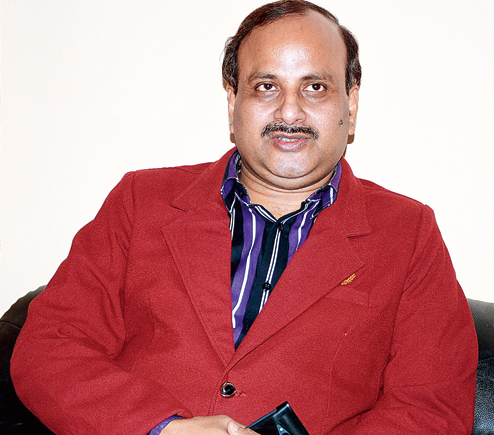
From IIT to IFS
- Susanta Nanda, 51,is an alumnus of Sainik School, Bhubaneswar
- He studied in IIT, Mumbai
- He did his M.Phil from Utkal University and joined the All India Service (Indian Forest Service) in 1989
- He started his career as divisional forest officer in Bonai
- Besides heading the horticulture directorate, he also heads Tribal Development Co-operative Corporation of Odisha Limited
Had you not been an IFS officer, what would you have been?
Had I not been an IFS officer, I would have certainly been in the armed forces. I was a product of Sainik School, Bhubaneswar. Once you join the Sainik School at an early age, you certainly nurture a dream to join the Army. Many of my friends are in the defence services