
Bhubaneswar, May 28: The state government has come up with a comprehensive plan to conserve water to mitigate possible drought situation in case of deficit rainfall.
According to the plan, the water resource department will take efforts for inter-basin water transfer as an effective alternative.
Inter-basin water transfer stands for transferring water from the surplus rivers to the deficit ones. The Mahanadi, which originates from the Western Ghats, is often found to be surplus in water resources. Being the biggest river of Odisha, it has a big reservoir that helps in irrigation as well as mitigating the flood-like situation across the state. The reservoir helps distribute the water to the deficit areas. In the new plan, the department would explore option to replicate similar projects in other rivers of the state.
Besides, intensive rainwater harvesting and recycling of wastewater are other focus areas of the administration. It will also take measures to reduce evaporation from reservoirs.
"The Union government is pressing hard on coming up with a different and more practical approach for water conservation to mitigate drought. During the Centre's pre-monsoon preparedness meeting held in April, Odisha was tagged as a water shortage state among another 14 of the country, including Uttar Pradesh and Maharashtra," said a department official.
Twenty-seven of Odisha's 30 districts are vulnerable to drought in case of deficit rainfall. "We had harrowing experiences in the past related to drought. The Centre has assured us of all assistance in our plan to take up the water conservation method," said the official.
Odisha have had major experiences of droughts and floods since long. Between 1834 and 1926, the state used to experience flood once in four years, which later rose to once in two years after 1926. The state experienced nine floods within 15 days in 2001. This was an all-time high, damaging million hectares of crops. The 2001 floods had submerged 25 out of the 30 districts of the state. It even inundated the hilly areas such as Kalahandi and Phulbani. In 2014, floods triggered by heavy rain in the state killed 35 persons and affected 18 lakh people. The spate in the Mahanadi had triggered the situation.
Meteorological centre director Sarat Chandra Sahu said this year the monsoon was likely to remain normal.
"We had a pre-monsoon meeting with the state government officials where we discussed possible drought and flood situations. It is important to be prepared for the both since Odisha is vulnerable to cyclones as well as drought. We will support the government in their plans," said Sahu.
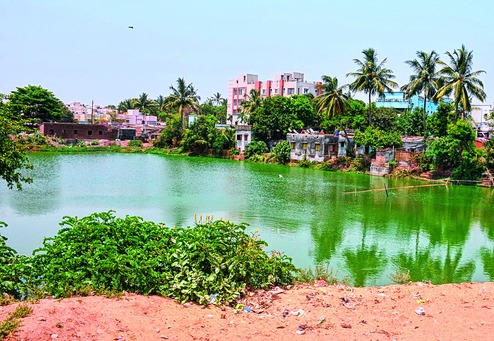
Moreover, the state government has also decided to take up renovation and restoration of natural water bodies across the state. It has already been undertaken in the capital city, where the local civic body has started restoration of as many as 14 natural water bodies. "We have taken the job to restore the ponds of the city in order to have a sustainable approach to water conservation. We have finished the restoration process in about four ponds and others are in process. The water conservation approach would not only help avoid the drought-like situation, but also help sustain the environment," said city mayor Ananta Narayan Jena.